Why finding consensus on mass balancing is key to making decarbonization policies and circular markets work
Key Highlights
- Mass balance accounting enables tracking recycled content in chemical products, supporting decarbonization and circular economy initiatives.
- Stakeholders face challenges in standardizing methodologies, certification schemes, and data-sharing systems across jurisdictions like the U.S. and EU.
- Legal disputes, such as the Colorado EPR case, highlight the need for clearer guidelines and consensus on mass balance application and crediting frameworks.
- Adopting connected business networks and third-party certification programs can improve data transparency, verification, and reporting in the chemical value chain.
- Achieving broad industry consensus on methodologies and standards is essential for reliable sustainability reporting and the growth of circular markets.
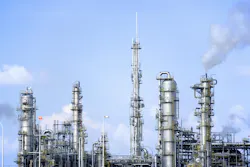
As part of a multi-trillion-dollar industry that provides products for 95% of the world’s manufactured goods worldwide, chemical companies are essential players in the global effort to decarbonize and shift to a more circular, sustainable approach to manufacturing.
Decarbonization requirements, extended producer responsibility (EPR) laws and other environmental policies are spreading globally and across the U.S., bringing new levels of transparency and accountability to the manufacturing value chain and driving a shift to a circular economy.
They also have brought the mass balance approach to “green line” accounting into the industrial mainstream. Today, mass balance methodologies have been adopted by many of the world’s chemical and polymer producers as a way to track, report and market the lower carbon content of their products, whether they come from recycled, renewable or circular sources. Mass balance is an accounting approach designed to enable attribution of recycled content to plastic products when recycled and virgin feedstocks are processed together.
The case for adopting mass balance is clear: It provides a framework for a sustainable production infrastructure in a chemical industry that is under increasing pressure to decarbonize and circularize — and to document its efforts toward those ends. It obviates the need to build separate, sequestered infrastructure for renewable, circular and recycled raw materials, a potentially costly and carbon-intensive proposition. In theory, it also should make the processes around identifying, reporting and auditing origin and content fast, traceable, accurate and cost-effective.
In some real-life applications of mass balance accounting, however, theory has yet to translate into practice.
Seeking stakeholder consensus
As important as mass balance accounting is to supporting the global decarbonization effort as well as regulatory compliance for chemical companies and manufacturers, and as much transparency as it has brought to the chemical and polymer value chains, the picture it provides still could be clearer. The debate among chemical and polymer industry stakeholders and those who regulate them about exactly how and when to apply mass balance accounting persists, as do questions about the certification and crediting frameworks and methodologies to apply.
This ongoing uncertainty is resulting in legal proceedings such as one in Colorado involving differences between the state’s Department of Public Health and Environment and the American Chemistry Council about the application of mass balancing as well as the calculation of recycled content and the tradeable credits that are based on that content. The case relates to Colorado’s EPR program. In the European Union, meanwhile, new rules published earlier this year clarify how the mass balance accounting approach should be applied under the EU Single-Use Polymer Directive.
Ultimately, the goal is to ensure the truest possible accounting of the green line (including carbon footprint, content, custody, etc.), from raw material/feedstock, through cracking and manufacturing, all the way to the end consumer. The challenge: how to get parties in the U.S., Europe and elsewhere on the same page with regard to mass balancing so they are better aligned in pursuit of that goal?
To find an answer, they will need to reach a broad consensus on several mass-balancing related issues, including:
Q. Which mass balance allocation methodology to apply, where and when
There are four basic mass balance allocation approaches:
- Free allocation, where all the chemical recycled input material to be allocated except any losses in the system.
- Fuel exempt, which limits allocation to the percentage of the input material that does not go toward fuel and losses in the system.
- Polymer only, which limits allocation to the percentage of the input material used in polymer production.
- Proportional allocation, where each output is equally allocated chemically recycled content based on the proportion of that output which is produced.
Today there is little uniformity across programs and jurisdictions. The Colorado program, for example, favors the proportional mass balance credit method, while the EU has adopted the fuel-exempt approach.
It is imperative that stakeholders (chemical companies and the trade groups that represent them, regulators and other key members of the polymer and chemical value chains) develop a broader consensus about which approach to apply in specific jurisdictions and situations. Progress is slow on that front. Continuing dialogue is a must. Cases such as the one in Colorado hopefully will help move the debate forward.
Q. Which certification and crediting frameworks, standards and organizations should the industry and value chain embrace?
There is a similar lack of uniformity in terms of the third-party organizations (known as producer responsibility organizations, or PROs, in the U.S.) and schemes for certifying companies and products, with distinctions in mass balance methodology and the point at which it is applied (at the company level, the batch level, site-specific, etc.) The ISCC (International Sustainability and Carbon Certification) PLUS is perhaps the most widely adopted program. REDcert, RSB Advanced Products, Ecoloop and Circular Action Alliance are others.
Here is another area where greater standardization of approaches across organizations is critical to establishing trusted, widely accepted data-driven systems, structures and practices within and across markets and jurisdictions. It is also essential to the continued expansion of a global Circular Economy.
Q. What kinds of connected systems and business networks can help support companies’ efforts to collect, verify, share and report data?
As interdependent as the chemical and polymer value chains are, especially when it comes to meeting EPR and decarbonization requirements, companies within those value chains must have the ability to transparently share fresh, trusted and readily auditable information about material origin, chain of custody, etc. Participating in business networks such as Together for Sustainability (TfS) and Chem-X can help in that regard.
Internally, companies with multi-step processes and a variety of raw materials also need to have a trusted system that uses mass balance to calculate, verify and report carbon footprint and other sustainability data to support traceability of materials and product content.
There is no question that mass balance accounting in some form is key to supporting the decarbonization of chemical and polymer value chains — and compliance with the growing wave of EPR and carbon-reduction regulations and policies. But only when stakeholders can reach a broad consensus on the lingering questions surrounding mass balance will true material traceability, and sustainable long-term circular markets for chemicals and polymers, be viable.
About the Author
Manoj Narang
Industry advisor, SAP’s chemicals industry business unit
Manoj Narang is an industry advisor within SAP’s chemicals industry business unit. He supports and enables the Asia Pacific chemical community in their pursuit of operational excellence. He is based in Mumbai, India, and works in SAP Labs India. Connect with him on LinkedIn at https://www.linkedin.com/in/manoj-narang-5279885/.