Leveraging a comprehensive approach to ESL and aseptic processing for dairy
Key Highlights
- Thermal processing methods like UHT and aseptic techniques are essential for extending shelf life while maintaining product safety and nutritional quality.
- Rapid heating and cooling, achieved through steam infusion and vacuum cooling, minimize thermal degradation and preserve flavor and nutrients.
- Holistic plant design integrating processing, CIP, and SIP systems enhances efficiency, reduces waste, and ensures regulatory compliance.
- Advanced equipment such as Therma-Stat and Therma-Surge+ provide precise control, flexibility, and improved throughput in dairy and plant-based ESL production.
- Growing consumer demand for plant-based dairy alternatives is prompting traditional dairy producers to diversify and innovate with ESL and aseptic processing technologies.
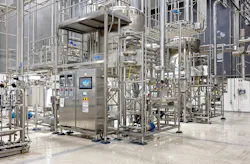
Dairy, among other categories of perishable foods, requires the strictest food safety and quality standards, particularly as it relates to extended shelf life (ESL) and aseptic products.
Methods of thermal processing and product handling are required to protect against the potential for product spoilage (or worse) by bacteria such as clostridium botulinum (precursor to the toxin botulism) and other less-harmful spoilage bacteria. These methods meet the requirements of the Food and Drug Administration (FDA) and other regulatory and standardization agencies for low-acid products such as milk and other plant-based products. Producers must ensure absolute certainty in hygiene and food safety, while protecting the nutritional value of the product.
This approach encompasses not only ensuring acceptable microbial quality of raw materials, but also strongly leverages the hygienic design and operation of equipment critical for processing these products. The most important of these procedures is ultra-high temperature (UHT) processing to support the ESL or aseptic format. This is the essential and final kill-step the product is exposed to prior to packaging.
Aseptic and ESL processing via steam injection
Aseptic processing commercially sterilizes products such as milk, cream, flavored milks and plant-based beverages by rapidly heating to temperatures above 285°F for a brief holding period of four seconds. This destroys all microorganisms, including spore-forming thermophiles. Product is then rapidly cooled, minimizing heat damage prior to homogenization and filling into shelf-stable sterile packaging. Low-acid aseptic products are governed by the FDA via 21 CFR Part 113. ESL dairy products are governed by state authority via the Pasteurized Milk Ordinance (PMO).
ESL processing is similar to that of aseptic processing but only requires products to be brought to a temperature above 280°F for a holding period of two seconds. Packaged ESL product requires refrigeration and can maintain a shelf life of up to 120 days. Innovative equipment suppliers have developed UHT processing equipment capable of producing products in either the aseptic or ESL formats on the same system.
Due to the sensitive nature of milk and milk-like products, the type of thermal processing selected is critical to the quality and taste of the finished products.
Thermal degradation is of primary concern. To reduce potential thermal degradation, it is paramount to heat and cool products as rapidly as possible while still adhering to all regulatory and quality standards. Rapid heating is best achieved through culinary steam injected or infused directly into the product. Rapid cooling is best achieved through immediate exposure of the product to a vacuum environment. These two processes are independent but controlled to ensure that the amount of steam added is the same as the amount of vapor removed in the vacuum process — such that the product is neither concentrated nor adulterated — thereby meeting Grade A dairy standards.
Low-acid aseptic processing enables products to have a “clean label,” maintaining shelf stability for up to 11 months without the need for preservatives. Due to the short, controlled nature of the heating and cooling process, products are minimally affected, ensuring enhanced flavor retention, nutritional value and product integrity.
Dairy manufacturers use one of two methods of direct heating for UHT processing — steam infusion or steam injection: Steam infusion passes the product through a steam atmosphere (milk-into-steam in a vessel); steam injection introduces steam directly into the product flow (steam-into-milk in a venturi). Both methods are followed by flash cooling to remove vapor and prevent dilution.
The choice of system, system design, filler and package are very product dependent as well as very consumer dependent. To ensure product integrity and system efficiency, it is crucial that the choice of process, filler and packaging is made based on the particular products and volumes being processed.
Plant-based ESL and aseptic
Plant-based products are processed using the same methods as dairy products and in many cases fall under the same regulatory jurisdiction. Traditional pasteurization processes can achieve a refrigerated shelf-life of roughly 12 to 21 days. ESL products are processed using methods that bridge the gap between standard pasteurization and long-term room temperature storage — thus achieving refrigerated freshness for 60 to 120 days.
A July 2025 report from the Plant Based Foods Association (PBFA) showed that 59 percent of U.S. households purchased plant-based foods in 2024. The top category where shoppers consumed more plant-based foods instead of animal-based products was milk comprising 40 percent of sales, with coconut, oat and almond milk dominating. The report showed plant-based milk-like products comprising 16 percent of the total U.S. milk market.
PBFA data shows July 2024–2025 (year-over-year) plant-based milk sales were up 9 percent. Comparatively, for the same period, plant-based yogurt sales were up 55 percent, and creamers were up 131 percent, with other dairy alternatives experiencing high growth, as well.
This market growth has led many dairy producers in the US to diversify into plant-based products, with some facilities producing up to 50 percent plant-based SKUs and others transitioning to plant-based products exclusively.
Beyond direct production, some dairy farmers are partnering with plant-based companies to pivot their business models, transitioning their land from animal agriculture to growing crops for plant-based dairy to provide an alternative revenue stream.
Holistic integration of ESL and aseptic processing for dairy
The need for heightened quality and consistency in dairy processing has been pushed forward over the past decades by the end-consumers’ desire for value-added nutrition. Processors have leveraged equipment manufacturers to continue to develop better processing equipment and better processing solutions to fulfill this evolving market.Likewise, these enhanced innovations have been met with the support of USDA, FDA and other regulatory and standard setting organizations.
One process integrator in particular has taken things a step further by approaching plant design and operations in a more holistic manner — wherein plant throughput, efficiency and product quality are paramount. This unique approach sets a new bar — raising the standard for dairy processing — particularly as it relates to value-added ESL and aseptic products.
The ability to achieve seamless process transitions — from ingredient receiving and storage, through product separation, batching and blending, thermal processing to ESL and aseptic standards, through storage and routing to fillers — in addition to clean-in-place (CIP) and sterilize-in-place (SIP) provisions for all processing equipment and piping — is a critical element for achieving the holistic integration of ESL and/or aseptic dairy production.
Latest-generation technologies in aseptic processing of perishable dairy products, when properly integrated, yield considerable benefits in product quality, process throughput and production uptime — which collectively yield increased ROI for processors.
The intention of this review is to further explore holistically integrated technologies from Statco-DSI, which has been a leading provider in the development and integration of ESL and aseptic processes for dairy products for more than 40 years. Its systems encompass: plant design, processing equipment and controls, project management, installation and integration with associated upstream and downstream processes or for full-scale brownfield and greenfield projects.
Industry norms for ESL and aseptic facilities show a much higher incidence of product loss than traditional pasteurized plants. This loss (shrink) can be upwards of 7 to 8 percent of the overall plant’s production. Statco-DSI’s comprehensive approach to plant design and ESL and aseptic process solutions have proven to operate at less than 1 percent shrink. When compared to conventional facilities, it’s clear that Statco-DSI's approach makes an excellent case study for closer review.
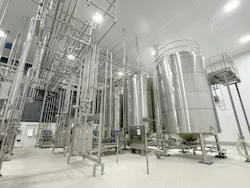
Statco-DSI’s holistically integrated technologies for dairy processors
Therma-Stat UHT Processing
Therma-Stat represents the latest-generation technology in ESL and UHT processing for dairy. The system can be used for a wide variety of products, including those intended for refrigerated and non-refrigerated retail, vending machines and food service distribution.
Therma-Stat uses direct steam injection to bring product streams to a precise holding temperature before rapidly cooling the product and removing vapor, which helps maximize efficiency, reduce costs and minimize product loss and assure product quality.
Therma-Surge+ Independent Surge Tank Operation
Therma-Surge+ aseptic valve solution allows for independent surge tank operation between UHT sources and storage destinations. This unique approach delivers optimum production efficiency and enables full, unencumbered utilization of all associated upstream and downstream assets.
Quality is ensured because all valves in the product pathway are pulsed during clean-in-place (CIP), which completely and thoroughly mitigates any potential residual product, contaminants or allergens.
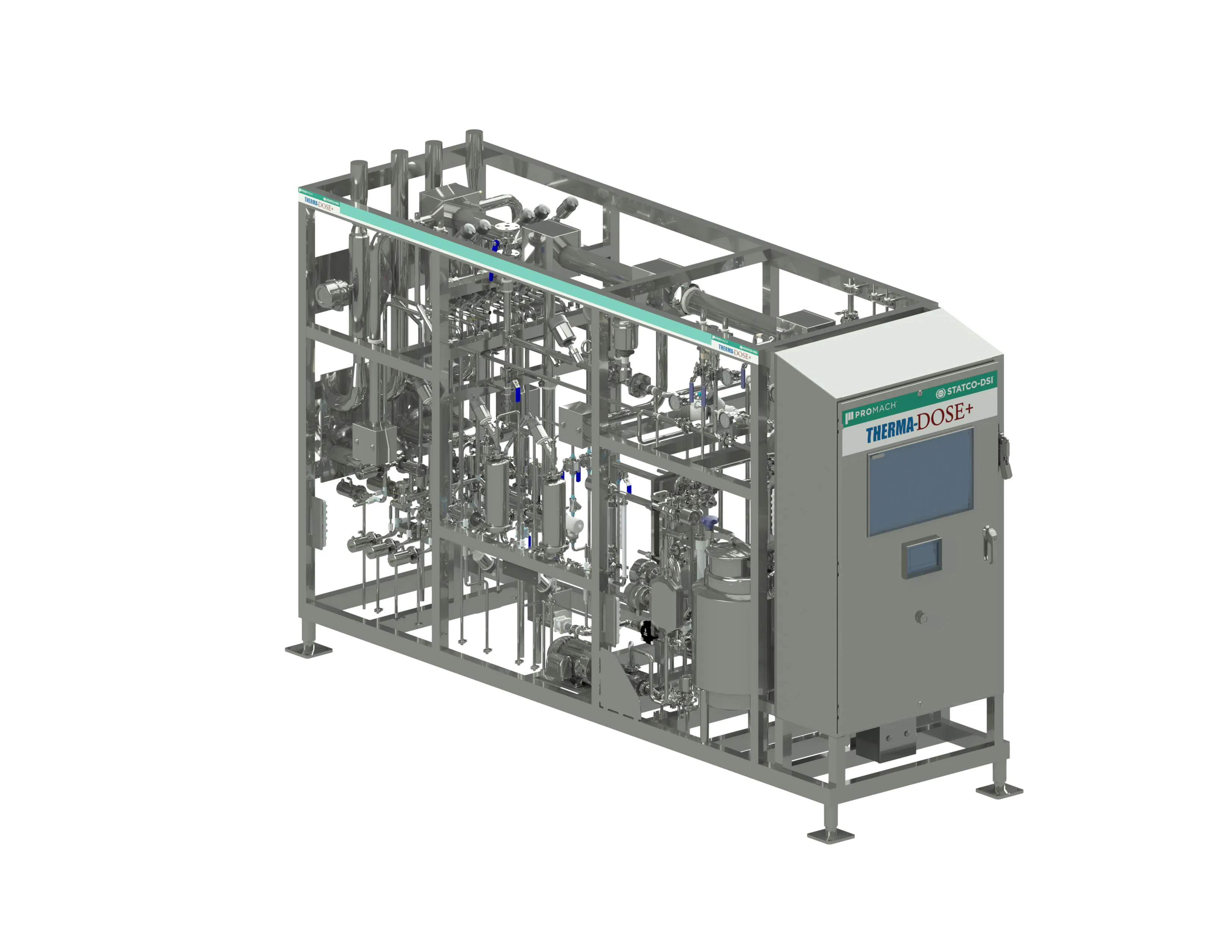
Therma-Dose Enzyme Dosing
Therma-Dose is designed to add enzymes directly to the ESL/aseptic stream between the Therma-Stat and Therma-Surge tanks. This results in accurate dosing for reduced enzyme usage, and conservation of water and chemicals.
There are three basic modes of system operation: 1) sterilization-in-place (SIP); 2) process; and 3) CIP. Each of these modes are initiated by the operator at an HMI interface screen, and automated to provide the desired functionality. Thema-Dose has two main sterile areas: 1) the enzyme line — from filtration through the end of line and the aseptic valve group; and 2) where the enzyme is injected into the sterile product. The system employs barrier zones that permit sterilization independently from the UHT processor.
Each zone is monitored for temperature during all steps of sterilization, production and CIP.
Therma-Route+ Seamless Routing Flexibility
Therma-Route+ aseptic valve solution enables zone protection between ESL/aseptic surge tanks, filler routing lines and fillers.
Valve configurations are designed to accommodate multiple surge tanks routing to multiple fillers. This seamless product routing capability provides complete independence of CIP, sterilization and production, utilizing full-port, double block-and-bleed protection. All product valves are lifted during CIP for thorough cleaning, completely mitigating the risk of residual product, contaminants and allergens.
Unique start-of-line valve solution provides the ability to perform a sterile air purge post sterilization and production, thus mitigating residual steam condensate, adverse thermal effects (line cooling) and final product line volume respectively.
Integrated mix and blend technology
Whether a production facility’s recipes are dairy-based, plant-based, or both, or whether its dry ingredient additions are via bags, supersacks, totes, or drums, ideally integrated systems should be capable of efficiently producing a vast range of products with ease and efficiency.
Integration of mixing and blending systems would ideally be capable of delivering the following:
- Seamless back-to-back transfers with one batch tank building a batch while the other is in active transfer to destination;
- Independent heating and cooling paths to suit specific batching needs;
- Surge-standardization capable of continuous production of standardized milks (1%, 2%, 3.25%), half-n-half, or standardized cream;
- Handling of non-dairy creamer emulsions;
- On-demand hot water for batch formulation tank flushes and path flushes;
- Mix-proof valve solutions to ensure seamless tank and pathway cleanability independent of active production;
- Intuitive interface for easy recipe editing and additions.
An automated approach to batching that leverages metered deliveries of up to three liquid ingredients seamlessly and simultaneously significantly reduces batching times, while maintaining product quality and consistency.
Ongoing plant and system support capabilities
In addition to ESL and UHT aseptic equipment performance, such a holistic approach enhances additional benefits critical to system operation, such as:
- Faster installation, testing, and go-live, particularly when component systems are skid-mounted and factory tested prior to shipment to the site.
- Improved machine analysis and instrument calibration.
- Reduced downtime and equipment failures through preventative maintenance.
- Domestically sourced components for reliable spare parts availability.
Statco-DSI has a dedicated service department comprised of engineers and technicians that are experienced in operations, troubleshooting, and maintenance of ESL and aseptic systems and provide plant support for the life of the systems. They possess a more comprehensive knowledge and understanding of the Statco-DSI provided processes and are also capable of further offering valuable on-site support for other peripheral plant equipment.
Embracing a more holistic ESL/aseptic solution for dairy
Every dairy manufacturing facility with ESL and aseptic processing needs has specific requirements posing unique challenges, whether with individual components or complete turnkey systems.
For these dairy operations, holistic integration of systems for ESL and aseptic processing is an optimized pathway to ensure their facility is managed and operating in the most efficient and cost-effective way possible. This gives the best guarantee that the ESL and aseptic solutions will operate as designed — meeting the high demand for quality and throughput levels while achieving expected system efficiencies.
About Statco-DSI
Statco-DSI is a best-in-class systems integration, distribution and service partner for sanitary process manufacturers in the food, dairy, beverage, brewing and life science industries. Its engineers are recognized experts in sanitary processing and packaging system design, combining creativity, ingenuity and experience to design solutions that meet and exceed their customers’ needs. Statco-DSI follows 3-A, FDA and USDA regulations to design any size operation from a single piece of equipment to an entire plant. Founded in 1982, Statco-DSI provides systems for more than 100 manufacturers in the food, beverage and dairy industries. With 11 offices located coast-to-coast, the company is recognized as the largest distributor and systems integrator of UHT aseptic processing systems for food and beverage in the United States.