Case study: How a beverage plant cut water waste by 15%

A global beverage plant recently set out to reduce its water consumption while maintaining production efficiency, and turned to deep-tech company Collo's process intelligence to meet that goal.
April 13, 2026
3 min read

Key Highlights

  • Collo's RF analyzers provide real-time, highly sensitive measurements that surpass traditional conductivity meters in detecting CIP phase transitions.
  • The technology enables the plant to reclaim 4 million liters of water annually, significantly reducing water, energy, and chemical consumption.
  • Shortening CIP cycles by 10% increases production uptime and output without additional resource use, supporting growth and sustainability.
  • Automated, immediate detection of process deviations enhances product safety and prevents quality failures before products leave the factory.
  • The successful trial paves the way for widespread adoption across all bottling lines, demonstrating the impact of deep tech on large-scale beverage manufacturing.

The food and beverage industry still relies on principles and technology developed in the 1880s to manage clean-in-place (CIP) operations. While conductivity meters have long been the industry standard for monitoring CIP, they often lack the sensitivity and accuracy needed to identify optimization opportunities without compromizing cleaning effectiveness.

Recently, a global beverage plant, with a $4 billion revenue and a beverage bottling network serving a population of over 600 million people across 12 countries, set out to reduce its water consumption while maintaining production efficiency. To achieve their goal, they turned to deep-tech company Collo's process intelligence. The company installed two Collo analyzers at one of their plants to optimize over 160 complete CIP cycles across production lines for six weeks.

"Collo uses radio frequency to analyze the entire composition of a liquid, whether milk, soft drink or jam, in real time," says Jani Puroranta, CEO at Collo. "Combined with machine learning, the analyzers reveal properties that current solutions relying on optics or conductivity overlook. The deep tech transition moves factories away from reactive, manual lab-testing toward an adaptive, data-driven production that continuously learns what normal liquid looks like and flags deviations instantly."

Market leaders such as Coca-Cola, Danone and Valio are already using Collo’s technology.

Reclaiming 4 million liters of water annually

The electromagnetic field sent into the liquid detects the exact moment a product ends, and a cleaning rinse begins, preventing excessive water flushing. With an average of 1,586 liters of water saved per CIP cycle and approximately 5,000 CIP cycles annually, the plant can save 4 million liters of treated water while also cutting energy and chemical use.

"We have to stop viewing water waste as just a sustainability metric when in reality, it’s also a growth bottleneck," says Puroranta. "When a plant flushes 15% of its cleaning water down the drain due to outdated technology, it is flushing its potential to scale. Collo provides the real-time data needed to reclaim that capacity and turn it back into production time."

The CIP cycles shortened by 10%, increasing production uptime and unit output with flat or reduced water intake.

In addition to saving water and time, real-time process intelligence increases product safety. While manual laboratory sampling takes days, automated measurement allows for immediate production adjustments if deviations are tracked. The technology is being used to flag product deviations and prevent quality failures before they exit the factory gate.

Radio frequency reveals properties that current solutions overlook

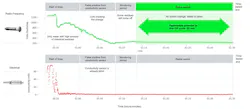
Thanks to their higher sensitivity and accuracy, Collo’s radio frequency analyzers detected transitions between CIP phases that conductivity meters missed. The validated optimization potential directly supports the company’s sustainability goals and operational efficiency targets across its nearly 40 bottling plants.

"In addition to advanced anomaly detection, radio frequency analyzers aren’t fooled by opaque, complex liquids, and maintain stability better than legacy methods. They manage to ensure reliable readings even in the noisy and harsh environments typical for high-speed bottling lines," adds Puroranta.

Operating in a region with water scarcity, it was crucial for the company to reduce water consumption while maintaining production efficiency. Following the successful trial, the company is moving forward with expansion across all its CIP lines at its main facility, and later across its network. 

About the Author

Jani Puroranta

CEO of Collo

Sign up for our eNewsletters
Get the latest news and updates