Evaluating vapor compression vs. membrane-based systems in WFI generation
Key Highlights
- Vapor compression distillation offers proven reliability and microbial control, making it ideal for high-value biologics and sterile products.
- Membrane-based systems provide lower energy consumption, greater water recovery, and installation flexibility, suitable for sustainability-focused facilities.
- Operational simplicity favors distillation, while membrane systems require sophisticated pretreatment, monitoring, and maintenance protocols.
- Initial capital costs are generally lower for membrane systems, but lifecycle costs depend on membrane replacement and operational expenses.
- Regulatory acceptance of membrane technologies has increased, but they demand thorough validation and risk mitigation strategies.
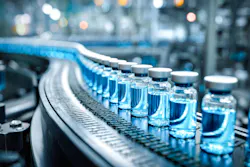
Water for injection (WFI) remains one of the most critical utility streams within biopharmaceutical manufacturing. Its quality directly affects product safety, process reliability and regulatory compliance.
Historically, distillation technologies dominated WFI production because they offered a robust physical barrier against microbial contamination, endotoxins and dissolved impurities. However, advances in membrane separation technologies and changes in regulatory expectations have broadened the range of acceptable approaches.
Today, many facilities are reassessing their WFI generation strategies. New greenfield projects are increasingly considering membrane-based systems. Existing sites are evaluating whether replacing aging distillation equipment can reduce costs and improve sustainability metrics.
Understanding WFI generation systems
Selecting the appropriate technology requires an understanding of process performance, risk management, utility consumption and long-term operational consideration. Choosing the best distribution system directly impacts product quality, process safety and operational efficiency.
The importance of WFI stems from its broad use throughout biopharmaceutical operations. Applications such as manufacturing injectable therapies, cleaning critical equipment and providing replacement fluid during hemofiltration demand water that meets stringent quality standards. WFI meets strict purification standards and is among the most rigorously regulated pharmaceutical water types.
Although both vapor compression and membrane-based systems can reliably produce compendial-grade WFI, they achieve this through fundamentally different mechanisms. Understanding how each technology operates is essential for evaluating its respective advantages, limitations and suitability for specific biopharmaceutical applications.
Vapor compression distillation
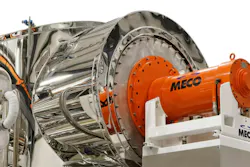
Vapor compression distillation produces WFI by evaporating purified feedwater and then condensing the resulting vapor. Unlike conventional multieffect distillation systems that rely on external steam supplies, these units employ mechanical compression to raise the vapor pressure and temperature. The compressed vapor subsequently serves as the heating medium for continued evaporation.
The process creates an effective barrier against contaminants. Nonvolatile compounds, endotoxins, microorganisms and dissolved solids remain behind in the concentrate stream, while the condensed vapor becomes highly purified WFI.
Vapor compression systems have earned a reputation for reliability. Many have operated continuously in pharmaceutical facilities for years with minimal process changes, providing manufacturers with a high degree of confidence in their performance.
Membrane-based WFI generation
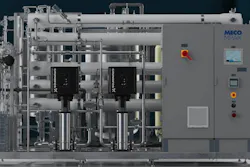
Membrane-based WFI systems generally consist of several purification stages arranged in series. Typical configurations include reverse osmosis, electrodeionization, ultrafiltration and additional polishing technologies designed to remove endotoxins and microbial contaminants.
These systems do not rely on phase change. Instead, they use selective membrane barriers and electrical separation mechanisms to progressively eliminate impurities from pretreated feedwater.
Acceptance of membrane technologies expanded following revisions to pharmacopoeial guidance in several regions. Regulatory authorities recognize that appropriately designed and validated membrane systems can consistently produce WFI that meets compendial specifications. The October 2025 revision of the Chinese Pharmacopeia aligned all major pharmacopeias, paving the way for widespread adoption.
This regulatory shift has significantly increased industry interest. It has also prompted more detailed discussions about risk mitigation strategies and life cycle costs.
Product quality considerations
From a product quality perspective, both technologies can produce compliant WFI when properly designed and maintained. However, their methods for achieving this objective differ substantially.
Vapor compression distillation relies on thermal separation. The evaporation-condensation process inherently provides multiple mechanisms for impurity removal. Elevated operating temperatures also discourage microbial proliferation within the system.
Membrane systems depend on the integrity of multiple barriers. Reverse osmosis membranes reject dissolved salts and many organic compounds. Ultrafiltration membranes target endotoxins and microorganisms, while electrodeionization reduces ionic contaminants to very low levels. The challenge lies in maintaining membrane performance over time.
Fouling, scaling, membrane degradation and biofilm formation can affect separation efficiency if pretreatment and sanitization programs are inadequate. Consequently, membrane-based systems often require more extensive monitoring programs, including regular integrity testing and tending of key process parameters.
Distillation systems are not entirely maintenance-free, but their critical quality attributes tend to be less sensitive to gradual performance changes. This characteristic contributes to their long-standing preference for facilities that manufacture high-value biologics or sterile injection products.
Energy consumption and sustainability
Energy efficiency has become a major consideration in facility design decisions. Traditional distillation systems are frequently criticized for their utility demands, particularly when compared with ambient-temperature purification technologies. Vapor compression distillation partially addresses this concern by recovering latent heat from the compressed vapor stream. As a result, these units generally consume considerably less steam than multieffect distillation systems. Nevertheless, they remain energy-intensive systems.
Membrane-based systems typically exhibit lower overall energy requirements because they avoid evaporation altogether. Electrical consumption associated with pumps and electrodeionization modules is often substantially less than the energy needed to generate and condense vapor.
Water recovery rates can also favor membrane technologies. Well-designed membrane installations may recover a larger percentage of incoming feedwater, reducing wastewater generation and supporting corporate sustainability initiatives.
For organizations with aggressive carbon reduction targets, these advantages can be compelling. Yet sustainability assessments should extend beyond operational energy usage. Membrane replacement intervals, chemical cleaning requirements, consumable usage and waste disposal practices all contribute to the total environmental footprint of the installation.
Operational complexity
Operational simplicity often influences technology selection as much as performance metrics. Vapor compression systems are generally straightforward to operate. Once commissioned and qualified, they function with limited operator intervention. Sanitization is largely achieved through the process’s elevated temperatures, reducing dependence on chemical agents.
Membrane systems present a different operational profile. They typically require more sophisticated pretreatment schemes, including softening, activated carbon treatment or additional filtration stages. Operators must monitor differential pressures, membrane flux rates, conductivity trends and microbial control measures to ensure consistent performance.
Periodic chemical cleaning procedures may also be necessary to restore membrane efficiency. Facilities with experienced water system personnel may consider these requirements manageable. However, organizations with limited technical resources may prefer the relative simplicity offered by distillation technologies.
Capital investment and lifecycle costs
Initial purchase costs can vary significantly depending on system capacity, redundancy requirements and site-specific utility infrastructure. Membrane-based systems frequently demonstrate lower capital costs, especially for smaller production volumes. Their compact footprint may also reduce facility construction expenses, an important consideration for space-constrained manufacturing sites.
Vapor compression units often require a larger up-front investment. Equipment construction materials, compressor assemblies and high-temperature distribution systems contribute to higher acquisition costs. However, over the long term, lifecycle economics becomes more nuanced.
Distillation equipment generally has a long service life and may experience fewer performance-related interventions. Membrane systems can offset their lower acquisition costs through reduced utility consumption, but periodic membrane replacement and increased monitoring activities should be included in financial evaluations.
A comprehensive total cost of ownership analysis is therefore essential. Focusing solely on purchase price rarely captures the full economic picture.
Risk management and regulatory expectations
Risk tolerance varies among manufacturers. Companies producing commercial biologics with established processes may prioritize technologies that demonstrate decades of operational history. Vapor compression distillation aligns well with this philosophy because of its proven performance and strong acceptance during regulatory inspections.
Membrane systems can also satisfy regulatory requirements, but they often demand more extensive justification during design and validation phases. Manufacturers must demonstrate effective microbial control strategies, appropriate sanitization methods and the ability to maintain membrane integrity throughout the system lifecycle.
Risk assessments should address scenarios such as membrane failure, inadequate sanitation, pretreatment upsets and prolonged shutdown periods. The answers to these questions frequently determine whether a membrane approach is appropriate for a specific facility.
Choosing the appropriate technology
There is no universally superior solution for WFI generation. Vapor compression distillation remains highly attractive for facilities seeking a conservative, well-established technology with inherent microbial control and minimal dependence on consumable components. It remains a preferred option for many large-scale commercial manufacturing operations.
Membrane-based systems offer meaningful advantages in energy efficiency, water conservation and installation flexibility. They can be particularly appealing for new facilities designed around sustainability objectives or for manufacturers willing to invest in enhanced monitoring and maintenance programs.
Where efficiency meets reliability
Ultimately, the decision should reflect an organization’s manufacturing strategy, utility availability, environmental goals, staffing capabilities and risk appetite. As biopharmaceutical production continues to evolve, both technologies are likely to maintain important roles within the industry.
The most successful implementations will result from carefully balancing performance, compliance, economics and long-term operational resilience.
About the Author
 Dylan Berger
Dylan Berger
Dylan Berger has written in the industry for over five years. He has bylines at Global Trade Mag, Tripwire and other high-profile publications.