Turning produced water into a reliable resource
Key Highlights
- Innovative ceramic ultrafiltration systems provide stable, high-quality pretreatment by removing oil, solids, and bacteria, even during feedwater fluctuations.
- Advanced membrane and thermal desalination technologies require reliable pretreatment to operate efficiently, especially in high salinity or variable feed conditions.
- Cost-effective pretreatment solutions are critical for the economic viability of mineral recovery and large-scale water reuse projects, with low operating expenses being highly desirable.
- Automation and remote monitoring enhance pretreatment system reliability, reducing operator intervention and ensuring continuous performance during feedwater upsets.
- Cross-sector collaboration is essential for developing integrated water reuse strategies, transforming produced water from waste to a valuable resource across industries.
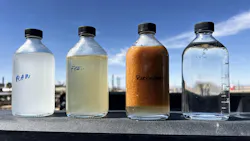
As the global energy system evolves, the intersection between water, energy and digital infrastructure is becoming more visible. Rapid growth in artificial intelligence (AI) and cloud computing is driving a major expansion of data centers. These facilities require significant volumes of electricity and water, particularly for cooling. At the same time, oil and gas operations generate vast quantities of produced water, much of which remains underutilized.
These parallel trends are pushing industries that have traditionally operated independently to rethink how water is managed. Produced water is no longer viewed solely as a waste stream but as a potential resource that can be treated and reused across sectors.
In the near term, the expansion of AI infrastructure is expected to increase demand for power generation, with natural gas likely to play an important role in meeting that demand. As energy production rises, the volumes of produced water associated with it will also grow. This dynamic presents an opportunity. If treated effectively, produced water could support industrial operations, provide cooling water for data centers, supply agricultural irrigation and potentially supplement municipal water supplies in water-stressed regions.
In several producing regions, produced water volumes already exceed available freshwater resources. This is increasing interest in treatment systems capable of converting produced water into a reliable industrial water source. However, turning produced water into a reliable resource depends on one critical factor: “consistent pretreatment.”
The growing importance of reliable pretreatment
Produced water is inherently complex. It often contains emulsified oil, suspended solids, bacteria and high salinity levels. Feedwater conditions can fluctuate significantly due to changes in production conditions, sometimes shifting rapidly from relatively stable streams to heavily contaminated water containing emulsified oil and fine solids. These variations can create operational challenges for downstream treatment processes.
Conventional pretreatment technologies such as dissolved air flotation (DAF) and nut shell filter (NSF) systems can perform well under stable conditions but often struggle during feedwater upsets. These systems often require multiple chemical adjustments and close operator monitoring to maintain performance. When oil emulsions or solids break through the system, downstream technologies can quickly become compromised. For sensitive processes such as mineral recovery or advanced desalination, even small amounts of contamination can disrupt operations and reduce system efficiency. This has shifted industry attention toward pretreatment systems that can provide a consistent barrier against contaminants, even when feedwater quality fluctuates.
Full-scale industrial deployments of ceramic ultrafiltration systems have consistently demonstrated this approach. Using silicon carbide membranes in a highly automated cross-flow configuration, these systems remove free oil, emulsified oil, suspended solids and bacteria in a single pretreatment step while maintaining stable output quality. Because the membranes are chemically inert and highly durable, they can withstand aggressive cleaning procedures and operate reliably under harsh conditions.
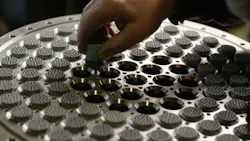
Across a wide range of industrial installations, these systems function as a single pretreatment barrier upstream of desalination or mineral recovery processes. Their ability to deliver stable water quality continuously with minimal operator attention helps protect downstream systems from process upsets in continuous, real-world operations.
Maintaining stable water quality during feedwater variations is particularly valuable when integrating multiple treatment processes within a broader water reuse strategy. Robust pretreatment helps protect downstream systems and support consistent performance across the treatment chain.
Highly automated operation plays a critical role in ensuring consistent pretreatment performance under variable feed conditions. Advanced ceramic ultrafiltration systems are designed to respond dynamically to fluctuations in feedwater quality, adjusting operating parameters in real time without requiring continuous operator intervention, allowing stable output to be maintained even during sudden feedwater upsets. Remote monitoring and control capabilities further enhance operational reliability, enabling systems to be supervised and optimized without constant on-site presence, while protective operating protocols ensure that membranes remain in operation during challenging conditions. At the same time, integrated alarm systems notify remote operators of any deviations, reducing operational complexity while supporting continuous, stable performance. These capabilities have been proven across full-scale industrial deployments operating under continuously varying feed conditions.
Enabling desalination and mineral recovery
The importance of pretreatment becomes even clearer when considering emerging downstream technologies. Desalination continues to play an important role in addressing water scarcity, and several emerging membrane technologies are now being developed to handle increasingly high salinity streams.
Thermal desalination technologies are deployed in high salinity environments where conventional seawater reverse osmosis (SWRO) systems are unable to operate effectively. While thermal processes are generally more tolerant of variable feedwater conditions, they are also associated with significantly higher energy demand, which can limit their broader adoption. At the same time, a new generation of ‘beyond-RO’ technologies, including osmotically assisted reverse osmosis (OARO), forward osmosis (FO) and vacuum-assisted membrane distillation (VMD), alongside advancements in thermal systems, are beginning to challenge traditional approaches to desalination.
Across all these technologies, consistent, high-quality pretreatment remains critical. Membrane-based systems are highly sensitive to oil contamination, suspended solids and biological activity, all of which can disrupt performance and reduce efficiency. Even thermal processes, while more robust, benefit significantly from stable pretreatment to maintain operational efficiency. As interest in mineral recovery from produced water continues to grow, the ability to deliver reliably treated feedwater becomes increasingly important, as fluctuations in water quality can interfere with extraction chemistry and reduce recovery yields.
For many mineral recovery and desalination projects, pretreatment costs are emerging as a decisive factor. Industry discussions suggest that pretreatment costs around $0.20 per barrel are considered highly competitive, highlighting how strongly economics influences the commercial viability of many mineral recovery projects.
Technologies capable of operating at lower operating expenditure are therefore attracting attention. In some advanced ceramic membrane systems, operating expenditure can fall below $0.02 per barrel while TOTEX targets below $0.10 per barrel are viewed as attractive for large scale projects.
Ultimately, the ability to deliver stable and high water quality — even during feed upsets — at low operational expenditure may determine whether many projects reach commercial viability.
Cross-sector collaboration will define the future
Beyond individual technologies, the broader shift taking place in the water sector is the growing need for cross-sector collaboration. Energy producers, water treatment companies, desalination specialists and digital infrastructure developers are becoming more closely connected through shared resource challenges. Data centers require reliable cooling water. Oil and gas operations generate large volumes of produced water. Agricultural regions face mounting water scarcity. These overlapping pressures are creating opportunities for integrated water reuse strategies. In regions such as Texas, there is already active discussion around advancing produced water treatment to standards suitable for broader reuse, including municipal and potentially potable applications.
For such systems to function effectively, reliability is essential. Industrial operators must be confident that water treatment systems can operate continuously with minimal operator intervention while delivering consistent output quality. Many modern pretreatment systems are therefore designed for automated operation with limited operator involvement, helping maintain stable performance over extended operating periods.
Operators are also increasingly prioritizing technology maturity and deployment experience. Systems with established industrial track records and proven performance at commercial scale, which can be engineered for different treatment capacities, tend to attract greater confidence from operators planning large scale produced water reuse projects.
Technologies capable of producing high-quality brine streams while remaining resilient to feedwater fluctuations are gaining attention. Systems that combine advanced membrane materials with proven, full-scale deployment, automated operation and scalable design are beginning to demonstrate how produced water treatment can move beyond waste management toward resource recovery.
As water scarcity intensifies and industrial demand continues to grow, the ability to treat challenging water streams reliably and cost-effectively will become increasingly important. Produced water was once viewed primarily as a waste disposal challenge. Today it is being reconsidered as a resource within broader industrial water management strategies.
About the Author
 David Nicolas Østedgaard-Munck
David Nicolas Østedgaard-Munck
Business Development Manager, LiqTech International Inc.,
David Ø.-Munck is business development manager at LiqTech International, where he leads commercial development and global partnerships for ceramic membrane crossflow systems in produced water treatment and industrial applications. David holds a PhD in Chemical Engineering with specialization in membrane science. His expertise includes process engineering, ceramic crossflow ultrafiltration, fouling control and holistic system optimization under demanding operating conditions. At LiqTech, David focuses on advancing Silicon Carbide membrane technology in full-scale deployments, enabling operators to achieve zero-emission, low-maintenance and high reliability produced water treatment with proven field performance.