Q&A: Identifying an optimal thickening solution for tomorrow’s lubricating greases
Key Highlights
- Lithium hydroxide is facing regulatory and supply challenges, prompting the industry to seek alternative thickening agents for greases.
- Calcium-based thickeners, such as calcium sulfonates and anhydrous calcium soaps, are being explored but have limitations in low-temperature performance and thermal stability.
- The innovative HybriCal hybrid system combines anhydrous calcium and calcium sulfonate to match lithium grease performance while offering safety and sustainability benefits.
- Industry efforts include developing greases with lower environmental impact, improved safety profiles, and compliance with evolving chemical classifications.
- Ongoing research focuses on diversifying thickener options like diurea and hydrated greases to meet the demands of modern industrial applications.
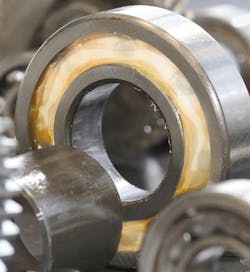
Industrial lubricating greases play a critical role in the reliability and functionality of industrial operations around the world, where they are responsible for the robust protection of critical equipment and machinery.
Consider: approximately 90% of all roller element bearings — a critical component in heavy and specialized machinery, conveyor systems, gearboxes and more — are lubricated by these greases. The products prevent premature wear, enabling such equipment to operate reliably over the long term. Without them, premature failure and other major consequences would be inevitable.
With these high stakes in mind, it is worth investigating a critical issue facing global grease supply. Lithium hydroxide has for many years served as a key ingredient in lubricating greases, providing thickening properties that enable greases to perform their roles. Lithium and lithium complex greases feature optimal thickening properties, good compatibility with a variety of base oils and other chemical additives, and they offer suitable performance for long-term use in a variety of industrial applications.
However, lithium has faced significant supply volatility in recent years and has sent the global grease industry searching for reliable alternatives. Processing recently discussed the situation with Dr. Gareth Fish, technical fellow for Lubrizol and a veteran of the grease industry, about the challenges of identifying alternatives and the performance characteristics of an optimal solution.
Processing: Grease manufacturers are seeking lithium alternatives. What are some of the driving factors behind this trend?
Dr. Gareth Fish: There are several influencing factors. The first and most pressing issue is that lithium is expected to face more stringent labeling and classification in the coming years. Last year, the European Chemicals Agency identified lithium hydroxide as a reproductive hazard with a Category 1A H360FD and a lactation hazard H362. Carcinogenic, mutagenic or toxic to reproduction (CMR) substances are eligible for REACH substance of very high concern (SVHC) listing.
This classification is not official yet, but those in the industry expect it to be implemented in 2026, and it will have a major impact for grease makers. Mandatory 1A classification means lithium hydroxide meets the European Union’s generic consumer restriction and thus cannot be present in finished greases at ≥ 0.3wt% if they are to be sold for the consumer market. Some bearing and equipment manufacturers have signaled their intention to stop specifying lithium greases.
Elsewhere, in Japan, lithium hydroxide is classified as a dangerous and deleterious substance requiring special handling conditions. Comparable Korean regulations are expected to be implemented in the coming years as well. All of this makes lithium greases challenging to work with in major global markets.
Processing: Beyond those impending classifications, we know that lithium supply has been unstable in recent years. Can you describe to us some of the factors that have led to lithium supply uncertainty in the grease market? What has caused the disruptions?
Dr. Fish: Many are probably familiar with the fact that lithium is used in electric batteries, which have been in increasing demand due to the proliferation of cell phones, laptop computers and battery electric vehicles. Prices for lithium initially spiked in 2015 and subsequently created some supply instability for grease manufacturers, leading them to seek out alternatives.
As of 2025, the market has grown more stable. Growth of electric vehicles has slowed somewhat, leading to a lithium oversupply that has driven prices back to reasonable levels. However, forecasters expect that demand will once again outstrip supply as soon as 2026.
Processing: So, what are the alternatives? What have grease manufacturers been substituting for lithium?
Dr. Fish: That is the tricky question. Grease formulators have largely gravitated toward calcium-based thickeners. Some of these options have long been available, but none have yet overtaken lithium because none of them have historically maintained a comparative cost and performance profile.
For example, calcium sulfonates represent the fastest-growing thickener type in North America, with volume having increased by 50 wt% over the past ten years, but not only as a result of lithium market instability. There is good reason for this: Calcium sulfonate greases maintain excellent inherent antiwear performance and corrosion resistance as well as good thermal stability. But again, there are drawbacks. Compared with lithium greases, calcium sulfonate greases have a much higher thickener content and as a result they demonstrate poorer low-temperature performance and suboptimal pumpability, and for this reason, are not widely accepted in automotive applications.
Another thickener that has gained some traction as a result of lithium supply instability is anhydrous calcium soaps, which make up approximately 10 wt% of the global grease market. Anhydrous calcium soaps are cost-effective and feature very good inherent water resistance performance. However, greases thickened with anhydrous calcium demonstrate only mediocre thermal stability. This limits their upper temperature applicability in (100°C) use cases.
Another drawback is that anhydrous calcium soaps can cause significant foaming during the manufacturing process. Failure to maintain the reaction below a precise temperature, even by just 10°C, can lead to damaged production equipment. That Is a risk most manufacturers would like to avoid.
Elsewhere, there are hydrated calcium soaps that are cost-effective but lack performance. Greases thickened with hydrated calcium soaps exhibit extremely poor thermal stability, making them unsuitable for most industrial uses. Further, they require glycerol and water to thicken, which can lead to incompatibility with many common additives included in typical industrial grease formulation. As such, greases thickened with hydrated calcium soaps make up just about 4% of the global grease market.
Finally, calcium complex greases are another option. These are also cost-effective and maintain good inherent thermal stability and better antiwear compared with the previously stated options. However, drawbacks include manufacturing difficulties, premature age hardening and a grainy finished texture.
Processing: That sounds like a real challenge for grease formulators. Are there other potential options that are being pursued?
Dr Fish: Given that no single calcium-based thickener has proven to be a suitable, one-size-fits-all alternative to lithium, we have focused our research on combining the performance benefits of some of these options while eliminating the drawbacks.
That has led to our development of a hybrid system — HybriCal grease thickener — based on the combination of anhydrous calcium and calcium sulfonate thickeners. Testing has demonstrated performance that matches lithium in terms of broad thermal stability and mobility under cold temperatures. It also features an improved health and safety profile, without risk of the same classification and labeling challenges that lithium is facing.
Further, the system meets key industry specifications and can achieve high load designations for severe applications when properly additized with the appropriate performance package. The result is a cost-effective alternative to standard lithium and lithium complex greases, offering ease of manufacturing, as well as significant sustainability benefits. These include up to a 30% global warming potential (GWP) production benefit and a 7% GWP raw materials benefit when compared to lithium complex greases, according to our calculations.
Processing: Are there any other industry challenges that your team is working on?
Dr. Fish: We are continuously working to help grease professionals overcome their challenges. Right now, we are also focused on diurea thickeners, hydrated greases, grease additives that are compliant with the latest chemical classifications and labeling, and grease technologies that reduce environmental impact and improve sustainability. It is our mission to deliver science-based technology that the industry can depend on.