Designing effective remote monitoring systems for process manufacturing operations
Key Highlights
- Remote video monitoring extends visibility beyond the plant floor, supporting faster incident investigation, quality assurance, and maintenance planning.
- Choosing the right cameras involves considering environmental factors, placement, lighting, and specific operational needs to ensure reliable performance.
- A flexible, scalable software platform with strong access controls and integration capabilities is crucial for effective remote monitoring management.
- Partnering with experienced industrial video specialists ensures tailored system design, appropriate technology deployment, and future-proof scalability.
- Designing remote monitoring as part of the operational infrastructure allows teams to collaborate seamlessly, reducing response times and operational risks.
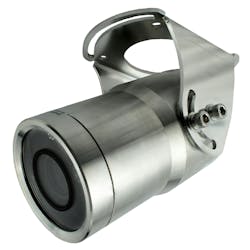 Opticom Tech’s CC06 is an example of a durable stainless steel camera used in processing facilities.
Opticom Tech’s CC06 is an example of a durable stainless steel camera used in processing facilities.
Processing facility monitoring is no longer confined to a single control room. Corporate offices may be hundreds of miles away, supervisors split time across multiple sites and maintenance specialists and equipment vendors increasingly support multiple plants across their region.
As operations have become more distributed, expectations around visibility have changed. When something goes wrong — or when performance needs to be evaluated — waiting for the right person to be physically present is often no longer practical. This shift is turning remote video monitoring into a foundational operational tool.
Remote monitoring goes beyond watching a live feed. When designed well, it supports faster decision-making, better troubleshooting, improved quality control and more efficient collaboration between internal teams and external partners. When designed poorly, it becomes underused, unreliable or restricted to a narrow set of users — an expensive data storage project.
Understanding what makes remote monitoring effective in processing environments allows facilities to adapt to the new distributed workforce trends.
Why remote visibility matters more than ever
Processing facilities rely on tightly coordinated systems, where small issues can cascade into downtime, waste or safety incidents. Historically, many facilities depended on physical presence — operators walking the floor, supervisors peering into equipment or even mirrors mounted inside machines — to understand what was happening on the line.
Those approaches still exist today, but they are increasingly insufficient. They provide only momentary snapshots and are useless when a problem needs to be reviewed after the fact or explained to someone who was not onsite.
Remote video monitoring changes the equation by making real-time and recorded visibility accessible beyond the plant floor. Corporate leadership can observe operations without travel. Maintenance teams can assess conditions before stepping into hazardous or confined areas. Vendors can see their equipment in operation instead of relying on verbal descriptions or photos taken after an issue occurs.
This shift is extending reach and efficiency for teams that are stretched thin, trying to do more with less.
Choosing the right cameras for each environment
One common misconception is that you can buy one type of camera and use it all throughout a facility. But industrial operators often have different priorities in different areas.
Durability matters, but many processing environments don’t need cameras built for mines or sawmills. They need to select the right camera for each specific application rather than defaulting to a one-size-fits-all approach.
Key considerations include:
- Field of View and Placement: Cameras must be positioned to clearly show critical machine components, material flow or operator interaction points.
- Environmental Factors: Cleanrooms, daily washdowns, temperature extremes and humidity all impact the type of camera that will work best (and last longest).
- Lighting Conditions: Glare, shadows and reflective surfaces can degrade visibility if not accounted for.
- Resolution and Frame Rate: Fine details matter for quality control and troubleshooting but are less important for traffic monitoring.
- Mounting Flexibility: Cameras often need to be installed in tight or unconventional locations.
- Recording vs. Live-only: Some applications may only be checked via recording, while others may require real-time monitoring.
In many cases, cameras replace or enhance mirrors, manual walkthroughs and indirect viewing methods, while also adding the ability to review footage later.
Practical uses for remote monitoring
When video monitoring is integrated into daily operations, its value quickly extends beyond security, basic oversight or checking a compliance box.
Incident investigation
Recorded video allows teams to review what actually happened after an incident, rather than relying on assumptions, eyewitness recollection or incomplete reports. This can reduce downtime, clarify root causes and support corrective actions.
Quality control
Remote visibility enables quality assurance teams to review processes without interrupting production. Issues can be identified earlier and standards can be verified across multiple shifts or facilities.
Maintenance evaluation
Instead of sending maintenance staff into the facility to “take a look,” video feeds allow preliminary assessment from offsite. This helps teams arrive better prepared, with the right tools and parts, especially if they’re responsible for large or multi-plant facilities.
Vendor support and troubleshooting
With the right permissions, equipment vendors can view their machines in your facility. When there are issues, offsite support can see what you see and direct you toward a resolution. This reduces travel time, shortens repair cycles, and improves collaboration between facilities and suppliers.
Training and process improvement
Recorded footage can support operator training and continuous improvement efforts by showing real-world conditions rather than theoretical examples.
The role of video software and access control
Cameras alone do not create an effective remote monitoring system. The software platform that manages video access, recording and sharing often determines whether a system is useful or frustrating.
Questions to ask about a potential video management software include:
- Access Control: Do we have full control over who can view live video, recorded footage, or specific cameras?
- Internal vs. External Access: Can vendors or consultants be granted temporary, restricted access without compromising security?
- Ease of Sharing: How quickly can clips be exported or shared during an investigation?
- Integration with Existing Systems: Does the platform work alongside other operational or IT tools already in place?
- Scalability: Can the system support multiple facilities without becoming overly complex?
Facilities that overlook software selection often find themselves limited by rigid permissions, complicated workflows, or systems that only a few people know how to use. In contrast, flexible platforms empower teams across operations, maintenance, quality and leadership.
The value of an experienced industrial video monitoring partner
Remote monitoring systems are rarely “plug and play,” especially in processing environments where visibility requirements vary from line to line and department to department. While cameras and software are widely available, the difference between a system that delivers long-term value and one that becomes underutilized often comes down to who helped design and deploy it.
An experienced industrial video monitoring partner brings more than equipment recommendations. They bring operational context.
Applying the right technology in the right places
Not every area of a processing facility needs the same type of equipment. Experienced partners understand when rugged cameras are needed vs. when commercial ones will do, where thermal and fire monitoring would be beneficial, and if compliance requires certain IP ratings. This expertise prevents overspending in some areas while avoiding blind spots in others.
Designing for scale and future needs
Lines change, new equipment is added, and corporate visibility requirements evolve. A knowledgeable partner designs systems that can scale across departments or facilities without forcing a full redesign later. This includes network architecture, camera placement strategies and software selection that won’t become a bottleneck as usage grows.
Software selection that supports control and flexibility
The right partner helps facilities choose video management software that aligns with a facility’s needs, including easy clip sharing, granular access controls for vendors or integration with other operational systems. Just as important, they avoid locking facilities into proprietary ecosystems that restrict future camera choices, software updates, or support options.
Empowering internal teams
A well-designed system should not require constant third-party intervention. Experienced partners prioritize training and system transparency so facility teams can handle basic troubleshooting, camera adjustments and day-to-day management themselves. This reduces reliance on expensive contract labor and keeps operational knowledge in-house.
Avoiding long-term lock-in
Perhaps most importantly, a strong partner helps facilities maintain control over their system. That means avoiding unnecessary dependence on a single camera brand, proprietary technology or exclusive service agreements. Facilities retain the freedom to evolve their system over time — adding new technologies, switching vendors or expanding capabilities without starting over.
In processing environments where uptime, quality, and responsiveness matter, remote monitoring is only as effective as the system behind it. Partnering with experienced industrial video specialists helps ensure that the technology supports operations.
Designing remote monitoring as an operational system
Remote monitoring is most effective when it’s treated as part of the operational infrastructure — not an add-on or afterthought.
That means designing the system around how teams actually work:
- Who needs visibility, and when?
- What decisions depend on video access?
- Which scenarios require recording, and which do not?
- How will offsite and onsite teams collaborate using video?
Most processing facilities don’t need the most rugged equipment available. What they need is thoughtful system design, appropriate camera selection, and software that supports collaboration without friction.
When done well, remote monitoring reduces guesswork, speeds response times and helps distributed teams operate as if they were standing on the floor together, even when they’re spread around the world.
About the Author
Heidi Schmidt, Global Sales Manager for Opticom Tech, has worked in the video technology space for more than 20 years, building expertise in CCTV, industrial video applications, new product development and video network solutions. As a sales leader at Opticom Tech, she helps customers implement robust video monitoring solutions for unique and harsh industrial environments. Founded in 1973, Opticom Tech provides integrated video monitoring solutions for industrial applications, including mines, sawmills, food processing facilities, and more. For more information, visit www.opticomtech.com.