How to successfully implement a flange management program
Key Highlights
- Recognize that flange leaks impact safety, environment, equipment, and finances, making proactive management essential.
- Appoint a dedicated program champion to ensure accountability and continuous focus across departments.
- Secure management commitment to reinforce flange integrity as a core operational standard and allocate necessary resources.
- Develop a structured assembly procedure based on ASME PCC-1 guidelines, complemented by simple, effective field checklists.
- Implement comprehensive training to improve technicians' understanding of gasket sealing, torque application, and bolt conditions, fostering a culture of precision.
- Conduct regular inspections and audits to ensure consistent flange integrity, emphasizing the importance of pressure boundary components.
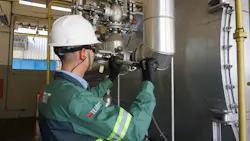
In oil and gas facilities, small leaks are often managed as routine maintenance items: A flange begins to weep, it is tightened and operations continue. Over time, this reactive cycle can shift attention away from addressing the underlying conditions that lead to repeated occurrences.
However, in refining, petrochemical, upstream production and gas processing environments, a single flange leak can escalate into a safety event, environmental violation or production loss.
Implementing a structured flange management program is not simply a maintenance initiative. It is a reliability, safety and compliance strategy. The following guide outlines a practical path for oil and gas facilities seeking to build and sustain an effective program.
Step 1: Recognize the real cost of leaks
Flange leaks affect four critical areas in oil and gas operations:
Safety
Hydrocarbon releases, hydrogen service, HF alkylation units and high-pressure steam systems present significant hazards. Documented industry incidents have shown that flange failures can result in severe injuries, fatalities and catastrophic equipment damage.
Environmental compliance
Fugitive emissions have become a major regulatory focus. Historically, government agencies emphasized monitoring of valve stem leaks. Regulatory focus is increasingly expanding beyond valve stems to include gasketed flange connections in LDAR and consent decree enforcement programs. Facilities may be assessed emissions estimates based on assumed leakage rates across thousands of flanges.
If a plant can demonstrate reduced leakage rates through the use of best available technology, improved flange assembly and documentation, emissions-related costs may decrease significantly.
Equipment and asset damage
Uncontrolled leaks can lead to corrosion, insulation damage, fire exposure and complete unit shutdowns. In severe cases, facilities have required partial rebuilding due to secondary damage.
Financial impact
Beyond repair costs, leaks generate downtime, emergency call outs, reputational risk and regulatory penalties. A single critical flange failure can cost millions.
The first and most critical cultural shift is to recognize that leaks are not routine maintenance events but measurable indicators of mechanical integrity failure that directly impact safety, compliance, reliability and long-term financial performance.
Step 2: Appoint a program champion
In complex oil and gas operations, flange integrity involves multiple departments, competing priorities and constant operational demands. Even in facilities with strong maintenance practices, flange management can become decentralized, with responsibilities distributed across engineering, operations, inspection and maintenance teams.
A structured program benefits from clear ownership. Establishing a dedicated champion ensures alignment, continuity and sustained focus across all stakeholders.
Who should be the champion?
Typically:
- A reliability engineer
- A mechanical integrity engineer
- A maintenance engineer
This individual must:
- Own the program from development through execution
- Advocate to management
- Engage technicians and inspectors
- Drive accountability across departments
While a team may support the effort, there must be one lead responsible for progress. Without clearly defined ownership and sustained accountability for leadership, even well-designed flange management initiatives will lose momentum and fail to achieve lasting cultural and operational change.
Step 3: Secure management commitment
Sustainable flange management programs require visible alignment with leadership. While day-to-day execution occurs at the engineering and field level, long-term success depends on clear expectations, consistent communication and organizational support from plant leadership.
Management commitment reinforces priorities, ensures resources are available and establishes flange integrity as an operational objective rather than a reactive maintenance activity.
Leadership must:
- Communicate clearly that leaks are unacceptable
- Require reporting of flange failures as abnormal events
- Support training and procedural updates
- Approve necessary investment in bolting, tooling, and inspection
When a leak occurs, management should ask:
- Why did this leak occur?
- Was the assembly procedure followed?
- Was the inspection completed?
When leadership visibly reinforces expectations, allocates resources and demands accountability, flange integrity shifts from a maintenance task to an operational standard embedded in the facility’s performance culture.
Step 4: Build a structured flange assembly procedure
A flange management program requires both technical depth and field practicality. The technical backbone of modern programs is ASME PCC-1 – “Guidelines for Pressure Boundary Bolted Flange Joint Assembly”, which provides comprehensive guidance for pressure boundary bolted flange joint assembly. However, a successful plant program must be structured in two distinct layers.
Engineering guideline
This section addresses:
- Gasket selection
- Required seating stress
- Torque calculations
- Bolt stress limits
- Lubrication requirements
- Flange surface condition criteria
This portion supports engineers, inspectors and planners. It provides a technical basis for correct assembly and is particularly critical for younger engineers who may not have access to senior mentorship.
Field assembly checklist
Technicians require simplicity; a 50-page document will not be used in the field.
What is typically preferred is:
- A one-page checklist
- Clear torque values
- Defined bolt tightening sequence
- Visual alignment criteria
- Inspectors’ signoff
Many successful programs use a “flange traveler” form that includes:
- Joint identification
- Gasket type
- Torque value
- Lubrication verification
- Assembly signoffs
- Visual alignment references
The checklist drives consistency, while the engineering guideline ensures technical accuracy.
Step 5: Implement targeted training
Comprehensive training transforms flange assembly from a repetitive task into a controlled engineering process grounded in mechanical principles, shared accountability and measurable performance outcomes. Training is where culture shifts from theory to practice.
Effective flange assembly training in oil and gas should cover:
- How gaskets seal
- Why proper seating stress is critical
- The importance of lubrication
- The impact of stud bolt condition
- How the torque sequence affects load distribution
One of the most powerful training tools is real-time bolt load demonstration equipment. When technicians see how tightening one stud affects adjacent studs, the importance of the correct sequence becomes immediately clear.
Often, solving one persistent leak using proper assembly methodology converts a skeptic into a program advocate. No technician wants repeated midnight call-outs to retighten the same joint. Everyone involved in a joint assembly must understand their role.
Step 6: Inspect and audit for consistent flange integrity
In oil and gas facilities, welds are subjected to rigorous inspection protocols. Dye penetrant testing, magnetic particle testing, radiography and staged weld verification are standard practices. Yet in many plants, the flange joint adjacent to that weld may not receive the same level of scrutiny. A flange joint is a pressure boundary component and must be treated with equal importance.
Inspection requirements should be defined according to service classification, such as:
- Critical service
- Normal process service
- Low risk utility service
Verification may include:
- Flange face condition assessment
- Bolt condition and lubrication confirmation
- Gasket verification
- Torque validation
- Documentation review and sign off
However, inspection alone is not sufficient. The program must also include structured auditing to confirm that procedures are applied consistently across shifts, contractors and turnaround cycles.
The objective is not perfection on a single joint, but repeatable performance across the entire facility. When inspection discipline and periodic auditing work together, flange assembly transitions from a variable-maintenance task to a controlled mechanical-integrity process that significantly reduces the probability of preventable release events.
Final consideration: Building a sustainable culture of flange integrity
Implementing a flange management program in refineries is not a short-term initiative. It is a structured cultural shift that moves an organization from reactive leak response to disciplined leak prevention.
Facilities that succeed do not treat flange integrity as a maintenance exercise. They embed it into engineering standards, inspection protocols, training programs and leadership expectations. Over time, this alignment produces measurable results: reduced fugitive emissions, fewer emergency call-outs, stronger regulatory defensibility, improved reliability and lower lifecycle cost.
Every facility already operates with thousands of bolted flange joints. The difference lies in whether those joints are managed systematically or addressed only when they fail.
About the Author
 Angelica Pajkovic
Angelica Pajkovic
Client Specialist at Teadit
Angelica Pajkovic is a Client Specialist at Teadit, with a particular focus on technical content development. Hailing from Toronto, Canada, she has over six years of experience in the industrial industry. In her previous role as Editor-in-Chief at an industrial B2B Publishing company, she gained a rounded understanding of the challenges, interests, and business relationships in the industrial sector. For more information, please contact Angelica via email at: [email protected].
 Bob Bush
Bob Bush
Sales Engineer, TEADIT
Bob Bush is a Sales Engineer with 37 years of experience in the refining, chemical, and aerospace industries, focused on the reliability of fixed and rotating equipment. He spent 21 years at Valero, where he served as Reliability Manager and Fixed Equipment Engineer, became the company’s flange-and-bolting subject-matter expert, and developed comprehensive assembly programs. He also led the team that delivered the first leak-free turnaround at the Valero Memphis Refinery.