From data silos to unified insight: The new reliability ecosystem for modern manufacturing
Key Highlights
- Modern process manufacturers are adopting integrated reliability ecosystems to unify siloed data and improve asset health monitoring.
- AI, ML, and first-principles models enable predictive and prescriptive maintenance, reducing downtime and unnecessary interventions.
- Seamless integration of sensors, software, and enterprise platforms enhances decision support and operational visibility.
- Organizations are shifting from reactive to proactive maintenance, optimizing workforce and asset utilization.
- A unified data fabric facilitates enterprise-wide asset management, enabling strategic planning and continuous improvement.
Modern process manufacturers face an array of new challenges. Global competition has made it more important than ever to ensure peak efficiency, leading organizations to focus on ways to improve their operations. However, while operational strategies are critical to performance, they are only one side of the operational excellence coin. Operations will always be dependent on effective maintenance and reliability practices to ensure bottlenecks and disruptions do not impact performance.
Many plants already utilize technologies for equipment condition monitoring. As a digital transformation wave swept the asset-intensive and -centric industries, reliability teams invested in sensors and software to reduce manual maintenance rounds, while keeping an eye on the health of their plants.
However, these technologies have historically operated within data silos — particularly when reliability teams purchased multiple standalone systems. This has led to challenges that range from inaccessible data to missed detection of early warning signs, making it difficult to deliver the goal of exceptional reliability across the plant or enterprise.
Today’s most effective teams are updating their maintenance and reliability strategy to bridge this gap, focusing on integrating their technologies into a single reliability ecosystem. Typically, this starts with laying down a solid foundation of asset health monitoring (such as vibration sensors), basic data connectivity and edge analytics. Such a strategy typically delivers early wins and organizational support, while raising a critical question: what’s next?
The answer could be to target true predictive and prescriptive maintenance practices, powered by first principles models, failure mode and effects analysis (FMEA), and artificial intelligence (AI) and machine learning (ML). By bringing these solutions together with a solid data foundation and tying them back to their enterprise asset management (EAM) or computerized maintenance management system (CMMS), organizations can create the most comprehensive reliability program possible.
A wide array of assets
Today’s reliability teams typically run quite lean. Workforce shortages and budget constraints mean teams are often asked to do more with less, yet the complexity of their tasks has only increased.
In addition, today’s asset portfolios are very broad — reflecting a more complex and competitive manufacturing environment. Small teams are often responsible for rotating equipment like pumps and motors — up through compressors and even turbines — and other associated equipment. Moreover, reliability technologies serve many industries (including chemical, energy, refining, mining and more), requiring teams to adapt them to their operating environment.
Ultimately, personnel are responsible for a massive scope of coverage of complex production and automation assets, and they need an integrated strategy to deliver fast results.
Beyond alerts
The complexity challenge is compounded by the fact that many of today’s plant personnel do not have decades of industry experience their predecessors had. As experienced expert personnel continue to leave the workforce, they are replaced by technicians and engineers with less experience, so a critical need for decision support arises.
Many teams find themselves flooded with data. An army of sensors sends a deluge of alerts — particularly during infrequent operations like startups and shutdowns — and teams need a way to identify the most critical of those alerts and prioritize them for the most effective action. They need software that explains why alerts are happening and what they should do next to be as efficient and effective as possible.
The integrated prescriptive guidance available in today’s most advanced reliability software can connect the dots between sensor data, health scoring and failure diagnostics. It eliminates guesswork and enables faster, more confident decisions, but it needs a way to efficiently and effectively access contextualized data to deliver the best results.
Seamless integration matters
An ecosystem of instrumentation, edge software, asset management and high-level analytics all working together to deliver best-in-class results is possible, but not without conscious effort to eliminate silos and free data for seamless mobility from end to end. Isolated systems create duplicated effort, missed context and inefficiencies.
To help organizations navigate this challenge, modern reliability technologies are being designed as part of an integrated enterprise operations platform (EOP). Reliability and maintenance are increasingly part of this EOP approach, with data flowing seamlessly from intelligent field devices, through the edge and into the cloud. To accommodate this capability, asset management, plant- and enterprise-level machinery health software, predictive maintenance software and even AI and ML tools are increasingly designed as native components of the EOP, integrated directly with its data fabric.
The data fabric is key not only to building the seamless data highway necessary to remove silos, but also for the integration of legacy tools, eliminating the need to fully rip and replace existing technology. The most advanced software can capture data from a wide array of tools — new and old — and bring it into the operations platform for cross-functional use. Rich data sets are then available to power device management, machinery health monitoring and industrial AI and ML, working together for maintenance, planning and strategic analysis.
Seamless integration in practice
Many reliability teams employ vibration monitoring solutions using portable devices and wireless vibration monitors. These devices can monitor vibration from assets and deliver easily consumable health information. In addition, the most advanced sensing devices will also provide actionable guidance around the most common issues, helping teams quickly identify the necessary action to improve asset health (Figure 1).
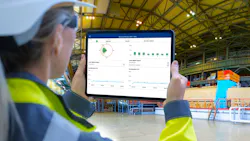
With a solid sensing foundation in place, many teams then turn to machinery health and device management software. These comprehensive software solutions can collect data from sensors around the plant and provide higher-level insights into both the health of the plant as a whole, and the health of individual instruments to ensure readings are accurate. Modern machinery health and device management software integrate seamlessly with sensors in the field, making sensors easy to find, identify and configure (Figure 2).
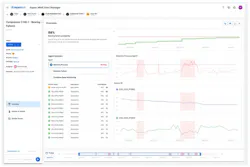
Once the team has seamless monitoring and plant-wide asset health visibility, implementation of AI-powered predictive and prescriptive maintenance software can take the reliability team to the next level. Integrated with machinery health software, AI-powered predictive and prescriptive maintenance software can capture asset health data to be used with first-principles models for process-dependent equipment, and with AI/ML for more complex, instrumented systems. These powerful models deliver deep insight into failure modes and trends to help teams identify problems and intervene in the earliest stages (Figure 3).
The same benefits can be extended enterprise-wide when teams implement enterprise level asset management software. AI-powered predictive and prescriptive maintenance software can integrate with asset management software to consume data from multiple plants for enterprise optimization and oversight. Reliability managers can close the loop by tying the enterprise software to their CMMS/EAM system, driving execution of the prescriptive guidance and remediation work that was identified through their reliability ecosystem (Figure 4).

Each step in bringing these individual modalities together as part of a seamless reliability ecosystem delivers multiplicative benefits. Ultimately, the goal is to eliminate the split between maintenance and reliability, moving from siloed roles to a comprehensive integrated reliability strategy.
Smarter maintenance
When teams move from a siloed, reactive maintenance program to a comprehensive predictive and prescriptive reliability program, they do so by leveraging integrated analytics to reshape maintenance strategies. The results can take many forms, but one of the most obvious examples is a move away from over-maintaining equipment.
For example, many plants using traditional maintenance strategies lubricate pumps on a regular cadence based on manufacturer requirements and known best practices. Typically, those best practices are based on a set of conditions that are unlikely to be identical to a plant’s unique practices. Without insights from modern reliability software, teams cannot tell whether they are over- or under-lubricating their pumps.
With a seamlessly integrated reliability ecosystem leveraging AI and ML models to predict failure, the system can identify when lubrication is truly needed, reducing unnecessary maintenance efforts. More importantly, if a pump begins to deviate from specification before the next scheduled cycle, predictive analytics will help identify the issue and the root cause faster, empowering teams to perform proactive maintenance just when it is needed.
Smarter maintenance in the real world
Integrated, holistic maintenance and reliability programs generate real results around the globe. For one large energy company, significant investments in wireless vibration monitoring and machinery health software delivered results, but improvement had reached a plateau. The reliability team sought to add AI-powered predictive and prescriptive maintenance software with enterprise integration in a seamless solution. The goal was consolidating asset health data for application of AI/ML and FMEA for more advanced optimization of asset utilization.
The team selected an AI-powered predictive and prescriptive maintenance software solution that integrated seamlessly with their existing integrated machinery health solutions to continue building on their EOP vision.
Today, from their EAM software, users can click through to see AI analyses of emerging issues, prioritized to drive efficient response and supported with actionable information to resolve the existing problems. From that same interface they can also check the sensors in their device manager software to ensure the instrumentation is working correctly, confirming that the alerts are valid. The team has even used the information from this solution to identify visibility gaps and add new measurement points, improving insights about asset utilization.
By eliminating silos and bringing data together in a single data fabric, the reliability team can see bigger picture trends, expanding their reliability benefits beyond accuracy into better financial and operational outcomes. In addition, the organization has been able to move plants from reactive maintenance to proactive reliability planning. This has empowered them to station fewer personnel at each plant — which are often in very remote locations — instead centralizing expertise in reliability hubs. Those centralized experts can guide strategy, recommend adjustments to production plans and instruct onsite personnel to intervene before failures occur.
Integrated, AI-driven reliability is the future of productive operations
Today’s plants already have critical pieces of the reliability puzzle in place. Sensors and machinery health software are already delivering value, but in many cases they are disjointed and difficult to use for preventive and predictive maintenance. Integration is the first step to unlocking exponential value by addressing this and related issues.
Once systems are integrated, it becomes much easier to implement AI-powered predictive and prescriptive maintenance software to complete the journey from monitoring and reacting to effective reliability intelligence. A unified data fabric — and an EOP strategy focused on delivering a single pane of glass for maintenance and reliability — delivers clarity, productivity and enterprise-wide optimization. As workforces shrink and expectations for operational performance grow, this type of integrated health strategy will become essential, not optional.
About the Author
 Doug Cooper
 Doug Cooper
Product management director for Emerson’s Aspen Technology business
Doug Cooper is a product management director for Emerson’s Aspen Technology business with more than 20 years in reliability and operations. Doug received a bachelor’s degree in mechanical engineering from Texas A&M University and an MBA from the University of Houston, Clear Lake.
 David Kapolnek
 David Kapolnek
David Kapolnek is Director of Product Management for Emerson’s Reliability Solutions business. In this role since 2020, Kapolnek has led development and deployment of information-based software tools and services that help manufacturers improve effectiveness and efficiency of their work practices. David has held product leadership roles in numerous organizations, with a focus on facilitation of high value user workflows through hardware and software-based systems. He earned a bachelor's degree in ceramic engineering from the University of Illinois, a master’s degree in materials science from UC Berkley, a Ph.D. in wide bandgap semiconductors from UC Santa Barbara, and an MBA from Cornell Johnson Graduate School of Management.