Not all processing flows like liquid: Engineering pneumatic conveying for powders and dry bulk solids
Key Highlights
- Vacuum conveying creates negative pressure, pulling materials into the system, which enhances containment and reduces dust emissions compared to pressure systems.
- Design considerations include material properties, conveying distance, vertical lift, and downstream equipment, ensuring efficient and gentle handling of fragile or abrasive materials.
- Pre-engineered and mobile vacuum conveying options provide flexible solutions for various plant needs, from permanent installations to temporary or multi-line applications.
- Bag dump stations integrated with vacuum systems improve safety, reduce dust, and ensure consistent material feed, supporting sanitation and operator ergonomics.
- Proper system engineering balances airflow, line size, filter area, and controls to prevent material degradation, filter blinding, and equipment wear, ensuring reliable operation.
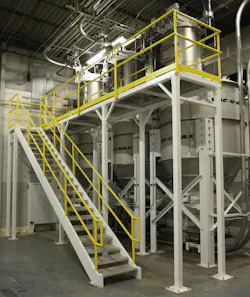 Pneumatic conveying system
In many processing plants, the word “process” immediately brings to mind liquids: pumps, pipes, valves, tanks and flowmeters. But not all processing flows like liquid. Across foods, pharmaceuticals, chemicals, plastics, nutraceuticals, battery, additive manufacturing and general industrial operations, the materials being processed are often dry bulk solids such as powders, granules, pellets, flakes, fibers, food particles, and friable ingredients that do not behave like liquids at all.
Dry materials bridge, flood, segregate, cake, absorb moisture, aerate, degrade, dust, and sometimes present combustible dust hazards. For process engineers, the challenge is not simply moving material from Point A to Point B. The real objective is to move the right amount of material, at the right rate, without excessive degradation, contamination, spillage, dusting, operator strain or interruption to the process.
That is where pneumatic conveying becomes an important automation technology. Pneumatic conveying is the movement of bulk dry materials through an enclosed pipeline using air and differential pressure. Within that broad category, systems are generally designed as vacuum conveying, pressure conveying or a combination of both. Each system type has its place. However, for many plant-floor applications involving powders and granular materials, vacuum conveying provides a clean, contained and highly flexible method of transferring material from bags, drums, boxes, bulk bags, hoppers or process vessels directly into downstream processing or packaging equipment.
Vacuum conveying versus pressure conveying
A pressure conveying system pushes material through the line using positive pressure. This can be appropriate for certain long-distance, high-capacity or multi-destination applications. However, because the conveying line is under positive pressure, any leak in the system can push material and dust outward into the plant environment. Depending on the material, that can create housekeeping issues, product loss, cross-contamination concerns, operator exposure and, when combustible dust is involved, additional safety concerns.
Vacuum conveying operates differently. A vacuum producer creates negative pressure in the conveying line, pulling material toward a vacuum receiver. If a small conveying-line leak occurs in a vacuum system, the leak is inward. Ambient air is drawn into the line instead of material being pushed out into the room. That distinction is one of the major reasons vacuum conveying is often selected for applications where dust control, sanitation, containment and operator exposure are important.
Pressure conveying also typically requires careful attention to air management, relief, filtration, line wear, velocity control and material degradation. If velocities are too high, friable materials can break down, ingredients can generate fines and abrasive materials can accelerate wear on bends and contact surfaces. Vacuum systems must also be properly engineered, but the negative-pressure operating principle provides an inherent containment advantage for many plant-floor transfer points.
How vacuum conveying automates material handling
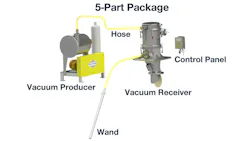
A basic vacuum conveying system includes a material pick-up point, conveying line, vacuum receiver, filter system, discharge valve, vacuum producer and controls. Material can be drawn from a bag dump station, drum, bulk bag unloader, tote, gaylord, hopper, process vessel or floor-level pick-up wand. The vacuum producer creates airflow through the line, entraining the material and pulling it to the receiver. Inside the receiver, material is separated from the conveying air. Filters protect the vacuum source and help maintain system performance. The receiver then discharges material into the next step in the process, such as a mixer, blender, reactor, weigh hopper, packaging machine, tablet press, extruder feed throat or other process equipment.
This automation replaces manual handling steps that are common in dry material processing: lifting bags, cutting and dumping bags, carrying material up stairs, loading mezzanine-mounted equipment, climbing ladders, scooping powders or manually transferring material from drums into process hoppers. These practices can be inefficient, inconsistent and ergonomically difficult. They can also release dust at the point of transfer.
Vacuum conveying allows materials to be picked up at floor level and conveyed up, over and into elevated equipment. The system can route around plant obstacles, reduce manual labor and help keep operators away from dusty or repetitive handling tasks. The result is a cleaner, more controlled material transfer method that supports process uptime and repeatability.
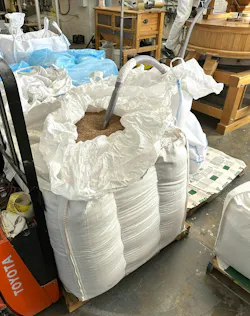
Vacuum conveying is suitable for a range of material types and applications
One of the strengths of vacuum conveying is its flexibility across a wide range of dry bulk materials. Systems can be designed for free-flowing powders and granulars, non-free-flowing powders, pellets, pastilles, flakes, fibers, food ingredients, nutraceutical blends, pharmaceutical powders, chemical additives, plastic resins, carbon black, metal powders, spices, sugar, salt, flour, starches, cocoa, coffee, grains, minerals, detergents and many other bulk solids.
Successful system design starts with the material. Important factors include bulk density, particle size and shape, flowability, moisture content, fat or oil content, abrasiveness, friability, explosibility, temperature, sanitation requirements and whether the material tends to bridge, pack, segregate, rathole, or generate fines. Conveying distance, vertical lift, number of bends, required rate, batch size, available headroom and downstream equipment all affect system design.
Vac-U-Max vacuum conveying systems are engineered around these application variables. For many straightforward applications, a pre-engineered package is the right fit. For more demanding applications, custom systems can be designed around the material, process, controls, sanitation requirements and plant layout.
Pre-engineered vacuum conveying systems
For plants that need a practical, easy-to-install vacuum conveying solution, a pre-engineered vacuum conveying package such as the Vac-U-Max Signature Series can reduce complexity. This is especially useful for common process applications requiring reliable transfer of powders or granular materials without starting from a fully custom design.
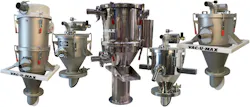
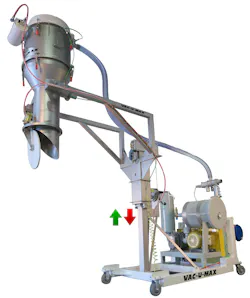
Mobile vacuum conveying
Not every plant needs a fixed conveying system. In many facilities, flexibility is just as important as capacity. Mobile vacuum conveying systems are designed for plants where equipment must serve multiple process lines, temporary campaigns, batch rooms or changing production needs.
A mobile vacuum conveyor can be moved to the point of use, connected to the material source and positioned to discharge into mixers, tanks, packaging machines or other hard-to-reach equipment. Depending on the material and system configuration, mobile vacuum conveying can handle small quantities through rates of approximately 5,000 lb/h (2,268 kg/h) and beyond.
Mobile systems are especially useful where plants want to reduce manual dumping but are not ready to dedicate a permanent conveyor to one process. They can also support product changeovers, pilot production, toll processing, seasonal production and applications where multiple ingredients are conveyed at different times.
Bag dump stations and dust control at the source
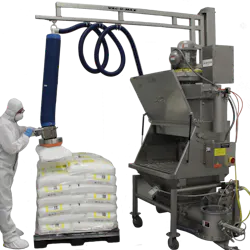
Many dry material processes begin with 25- to 50-lb bags. Without proper equipment, operators cut bags open and manually dump them directly into an open hopper, mixer or process vessel. That may seem simple, but it can create dust clouds, spills, poor ergonomics and inconsistent feed conditions.
A bag dump station provides a controlled point for opening and introducing bagged material into the process. When integrated with vacuum conveying, the bag dump station can feed material directly into a pneumatic conveying line. Designs may include integral dust collection, grating, bag support, access doors, lump breakers, screen decks, magnets, air-control slides, pick-up adapters, vacuum bag lifting devices, and other features depending on the material and process.
By capturing dust at the source and moving material in an enclosed line, a bag dump station with vacuum conveying helps reduce housekeeping demands and improves operator working conditions. It also provides a more consistent feed point for downstream processing equipment.
Vacuum conveyor materials of construction and design
Materials of construction matter in dry bulk solids handling. Systems can be designed in carbon steel, 304 stainless steel or 316/316L stainless steel depending on the application. Food, pharmaceutical, nutraceutical and sanitary applications may require stainless steel product-contact surfaces, sanitary finishes, tool-free disassembly, sanitary clamps, polished surfaces, clean-in-place features, USDA-accepted designs or FDA-compliant components.
For industrial applications, construction may focus on durability, abrasion resistance, electrical classification, grounding, bonding, explosion protection, filter area, valve selection and ease of maintenance. Receiver geometry, cone angles, discharge valve type, filter media, inlet design and line routing all influence performance.
Good vacuum conveying design is not simply a matter of selecting a vacuum source and attaching a hose. The system must balance airflow, material loading, line size, filter area, receiver volume, discharge timing and controls. If the system is undersized, it may not achieve the required conveying rate. If it is oversized or too aggressive, it may degrade material, blind filters or create unnecessary wear. Proper engineering protects the material, the operator and the process.
Vacuum conveying provides cleaner transfer, better process control
Vacuum conveying is not just a material movement method. It is a process automation tool. It helps connect raw material handling to production equipment in a cleaner, more controlled way. It reduces lifting, dumping, stair climbing, open transfers, spills and fugitive dust. It allows material to move from floor-level sources to elevated equipment. It supports batching, weighing, ingredient handling, packaging, blending and continuous production.
For engineers entering the dry bulk solids side of processing, the key lesson is that powders and granular materials require their own design logic. They are not liquids, and they cannot be treated like liquids. A successful system considers material behavior, process goals, safety, sanitation, ergonomics, plant layout and maintenance from the beginning.
Whether the application calls for a pre-engineered conveyor, a mobile vacuum conveying system, a bag dump station, a bulk bag unloader, a sanitary receiver, or a fully custom pneumatic conveying solution, the goal is the same: move dry bulk solids efficiently, cleanly, and safely from source to process.
About the Author
 Doan Pendleton
Doan Pendleton
Doan Pendleton is President of Vac-U-Max.