Q&A: Pros and cons of buying new versus used processing equipment
Key Highlights
- Used processing equipment is often a practical choice for budget-conscious projects or rapid deployment, offering cost savings and shorter lead times.
- New equipment provides higher automation, better performance, and easier compliance with safety and hygiene standards, especially in regulated industries.
- Risks of used equipment include potential non-compliance, hidden costs, and mismatched capacity, which require careful assessment and validation.
- Digitalization enhances the value of new equipment with IoT and predictive maintenance, but refurbished units with retrofit tech remain viable lower-cost options.
 IPP Worldwide
We’ve all heard the adage that a new car loses half (or some other significant fraction) of its value as soon as you drive it off the lot, making buying a used car smarter financially. And with the average price of a new car reaching an all-time high of $50,080 in September 2025 according to Kelley Blue Book, it makes sense that used vehicles make up 2/3 to 3/4 of US car sales annually.
With new industrial processing equipment, depreciation and inflation rates are similar to those of cars, yet the vast majority of equipment purchases in the US involve new machinery, with used equipment making up a larger share in emerging markets such Latin America and Africa.
While the market for used processing equipment is relatively small in the US compared to new equipment sales, numerous well-established used dealers operate in the US, and many original equipment manufacturers (OEMs) also sell used and refurbished products.
Processing reached out to new and used equipment suppliers, the Process Equipment Manufacturers’ Association (PEMA), and PMMI, The Association for Packaging and Processing Technologies to get their perspectives on the pros and cons of buying new versus used equipment for the process industries.
What applications are most suitable for used processing equipment?
Joseph Martorana, president, Ross Mixers, which sells both new and rebuilt mixing equipment: When budgets are tight or shorter delivery timelines are required, reconditioned equipment can be the most practical solution. For many manufacturers, the reduced capital investment makes it easier to move forward with a project, expand capacity, shorten lead times, or test a new product line without committing to the full cost of new equipment.
Ross Gale, vice president, International Process Plants (IPP), which buys and sells used process plants and equipment: I would say that all process equipment with the exception of control systems and packaging lines is viable to buy and repurpose on a used basis. Packaging lines and control systems are harder to repurpose, unless they're really late model.
Colby Bowman, business development manager, Stedman Machine Company (PEMA), which sells both new and used size-reduction equipment: There are cases for both new and used depending on the types of equipment. For example, heavy industrial size reduction equipment that has been properly maintained still has significant value. In this specific case, assessing the value of the used equipment with the help of an OEM partner is imperative.
What are the advantages of new processing equipment?
Jay Anzelmo, vice president, sales & marketing, Cyclonaire (PEMA), which sells pneumatic conveying equipment: With new equipment, clients are buying an assured outcome. When clients purchase a complete material handling system, they are really getting a series of complex subcomponents that are relationally engineered to meet and exceed the required outcome.
Jorge Izquierdo, vice president for market development, PMMI: New equipment is generally attractive in the processing industry because it delivers higher automation, throughput and performance gains, better reliability, and lower total cost of ownership (TCO). With the current limitations in workforce availability and qualifications, processors are actively looking for more automation with strong aftermarket support, improved HMI/PC‑based controls, and digital technologies like predictive maintenance and remote services that older machines typically lack.
Robert Bunting Jr., president and CEO, Bunting Magnetics (PEMA), which supplies magnetic separation, metal detection, and conveying equipment: The biggest advantage of new equipment is certainty. When equipment is built new, it can be engineered to meet current HACCP expectations without workarounds. That includes verified magnetic strength, sanitary design, surface finish, and cleanability. With used or legacy equipment, you are often making assumptions that are hard to defend during an audit.
Are there risks and hidden costs of buying used processing equipment, particularly in highly regulated industries such as pharma and foods?
Rod Henricks, director of sales, Kice Industries (PEMA), which sells industrial air and automation systems: Unless you have the ability in-house to prove that used piece of equipment is exactly the same form, fit, and function as a newly quoted or newly configured piece of equipment, you're potentially committing yourself to spend money without even knowing what the limit might be. If you don't carefully analyze it or know what you're buying, you run the risk that you're going to spend more than what a new piece would cost you.

Bunting, Bunting Magnetics: Used equipment often does not meet current hygienic design or performance expectations. That creates problems during HACCP verification and audits, and it can lead to nonconformances that take time and money to resolve. I also see used equipment misapplied. When a unit is undersized or poorly matched to the process, it becomes a bottleneck or a constant source of operational frustration.
Izquierdo, PMMI: In tightly regulated industries (pharma, medical devices, food), used machinery often carries hidden costs tied to safety, compliance, validation and lifecycle risk. Those costs can be reduced by following strict risk assessment protocols and refurbishment best practices and by working with OEMs.
Gale, IPP: Over the last 15 years or so since GMP regulations have really matured, we have been focusing heavily on ensuring, when we buy equipment from the life sciences or the food industry, that we're getting a good paper trail on the pieces of equipment. We know the previous use, we have the MSDS sheets, we have CAS numbers of the previous products on the chemical side, and that gives our customers a good level of confidence in knowing what they're buying and helps to simplify the validation process.
Does the used equipment market complement or compete with OEMs?
Bunting, Bunting Magnetics: Used equipment competes directly on upfront cost. At the same time, it frequently leads customers back to the OEM when they need help validating performance, correcting sanitary issues, or updating equipment to meet current food safety expectations. The OEMs that do this well do not treat the used market as a threat. They treat it as an extension of the relationship.
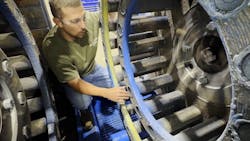
Martorana, Ross Mixers: We view it as an extension of our value chain and a testament to the longevity of Ross process equipment. Our reconditioned equipment allows customers to access Ross mixers at a discounted cost while still benefiting from OEM expertise, high quality engineering, and long-term support. It gives the end user more affordable options without compromising reliability.
Anzelmo, Cyclonaire: It creates a pipeline for retrofits and modernization projects, which can be beneficial in some instances, but it can undercut when buyers underestimate retrofit and downtime costs.
Henricks, Kice Industries: I think we can learn a lot from understanding how the rebuild market works and why customers are using it. It may also give us some different avenues to pursue with a customer that typically has gone down that route. What did we as an OEM miss in the original design, or what nuance did they add to it during the rebuild process that we should maybe make part of our configuration?
Have processing equipment purchasing strategies changed in recent years?
Gale, IPP: We are seeing even larger companies look to open their horizon a bit to find new vendors. Whether that's used vendors or rebuilt options from OEMs, companies are definitely looking to push the envelope to save on CapEx on projects.
Bowman, Stedman Machine: It seems to be very company/industry specific. Ultimately, there does seem to be a shift, with end users putting more value on a trusted, experienced partner that can provide a turn-key process.
Henricks, Kice Industries: I don’t see larger multi-location or multinational customers looking to buy used equipment on the secondary market, but purchasing on the customer side has gotten a lot more organized. They know where they're buying, where they're using, what the turnover rate of equipment may be. So, they're coming to the table with a lot of stats and metrics about what their needs are.
Bunting, Bunting Magnetics: Purchasing has shifted from price-only decisions to risk-based decisions. Audit performance, recall exposure, and customer requirements now carry real weight. Documented equipment is no longer optional.
What role does digitalization (IoT, predictive maintenance, smart controls) play in process equipment purchasing decisions? Is technology widening or narrowing the gap?
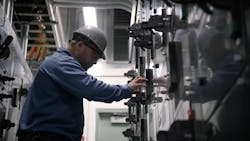
Martorana, Ross Mixers: Digitalization is widening the gap, especially for manufacturers relying on data to manage and optimize production for repeatability in their process. New equipment makes it easier to incorporate controls that improve yield, reduce waste, shorten cycle times, and support faster changeovers and consistency. That said, for customers whose priority is lowering capital costs and who have a stable, well-understood process, reconditioned equipment continues to be very appealing, and it can also be rebuilt with updated controls to provide many of the same benefits as new machines.
Izquierdo, PMMI: Technology increases the value of new machines (built‑in sensors, edge/cloud analytics, remote diagnostics), but it also makes used/refurbished equipment more viable when OEMs add IIoT, predictive‑maintenance services, and secure remote access. The net effect is a bifurcated market: high‑automation/regulatory buyers favor new machines for native digital capabilities, while certified refurbished units with retrofit IoT and OEM support become credible lower‑cost options for others.
With so much focus on sustainability and circular manufacturing, should OEMs be doing more to support a formal secondary market?
Bowman, Stedman Machine: Yes, we support a secondary market for our equipment because assets that have value can still offer viable solutions. Finding an OEM that can act as a partner in determining if the equipment is a good fit for a specific application (testing, refurbish estimates, inspections) is a key factor in deciding if used equipment is a good fit for a project.
Izquierdo, PMMI: Supporting a formal secondary market is both a sustainability opportunity and a smart aftermarket play. OEMs that embrace certified refurbishment, clear documentation, upgrade kits and aftermarket services can capture new revenue, reduce customer risk, and advance circular manufacturing goals. However, it’s important to keep in mind that the major sustainability opportunities come from the operation of the equipment by reducing energy and water use, cutting ingredient and product waste, extending asset life, and helping supply‑chain efficiency.
Martorana, Ross Mixers: Yes, Ross reconditioned equipment supports sustainability by extending the life of durable, heavy-duty machinery and keeping it out of the landfill, while also lowering the cost barrier for end users. By reusing and reconditioning existing equipment, we reduce the demand for new raw materials, which in turn helps to lower the environmental impact associated with sourcing, processing, and transporting those materials through global supply chains.
Bunting, Bunting Magnetics: Sustainability matters, but in food processing, food safety has no margin for failure. One equipment failure can trigger recalls, regulatory action, and lasting brand damage. OEMs can support responsible reuse by offering structured validation programs, certified replacement parts, current manuals, and OEM-led testing. That allows processors to extend asset life without sacrificing safety or audit readiness.