Previewing Pack Expo International 2026 with Timothy “TJ” Knob Jr. of Lee Industries
PACK EXPO International 2026 allows attendees to see the latest packaging and processing equipment and technologies up close and in person. But the show also provides an opportunity to take a broader look at the challenges and trends impacting the industry.
With that in mind, Processing asked PACK EXPO International 2026 exhibitors about the products and technologies they will have on display at the event, along with the biggest processing or operational challenges their customers are facing today. We’ll be publishing their responses in the weeks leading up to the show, which takes place October 18-21 at McCormick Place in Chicago. In this installment, we hear from Timothy “TJ” Knob Jr., chief applications engineer, at Lee Industries.
Q: What products, technologies, or live demonstrations will visitors be able to see at your booth during PACK EXPO International 2026, and which applications or manufacturing challenges do they address?
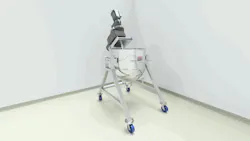
We are bringing our 50-gallon Style D9MSI Kettle and 50-gallon Style D7SI Kettle. Each features a different agitation style:
Vessel with double-motion inclined agitation (D9MSI): This agitation style is specially designed to feature inclined, counter-rotating mixing blades for mixing heavier, high-viscosity products where both thorough mixing and suspension and protection of ingredients is required. Scrape surface agitation is used to enhance mixing, heating and cooling performance. This agitation style is well-suited to higher-viscosity formulations or products with solids and particulates.
Vessel with single-motion inclined agitation (D7SI): Specially designed for mixing liquids with particles or chunks of various sizes and densities, this inclined agitator provides a gentle folding/rolling action to ensure complete mixing and top-to-bottom blending of the entire batch. The uniquely-designed scraper shovel blades and lifting fins carefully lift and fold the ingredients, ensuring thorough mixing while protecting ingredients. This agitation style is better suited to applications where gentler or less intensive agitation is sufficient.
Vessel size: A 50-gallon kettle is engineered for processors who need small-batch flexibility without sacrificing the benefits of commercial-scale mixing, heating, consistency or product integrity. The hemispherical kettle format itself is especially valuable for products where uniform particulate distribution, complete mixing and efficient discharge are difficult to achieve in conventional vertical tanks.
Q: What are the biggest processing or operational challenges your customers are facing today, and how are your latest solutions helping manufacturers improve efficiency, product quality, flexibility, safety, or sustainability?
Manufacturers are being asked to produce more output, more SKUs and more product variation with constrained labor, utilities and floor space. At the same time, sanitation, traceability and quality expectations continue to rise.
A major lesson from the plant floor is that a “capacity problem” is often really a process-flow problem. Bottlenecks can arise at any point in the process and are typically not just a vessel volume issue.
Lee is helping processors address those issues through:
- Application-specific agitation: Helps reduce mixing time, protects particulates and improves batch consistency.
- Greater heat-transfer area and optimized jacket design: Can help shorten heating and cooling cycles.
- Automation-ready features: Includes vessel weighing, temperature sensing and automated ingredient handling, to reduce manual intervention and improve repeatability.
- Cleanability designed into the process: Critical because sanitation time directly affects available production hours.
- Flexible, right-sized batch capacity: Helps avoid automatically moving to the largest possible vessel, especially when product integrity or SKU variety calls for multiple smaller batches.
Q: What technology or industry trends are having the greatest impact on processing equipment design and investment decisions today?
From our engineers’ perspective, several trends are converging:
- More SKUs and shorter production runs: Plants need equipment that can move efficiently between formulations, viscosities and batch sizes rather than being optimized for one product indefinitely.
- Labor constraints and automation: Automation increasingly needs to remove repetitive handling and improve consistency without making equipment more difficult to operate or maintain.
- Traceability and data capture: Batch identification, recipe control, temperature records and process data are moving closer to the equipment level.
- Sanitation and resource efficiency: Water, energy, cleaning time and utility consumption are becoming capital-planning variables, not simply operating expenses.
- Future-ready capital investment: Manufacturers increasingly want modular capacity, scalable controls, flexible vessels and layouts that can accommodate future products and automation rather than locking the plant into today’s requirements.
Q: If a process engineer, operations manager, or plant executive visits your booth, what are one or two key insights, best practices, or innovations you hope they take away from the conversation?
First, baseline the entire process and find the friction before just buying more capacity: Measure where product waits, where labor accumulates, which cleaning cycle dictates the schedule and where heating, cooling, mixing or filling constrains output. Often the highest-value improvement is removing friction between operations rather than simply installing a larger vessel.
Second, engineer both for the product you make now and the products you plan to make next: Involving process-equipment engineers early can prevent expensive scale-up limitations and create much more flexibility over the life of the equipment.
About the Author
 Jesse Osborne
Jesse Osborne
Chief Editor
Jesse Osborne is Chief Editor of Processing, a position he has held since 2019. Prior to joining Processing he served as editor for a publication covering the food manufacturing industry. He can be reached at [email protected].