Processing’s Photo of the Month — March 2026
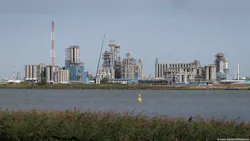
Processing’s first photo of the month is this view of the TotalEnergies Polymers plant in Antwerp, Belgium, taken from across the Scheldt River. The photo was taken by German Simonson, a Lithuanian IT professional whose hobby is industrial photography. Simonson operates the website Industrial Fine Art as well as a Facebook page and an Instagram page under the same name. He also administers an Industrial Fine Art Facebook group that has more than 129,000 members.
While many of Simonson’s photos are more artistic, we chose this one to illustrate the value of simply documenting a facility or process. “While I position myself as a fine art photographer, in reality, perhaps 80% of my photos are basically documentary,” Simonson says. “The photos at that plant are just simple photos. Good quality, but nothing artistic.”
The photo does have a pastoral quality, however, making the plant appear almost like an isolated city on a plain. In reality, the polymers plant is part of a vast complex that also includes a crude oil refinery and an olefins plant. The polymers plant converts ethylene produced by the olefins plant into high-density polyethylene (HDPE) powders and pellets for the plastics industry.
Last spring, the company announced plans to shut down the older of two steam crackers at the site’s olefins plant in 2027, citing a cancelled offtake agreement by a long-term customer. The closure also aligns with the company’s long-term strategy of pivoting away from oil and gas and achieving carbon neutrality by 2050.
Less aligned with that long-term strategy was the announcement this week that TotalEnergies reached an agreement with the Trump administration to redirect nearly $1 billion of investment from East Coast offshore wind leases to oil and natural gas and LNG production in the U.S., along with a pledge not to develop any new offshore wind projects in the U.S.
In a statement, Patrick Pouyanné, Chairman of the Board of Directors and CEO of TotalEnergies said, “These investments will contribute to supplying Europe with much-needed LNG from the U.S. and provide gas for U.S. data center development. We believe this is a more efficient use of capital in the United States.”
The photo also highlights the challenge of accessing processing plants and how facilities can seem distant and mysterious to outsiders. This is why we hope going forward that you, the insiders, will contribute photos for this feature that take us beyond the security fence and help unravel the mysteries behind the industrial processes we all depend on.
Processing’s Photo of the Month is a regular feature where we invite professionals from across the process industries to share compelling images from their operations. Photos can be artistic, technical, historical, timely, or simply intriguing. Please include a couple paragraphs describing what the image shows, where it was taken, and why it matters. Tell us what is happening, what challenges were involved, or what makes this moment worth sharing with the broader industry.
All photos must be submitted by the original owner or with explicit permission from the owner and with minimal digital editing. Basic adjustments such as cropping or color correction are expected, but the image should be an accurate depiction of the subject.
Each month, our editorial team will select one image to feature. It’s an opportunity to highlight your work, your facility, and your perspective, while contributing to a richer visual record of the processing industries.
Great processes deserve to be seen. We look forward to seeing yours. Send submissions to [email protected].