BASF inaugurates Zhanjiang Verbund site in China chemical market
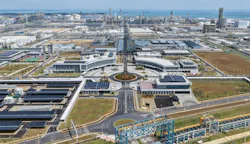
BASF has inaugurated its Zhanjiang Verbund site in Guangdong Province, marking the startup of a large-scale integrated chemical complex in southern China.
According to BASF, the €8.7 billion facility was completed on schedule and below budget. The site covers approximately four square kilometers and represents one of the company’s largest investments in China’s chemical manufacturing sector.
The Zhanjiang complex employs more than 2,000 people and produces a range of basic chemicals, intermediates and specialty chemicals. These products serve industries including transportation, consumer goods, electronics, home care and personal care.
At the core of the site is a steam cracker with an annual ethylene capacity of 1 million tons. BASF stated the unit is equipped with electrically driven compressors powered entirely by renewable energy. The flex-feed cracker can process multiple feedstocks, including naphtha and butane.
The company reported that the site integrates 18 plants and 32 production lines and is currently producing more than 70 products. The facility operates under BASF’s Verbund model, which links production processes to improve efficiency, reduce resource consumption and enhance supply reliability.
BASF said the use of process integration, renewable energy and new technologies can reduce carbon dioxide emissions by up to 50 percent compared with conventional petrochemical sites. The site’s electricity supply is supported by long-term renewable power agreements and investments in offshore wind energy.
The Zhanjiang site is BASF’s seventh Verbund site globally and its third largest, following Ludwigshafen in Germany and Antwerp in Belgium. It is operated solely by BASF and is designed to primarily serve customers in China as part of the company’s local-for-local production strategy.
The company began developing the project in 2018, with initial production starting in phases from 2022. BASF stated the site will support future growth and supply chain development in one of China’s key industrial regions.