New book details Andrew Jenike’s impact on bulk solids flow science
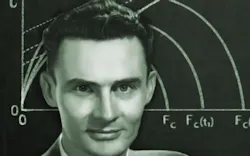
Jenike & Johanson President Emeritus Dr. John Carson has published a new book on bulk solids flow science titled Andrew Jenike: Founding Father of the Science of Bulk Solids Storage and Flow. The book examines the life and work of Dr. Andrew Jenike, whose research established the modern engineering principles used to design bulk material handling systems.
According to the book, Jenike made a pivotal decision on April 16, 1953, to focus his work on understanding and predicting the flow behavior of bulk solids. His research led to the development of widely used methodologies for designing hoppers, silos, feeders, and related equipment.
These contributions include the introduction of mass flow and funnel flow concepts, flow/no-flow criteria, and calculation methods for wall angles and outlet dimensions. These principles remain central to achieving reliable and efficient bulk solids handling across industries.
The book also details Jenike’s career, including his academic work at the University of Utah, where he published influential Bulletins 108 and 123, and the founding of Jenike & Johanson. It further explores his personal history, including his early life experiences and academic training at the University of London.
Carson, who joined Jenike & Johanson in 1967 and worked closely with Jenike, draws on decades of direct experience to provide both technical context and personal perspective on the development of bulk solids flow science.
“Dr. Jenike’s work fundamentally changed how engineers approach bulk solids handling,” Carson said in a statement. “This book is an effort to document both the science and the story behind those contributions.”
The publication highlights the continued relevance of Jenike’s work across sectors such as mining, agriculture, chemicals, pharmaceuticals, and energy, where bulk solids handling remains a critical operational challenge.