Chemical Safety Board finds runaway reaction caused Louisville reactor explosion
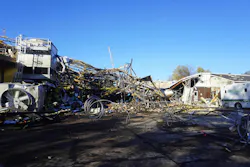
The U.S. Chemical Safety and Hazard Investigation Board (CSB) has released its final investigation report into the November 12, 2024, explosion at Givaudan Sense Colour’s caramel coloring manufacturing facility in Louisville, Kentucky, concluding that a runaway decomposition reaction caused the fatal incident.
According to the CSB, the explosion occurred when a 2,500-gallon reactor known as Reactor 6 experienced an uncontrolled reaction involving a sugar ingredient used in the caramel coloring production process. The rapid pressure buildup exceeded the capacity of the reactor’s emergency pressure relief system, causing the vessel to rupture.
The explosion killed two workers, seriously injured three others, and caused an estimated $40 million in combined damage to the facility and surrounding community. The blast also damaged a nearby control room, which collapsed and fatally injured two employees working inside. Investigators noted that the control room was located about 40 feet from the reactor and was not designed to withstand an explosion.
The CSB found that Givaudan did not recognize the potential for a runaway reaction involving the sugar ingredient and did not fully understand the associated reactive chemical hazards. Investigators determined that the reactor’s emergency pressure relief system was not designed to handle the conditions created by the decomposition reaction. The report states that the relief system would have needed to be approximately four times larger to safely manage the pressure generated during the event.
The incident also affected the surrounding community. Investigators reported that the reactor shell, weighing roughly 2,000 pounds, was propelled approximately 245 feet into a nearby residential neighborhood, while debris traveled up to 400 feet beyond the facility’s property. Local authorities issued a shelter-in-place order covering a one-mile radius around the site.
The facility permanently ceased operations following the explosion and has since been demolished.
In its report, the CSB emphasized the need for manufacturers handling reactive chemical processes to identify hazards, implement effective safeguards, and protect both workers and nearby communities. The agency also highlighted the importance of facility siting analyses for occupied structures such as control rooms to reduce risks from process-related incidents.
The board reiterated previous recommendations that the U.S. Environmental Protection Agency revise its Accidental Release Prevention Requirements to explicitly address reactive chemical hazards. It also renewed calls for the Occupational Safety and Health Administration to expand its Process Safety Management standard to better address such hazards.
Additional recommendations directed at Givaudan’s caramel coloring operations include conducting third-party reactivity testing of sugar ingredients, performing facility hazard analyses, improving emergency pressure relief systems, developing comprehensive process safety management programs, establishing operator alerts, and strengthening training on safe operating limits.
The CSB also urged Givaudan to ensure that any future caramel coloring manufacturing facility is not located in close proximity to residential areas in order to reduce potential risks to surrounding communities.