Fertilizer markets shift from price to supply access after Hormuz disruption
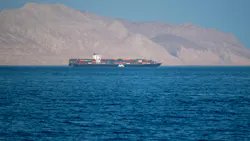
Fertilizer markets are increasingly being shaped by supply access rather than price following disruptions around the Strait of Hormuz, according to an ICIS Insight by fertilizer analyst Chris Vlachopoulos.
The closure of the Strait of Hormuz after military escalation in late February 2026 and the subsequent withdrawal of war-risk insurance significantly reduced Gulf tanker traffic by early March. According to the analysis, the disruption represents the third major fertilizer supply shock in four years, following Russia’s invasion of Ukraine in 2022 and China’s tightening of fertilizer export restrictions.
The latest disruption has exposed structural vulnerabilities across fertilizer markets. Analysts say higher prices no longer guarantee access to supply when logistics and critical feedstocks are constrained.
Phosphate fertilizers face some of the greatest risks because production depends on sulfuric acid and sulfur. The Gulf region supplies about 44% of globally traded sulfur, but sulfur availability is largely determined by oil and gas processing activity rather than fertilizer demand.
The dependence on sulfur is affecting producers worldwide. ICIS noted that even companies with significant phosphate rock reserves and export infrastructure remain vulnerable if they cannot secure sufficient sulfur supplies.
Nitrogen markets have also tightened because Gulf producers account for more than 40% of seaborne urea trade. By comparison, potash has remained relatively stable because production is concentrated outside the Gulf region.
The market shift is also evident in pricing. Rising sulfur and ammonia costs have not been fully reflected in finished phosphate fertilizer prices, suggesting that supply allocation and procurement arrangements are becoming more important than price signals.
At the same time, China has restricted monoammonium phosphate exports through at least August 2026 to protect domestic supplies, reducing the availability of product on global markets.
Governments are responding by pursuing greater fertilizer security. Brazil is working to reduce its reliance on imports and approved a $1 billion revival of its UFN-III fertilizer plant. The European Union has introduced an action plan focused on affordability, market transparency, and strategic autonomy, while legislation introduced in the United States Senate seeks to eliminate tariffs and countervailing duties on phosphate fertilizer imports from Morocco.
According to ICIS, fertilizer is increasingly being treated as a strategic resource rather than a traded commodity. The analysis said future market adjustments are likely to occur through availability and access to supply rather than through price movements alone.
The analysis also warned that supply constraints could gradually reduce agricultural output in regions with limited purchasing power and weaker procurement systems, creating uneven food security challenges worldwide.