New cellulose films deliver plastic-like performance and inherent biodegradability
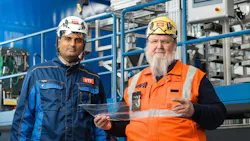
Cellulose packaging films and coatings developed by VTT Technical Research Centre of Finland and LUT University have demonstrated pilot-scale production and could provide an alternative to conventional plastic packaging materials.
Developed through the Films for Future (F3) project, the materials are designed to combine plastic-like performance with improved end-of-life characteristics. The films are inherently biodegradable, while the coatings are engineered to support recyclability in fiber-based packaging systems and biodegradability where required.
The technology processes cellulose as a polymer rather than a fiber, enabling the production of transparent films with mechanical and barrier properties comparable to plastics. Researchers said the development comes as packaging manufacturers face increasingly stringent requirements around recyclability, material composition and lifecycle impacts under regulations such as the European Union Packaging and Packaging Waste Regulation.
The F3 platform was designed to integrate with existing converting technologies and fit within current recycling streams or biodegradation pathways, depending on the application. Processing compatibility has been demonstrated using conventional methods, including thermoforming.
Completed in March 2026, the project demonstrated the feasibility of producing cellulose-based films and coatings across multiple applications. Initial commercial applications are expected in dry food packaging, bakery products and fiber-based packaging requiring transparent barrier layers.
According to VTT, the films achieved oxygen transmission rates below 1 cubic centimeter per square meter per day, comparable to conventional plastics at 23 degrees Celsius and 50% relative humidity. The coatings demonstrated oxygen transmission rates below 0.2 cubic centimeters per square meter per day and a grease barrier rating of KIT 12 in recyclable fiber-based packaging systems.
The project involved collaboration between VTT, LUT University and 34 industrial partners with funding from the European Regional Development Fund. The next phase will focus on scaling the technology toward commercial manufacturing and expanding multifunctional capabilities, including active and intelligent packaging applications.