Eriez releases hopper transition design guide for vibratory feeder performance
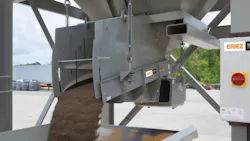
Eriez has released a technical paper outlining engineering guidelines for optimizing hopper transitions to improve the performance of vibratory feeding systems used in bulk material handling applications.
Titled Optimal Hopper Transitions: Design Guidelines for Maximum Hopper-to-Feeder Performance, the paper explains how hopper transition design directly affects feeder capacity, material flow, equipment wear, and long-term reliability. According to Eriez, many feeder performance problems originate at the hopper-to-feeder interface rather than with the feeder itself.
The paper, authored by Clay O'Dana, Global Market Manager-Vibratory at Eriez, examines key design considerations including throat opening dimensions, gate height relationships, hopper wall angles, and structural clearances. It explains how improper throat sizing can increase headload, reducing feeder amplitude and capacity, while inadequate clearances can dampen vibration and contribute to premature equipment wear.
Eriez also reviews common hopper transition configurations, including flat-tray, tubular, and covered tray designs. The paper illustrates how properly engineered transitions enable electromagnetic and mechanical vibratory feeders to operate at their intended stroke and amplitude while maintaining consistent material flow.
According to Eriez, the technical paper is intended to help plant engineers, original equipment manufacturers, and equipment operators identify and resolve hopper-to-feeder design issues before they result in reduced throughput or unplanned maintenance. The guidance is applicable to industries including mining, aggregates, recycling, and food processing.
In 2025, Eriez released a video titled "Hopper Transition Designs for Vibratory Feeding and Conveying," and O'Dana spoke with Processing about the video in a July 14, 2025 podcast episode.