CSB finds tank-wall thinning preceded deadly Washington mill failure
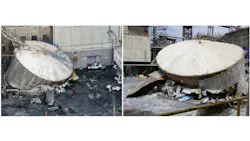
The U.S. Chemical Safety and Hazard Investigation Board (CSB) has released an update on its investigation into the May 26, 2026, catastrophic failure of an atmospheric storage tank at Nippon Dynawave Packaging Company’s pulp and paper mill in Longview, Washington.
The 1.2-million-gallon tank, identified as G Tank, released approximately 900,000 gallons of highly caustic white liquor at about 200 degrees Fahrenheit. The release fatally injured 11 employees and seriously injured three others.
According to the CSB, an external inspection conducted in July 2025 identified significant areas of carbon-steel tank shell that had thinned below the calculated minimum safe thickness.
The inspection contractor recommended an internal inspection and repairs. The report also determined that the tank was not fit for continued service without repairs and identified a high likelihood and consequence of failure.
Nippon Dynawave conducted additional external inspections in October 2025 and February 2026. Those inspections also found substantial portions of the tank shell below the calculated minimum safe thickness.
Despite the inspection findings, G Tank remained in service without an internal inspection or repairs, according to the CSB. The agency is examining why the tank was not removed from service or operated under reduced conditions.
On May 26, a process upset stopped the flow of white liquor from G Tank to the mill’s digestor. However, white liquor continued entering the tank from the mill’s recausticizing process.
The tank level reached approximately 90% full by 6:22 a.m. At about 7:09 a.m., G Tank catastrophically failed, releasing the hot, corrosive liquid into the surrounding courtyard and nearby buildings.
Five additional Nippon Dynawave employees and one firefighter also sustained injuries but did not require inpatient hospitalization.
The CSB continues to investigate the causes and contributing factors. Areas under review include mechanical integrity, inspection and maintenance practices, actions taken regarding G Tank and other atmospheric storage tanks, operating conditions, emergency response procedures, regulatory requirements and industry guidance.