Moleaer patents nanobubble process to improve wastewater polymer performance
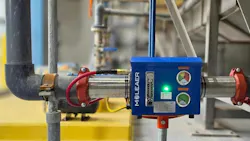
Moleaer has patented a nanobubble process designed to improve polymer performance during wastewater treatment dewatering and help reduce operating costs.
The process introduces nanobubbles into polymer makedown water before polymer blending. The approach is designed to improve polymer activation without changing polymer chemistry or modifying existing dewatering equipment.
Operators can use the resulting performance gains to reduce polymer consumption, increase cake dryness or balance both objectives based on facility economics.
The process installs on the makedown water line and operates without moving parts or interruptions to treatment operations. Moleaer also offers the technology through a performance contract, with customers paying based on results.
Moleaer’s process is used at municipal and industrial wastewater facilities with centrifuges, belt filter presses, screw presses and dissolved air flotation systems.
At Clean Water Services’ Rock Creek Water Resource Recovery Facility in Hillsboro, Oregon, the process demonstrated potential for a 23% reduction in polymer use or a 2-percentage-point increase in cake dryness, from 21% to 23%.
The facility optimized for overall economics and achieved a 17% reduction in polymer consumption while producing slightly drier cake.
“Working with Moleaer’s nanobubble technology has allowed us to meaningfully reduce our polymer consumption in biosolids production,” said Chris Maher, senior operations analyst at Clean Water Services.
At Greer Commission of Public Works’ Maple Creek Wastewater Treatment Plant in South Carolina, nanobubbles were added to polymer makeup water during residuals thickening and dewatering.
Greer found that polymer consumption could be reduced by 30% while maintaining the same cake solids. With a fixed polymer feed rate, varying nanobubble doses increased cake solids by 2 to 4 percentage points, depending on the polymer type and concentration.
“We saw that nanobubbles can improve residuals thickening and dewatering performance while reducing polymer consumption,” said Daniel Fahr, wastewater operations manager at Greer Commission of Public Works.