The future of thermal processing lies in intelligence, not just heat
Key Highlights
- Industries are moving from static heat control to intelligent, data-driven thermal management systems that optimize processes in real time.
- AI agents enhance decision-making by autonomously adjusting operations, leading to energy savings of up to 30% and improved sustainability.
- Predictive maintenance powered by AI reduces downtime and extends equipment lifespan by identifying early signs of failure.
- Adaptive energy management allows industries to leverage real-time pricing and grid conditions, lowering operational costs and emissions.
- Decentralized AI decision-making increases system resilience and streamlines regulatory compliance through automated recordkeeping.
 Industrial AI concept image
Industrial sectors are facing a stark choice: evolve with intelligent automation or risk obsolescence. For decades, industries such as metal processing, petrochemicals, aerospace, food and beverage, and power generation have optimized processes through incremental improvements in equipment and energy efficiency. But a fundamental transformation is now underway, driven by AI agents and real-time data intelligence.
At the heart of this change is a simple realization: thermal processing is no longer just about heat; it is about intelligence. The industries that embrace data-driven thermal control, predictive optimization, and AI-enhanced energy efficiency will lead the next industrial revolution. Those that resist will be left behind.
From heat control to data intelligence
For years, thermal processing, heat treatment, and industrial energy control have focused on precision heat management. The goal has been to minimize waste, maintain product integrity, and comply with ever-tightening regulations. While these remain critical, a new competitive advantage is emerging — not just controlling heat but controlling knowledge.
AI is no longer a futuristic concept; it is already transforming industrial automation. But not in the form of simple chatbots or consumer applications. Instead, AI is arriving as intelligent agents and edge computing solutions capable of revolutionizing how industries manage heating, cooling, and material transformation processes.
Despite this shift, many industries are still relying on outdated paradigms. Data recording remains largely static, with chart recorders, manual logs, and PLC-based systems that store information without deriving actionable insights. Energy efficiency strategies are often reactive rather than predictive. Power-intensive industries such as glass manufacturing, bulk processing, and petrochemical refining continue to follow rigid, fixed schedules instead of using AI-driven, real-time adaptive control.
Regulatory compliance is another area in need of transformation. Industries subject to regulations such as AMS2750, NADCAP, and FDA, often view compliance as a burden rather than an opportunity. The effort required for documentation, auditing, and process verification can be immense, but AI-driven automation offers a way to turn compliance into a strategic advantage rather than just an obligation.
The future belongs to those who integrate intelligence into their heat processing systems. Running a thermal process at the right temperature is no longer enough. Industries must understand when, why, and how to optimize every variable in real time.
AI-driven data Intelligence provides a new competitive advantage in thermal processing
New AI solutions such as Watlow’s Edge Process Management (EPM) platform are designed to bridge the gap between raw data and AI-driven decision-making. Historically, industrial data collection has been separate from process adjustments. Operators have reviewed conditions manually and made changes based on past trends. EPM will transform this approach by actively integrating real-time, precision-calibrated data into AI models that can suggest changes or even dynamically adjust process parameters (under controlled conditions).
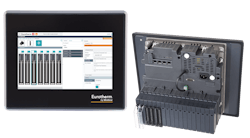
Unlike traditional data collection methods, EPM will have the ability to enable AI agents to optimize thermal cycles, power loads, and energy-intensive operations based on real-time grid conditions, demand fluctuations, and pricing models. This allows industries to shift from responding to failures and inefficiencies after they occur to proactively optimizing performance. AI-powered self-auditing also simplifies compliance, reducing the administrative burden associated with regulatory reporting in aerospace, biopharma, food safety, and defense manufacturing.
The role of AI agents in industrial efficiency
A common misconception about AI in industry is that it will replace people. However, its most valuable role is as an augmentation tool that enhances human decision-making. AI agents do not merely analyze data; they actively adjust processes (under human supervision). Unlike traditional AI models that provide recommendations, industrial AI agents can autonomously fine-tune operations and improve over time through techniques such as reinforcement learning.
Today's manufacturing environments often operate in silos, with separate systems handling process control, energy management, and quality assurance. AI agents unify these functions, creating a more interconnected and efficient operation.
For example, in glass and ceramic manufacturing, traditional systems rely on static thermal schedules with predefined ramp-up and cooling times. By integrating AI-enhanced data feeds into industrial control systems, real-time adjustments can be made based on batch size, ambient conditions, and energy pricing fluctuations. This approach has already shown measurable efficiency gains across multiple industries.
Studies in industrial automation indicate that AI-driven thermal process management can lead to significant energy savings (10-30%) depending on the complexity of the system and the extent of AI integration. While results vary, the trend is clear — facilities that incorporate real-time AI decision-making are reducing costs and improving sustainability.

Beyond efficiency, AI agents are also playing a critical role in predictive maintenance. Equipment failures in thermal processing can cause costly downtime and defective products. Traditional maintenance strategies are either time-based or reactive, meaning equipment is serviced at fixed intervals or only after a failure occurs. AI enables predictive maintenance by analyzing sensor data and using machine learning models to detect early warning signs of equipment failure. This allows manufacturers to plan maintenance in advance, reducing unexpected shutdowns and extending the lifespan of their assets.
Adaptive energy management is another overlooked benefit of AI in industrial settings. Many facilities still operate on legacy energy consumption patterns, using electricity and fuel at fixed rates regardless of demand fluctuations. AI agents, when integrated with real-time pricing data and grid conditions, can dynamically adjust energy-intensive processes to take advantage of off-peak pricing, alternative power sources, and energy storage solutions. In industries such as bulk material processing and petrochemical refining, where energy costs represent a significant portion of operational expenses, AI-driven optimization is helping companies lower costs while reducing carbon emissions.
A turning point for industrial decision-making
As industries adopt AI-driven process management, they are also rethinking how decisions are made. Historically, centralized control rooms have been the nerve centers of industrial operations, where human operators monitored processes and made adjustments manually. AI is shifting this model toward distributed intelligence, where AI agents embedded within machines and systems make localized decisions autonomously, with human oversight.
This shift enables greater resilience, allowing systems to respond more quickly to disruptions such as supply chain interruptions, equipment malfunctions, and environmental fluctuations. The ability to generate, analyze, and act on real-time data is also reshaping compliance reporting. Traditionally, regulatory documentation has been a time-consuming, labor-intensive process. AI-driven recordkeeping automates this function, reducing human error and providing auditors with instant access to traceable, high-accuracy data. This streamlines compliance and significantly reduces the burden on manufacturers.
The future of AI in thermal processing
In an era of increasing global competition, waiting to adopt AI is no longer an option. The most forward-thinking industrial players are already integrating AI agents, edge intelligence, and real-time optimization tools into their operations. As industries accelerate toward decarbonization and energy efficiency, those that embrace AI-driven thermal processing will gain a lasting competitive advantage.
About the Author
 Peter Sherwin
Peter Sherwin
Peter Sherwin is the Director, Strategic Marketing at Watlow, supporting customers across industries that rely on engineered thermal solutions, including energy, industrial processing, medical and analytical technologies, biopharma, and aerospace and defense. He brings extensive global business development experience, particularly in thermal processing, and focuses on turning market and application insight into solutions that enhance customer performance, reliability, efficiency, and safety.