From insight to execution: Why industrial AI’s next breakthrough will happen on the plant floor
Key Highlights
- Industrial AI has advanced from visibility tools to systems that must now focus on enabling timely, coordinated actions on the plant floor.
- Embedding AI into operational workflows reduces the steps needed to translate insights into actions, improving efficiency and issue resolution speed.
- Execution platforms facilitate closed-loop learning by capturing data from actions, leading to continuous operational improvements.
- Emerging agentic systems can autonomously manage tasks like anomaly detection, maintenance scheduling, and inventory checks, reducing administrative burdens.
- Success in industrial AI depends on connecting insights with workflows, empowering frontline workers, and establishing governance for autonomous actions.
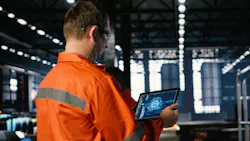
Artificial intelligence (AI) has fundamentally reshaped how industrial organizations observe their operations over the past decade. Sensors now stream real-time equipment data, predictive models forecast failures weeks in advance and advanced analytics platforms surface anomalies long before they escalate into costly downtime events. Despite these advancements, the measurable operational value from these technologies remains inconsistent across asset-intensive industries such as oil and gas, chemicals and manufacturing.
Equipment failures continue to occur, maintenance backlogs persist and operators still spend a significant portion of their time collecting data rather than resolving issues. The core challenge is not a lack of intelligence or data. Instead, the challenge lies in execution. While organizations have become highly capable at generating insights, they have not always been as effective at translating those insights into timely, coordinated action on the plant floor.
This disconnect is becoming increasingly clear to industrial leaders. Historically, AI has been deployed in layers of the technology stack that sit adjacent to, rather than embedded within, frontline operations. Analytics tools produce valuable insights, but those insights often remain isolated in dashboards or reporting systems that require multiple additional steps before action can occur. As a result, organizations are now recognizing that the next phase of industrial AI must focus not on generating more insight, but on ensuring that insight drives execution.
Over the past decade, industrial companies have made significant investments in digital technologies. Monitoring systems track asset health in real time, predictive models identify reliability risks and analytics platforms provide visibility into production performance across entire facilities. However, research consistently shows that many of these initiatives struggle to deliver tangible financial impact. At the same time, the potential economic value remains substantial, with estimates pointing to hundreds of billions of dollars in opportunity tied to improved reliability, efficiency and productivity.
The gap between potential and realized value is not primarily a technical issue related to data science. It is an operational design challenge. Most industrial AI systems were designed to improve visibility and generate insights, but they were not built to ensure that those insights are acted upon effectively. This has created what can be described as an execution gap, where there is a disconnect between detecting a problem, deciding on a course of action and executing that action in a timely and coordinated manner.
To better understand this challenge, it is helpful to look at how industrial digitalization has evolved. The first wave introduced systems of record such as ERP and EAM platforms, which digitized maintenance histories, asset records and work orders. These systems improved visibility into what had already occurred but did not guide how work should be performed. The second wave brought systems of monitoring, including SCADA and control systems, which enabled real-time visibility into equipment performance and process conditions. The third wave introduced systems of insight, where predictive analytics and machine learning models allowed organizations to anticipate failures and identify optimization opportunities earlier than ever before.
While each of these waves added important capabilities, they all share a common limitation in that they stop short of the frontline worker. They document the past, monitor the present and predict the future, but they do not directly guide what should happen next or coordinate the operational response required to resolve issues. This missing layer is now being addressed through what many refer to as the execution layer, which connects insights with the people, processes and workflows needed to take action.
The impact of this gap is most evident in the daily experience of frontline workers. Operators, technicians and safety personnel are responsible for maintaining safe and reliable operations, yet the tools available to them have not evolved at the same pace as analytics systems. In many facilities, operators still rely on manual inspections and paper-based processes, while maintenance teams often receive incomplete information that requires additional time to diagnose issues before repairs can begin. Safety workflows are frequently fragmented, requiring coordination across multiple disconnected systems.
This has led to what can be described as a frontline productivity paradox, where the individuals most critical to operational performance often have the least advanced digital support. Addressing this imbalance requires a shift in how organizations think about technology deployment. Rather than continuing to invest solely in analytics, there is a growing need to integrate intelligence directly into operational workflows so that frontline workers are equipped with the information and guidance they need at the moment of action.
A new category of technology is emerging to support this shift, often referred to as industrial execution platforms. These platforms embed AI directly into frontline workflows across operations, maintenance and safety functions. Instead of delivering insights through separate dashboards, they integrate intelligence into the systems where work is actually performed. Operators conducting inspections can access contextual data and historical information in real time, while maintenance technicians receive diagnostic insights and recommended actions before arriving at a job site. Reliability engineers can analyze patterns across assets more efficiently, and safety teams can manage compliance processes through integrated digital workflows.
The key advantage of this approach is that it reduces the distance between insight and action. When intelligence is embedded within workflows, there are fewer steps required to translate a recommendation into execution. This not only improves efficiency but also increases the likelihood that issues will be addressed before they escalate into larger problems.
Another important benefit of execution-focused systems is their ability to create closed-loop learning. In traditional analytics environments, insights are generated but there is often limited visibility into whether they were acted upon or what outcomes resulted. Execution platforms address this by capturing data from each action taken, creating a continuous feedback loop that improves future decision-making. Over time, this leads to more accurate predictions, more effective maintenance strategies and a more adaptive operational environment.
The impact of this approach is already being demonstrated in industrial settings. Organizations that have adopted execution-focused platforms are seeing measurable improvements in maintenance efficiency, reduced downtime and better coordination across teams. In many cases, these improvements are achieved not by replacing existing systems, but by connecting them and enabling them to function more effectively as part of an integrated operational ecosystem.
Looking ahead, the next phase of industrial AI will likely involve the rise of agentic systems that can take a more active role in coordinating operational activities. These systems go beyond providing recommendations by initiating and managing tasks across multiple steps. For example, an agentic system could detect an anomaly, generate a maintenance notification, recommend a course of action, check inventory availability and schedule the work within an optimal production window. While human oversight remains essential, particularly in safety-critical environments, these capabilities have the potential to significantly reduce administrative burden and allow skilled workers to focus on higher-value activities.
One of the most immediate opportunities for impact lies in maintenance operations. Unplanned downtime remains one of the costliest challenges in asset-intensive industries, with outages often resulting in significant financial losses. Predictive maintenance technologies offer a powerful tool for reducing this risk, but their effectiveness depends on how well they are integrated into operational workflows. Detecting a potential failure is only the first step. Ensuring that the right actions are taken at the right time requires a well-designed execution framework.
As industrial organizations continue to advance their digital transformation efforts, several strategic priorities are becoming increasingly clear. Companies must evaluate how insights are connected to workflows, empower frontline workers with better tools and information and ensure that data from across systems is integrated to provide meaningful context. At the same time, they must establish governance frameworks that define how and when AI systems can take autonomous action while maintaining appropriate levels of human oversight.
Ultimately, the success of industrial AI initiatives will be measured not by the sophistication of the models or the volume of data processed, but by the tangible outcomes they deliver. Reduced downtime, improved reliability, enhanced safety and increased productivity are the metrics that matter most. Achieving these outcomes requires a fundamental shift in focus from insight generation to execution.
Industrial AI has reached a critical inflection point. The technologies required to generate insights have matured rapidly, but the next wave of value will come from ensuring that those insights are translated into action on the plant floor. Organizations that embrace this shift will be better positioned to capture the full potential of their digital investments and drive sustained operational improvement.
About the Author
 Sundeep Ravande
Sundeep Ravande
CEO of Innovapptive Inc.
Sundeep Ravande is the CEO of Innovapptive Inc., where he leads the company’s vision to become the leading provider of connected worker experience software. He holds a Master of Science degree in aerospace and mechanical engineering from the University of Mississippi.