The OT risks process plants normalize until production feels them
Key Highlights
- Brownfield plants often develop hidden OT risks through aging infrastructure, undocumented modifications, and physical-layer issues that reduce network stability without immediate failures.
- Operational instability symptoms, such as intermittent device communication or unexplained process variations, often mask underlying physical and network layer weaknesses.
- Maintaining current, accurate visibility of installed network components and physical conditions is essential for proactive risk management and reliable operations.
- A disciplined approach to lifecycle management—including physical verification, documentation updates, and risk prioritization—can significantly reduce operational and regulatory risks.
- Addressing OT debt before outages or failures involves practical steps like site walkdowns, physical-layer certification, and integrating findings into maintenance and turnaround planning.
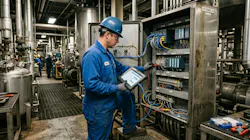
In brownfield process plants, downtime rarely begins with a dramatic network collapse. It starts quietly.
A weigh-scale at the extraction stage of a sugar and ethanol mill drops its tag for four seconds every afternoon, and the operator learns to wait it out. A pasteurizer skid in a food and beverage line loses a datapoint for three minutes and the supervisor assumes the tag just glitched. A CIP cycle runs 12 minutes longer than the recipe specifies and nobody opens a work order because the product still cleared quality. A variable frequency drive on a cement plant auxiliary drops communication every day around peak load — always the same device, never at the same minute, never long enough to trip a controller. I/O behavior becomes slightly less predictable from one campaign to the next. A maintenance team resolves the symptom only to see a similar event return weeks later under slightly different operating conditions. Nothing looks catastrophic — until production begins to feel the accumulated effect.
This is one of the most overlooked realities in process operations: OT network risk builds gradually, in normalized conditions that no longer draw attention because they have become part of the plant’s routine. Aging infrastructure, undocumented changes, weak physical-layer discipline, inconsistent spare-parts planning and incomplete visibility into the installed network can all live quietly inside a process facility for years. Then one day, what looked manageable becomes operationally expensive — sometimes during a turnaround window that cannot be extended, sometimes in the middle of a regulated batch the plant cannot afford to lose.
The issue is not that brownfield process plants are inherently unreliable. The issue is that many of them carry more OT dependency than their current network visibility and lifecycle discipline were ever designed to support.
Why the problem stays hidden
In most process plants, network-related reliability issues do not announce themselves as network problems. They show up as operational instability.
A cement plant’s raw-mill segment experiences intermittent device communication, but the complaint at the plant level is throughput variability shift over shift. A maintenance supervisor in a sugar and ethanol mill notices that troubleshooting time on the juice treatment line has crept up over two harvest campaigns, but the root issue is not in controller logic alone. An engineering team in a food and beverage plant assumes a packaging line is fundamentally healthy because it still runs, even though the physical network has accumulated years of modifications, mixed component conditions, undocumented interventions and lifecycle exposure — including, often enough, a copper run whose measured impedance is so far out of specification that the network sees it as hundreds of meters longer than the drawings say it is.
That is why OT network risk is so often normalized. The symptoms rarely appear where the actual weakness begins.
In process environments this is especially difficult because continuous and semi-continuous operations reward short-term recovery. If the plant gets back online and the batch cleared, the event is considered resolved. But repeated recovery without deeper visibility hides degradation patterns that continue to erode operating margin — and, in regulated industries, can quietly erode data integrity and batch genealogy along with it.
Brownfield plants carry hidden OT debt
Most existing plants do not expand from a blank sheet of paper. They evolve.
New skids are added. Legacy segments remain in service well past their original design horizon. Panels are modified during unit upgrades. Cables are rerouted around new process equipment. Devices are replaced opportunistically during short shutdowns. Temporary workarounds become permanent practice. Documentation lags behind the field. Over time, the plant develops a form of OT debt — not because of poor engineering, but because the operating reality of an industrial facility is always moving faster than its documentation and standardization. When three generations of managed switches from different vendors are running subtly different spanning-tree variants, or a segmented network has quietly converged into a physical loop no one ever drew, that debt is already doing active work against production.
The result is an environment in which critical communications still support production, but visibility into the true condition of the supporting infrastructure is fragmented. The plant knows what it wants the network to be. It may not fully know what the installed network has become.
This matters because process plants are increasingly asking more from OT infrastructure than they did when many of those systems were first commissioned. Expansion, historian integration, remote support, asset health monitoring, advanced process control, alarm rationalization and production optimization all depend on stable, maintainable infrastructure. If the network supporting those goals is aging in the background without disciplined review, the plant is carrying risk whether it measures that risk or not.
The physical layer is still where most problems begin
It is tempting to treat OT reliability as a software, controller or architecture issue. In practice, a large share of persistent process plant problems still begin at the physical layer.
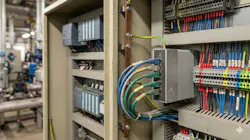
Connector wear, cable stress, improper termination — M12 field connectors mounted during a weekend outage and never verified to specification are an especially common culprit — weak network and system grounding, shielding compromised by later rework, environmental exposure, power-quality issues, vibration from rotating equipment, panel modifications and inconsistent repair practices can all compromise communication long before a failure looks obvious. An SFP whose bit-error rate has been climbing quietly for months will eventually drop a link, but the warning was there to read for anyone who was looking. These conditions rarely produce an immediate outage. They reduce stability margin. That reduced margin is what makes the plant more vulnerable to intermittent faults, harder-to-repeat symptoms and troubleshooting that consumes far more time than expected.
This is especially relevant in process facilities because many operate under demanding conditions: heat, moisture, chemical exposure, vibration, washdown requirements, classified areas, saline environments and aging cabinet infrastructure. A network does not need to fail completely for these conditions to affect plant performance. It only needs to become less predictable.
And predictability is one of the most valuable forms of reliability a process plant can have. It is what allows a reliability engineer to plan a shutdown with confidence, a regulatory team to defend a batch record and a production manager to trust that next week’s schedule is achievable.
Visibility matters more than assumptions
One of the most costly mistakes in brownfield environments is assuming that a network is healthy simply because it is still running.
A process plant can operate for years with limited visibility into current topology, field modifications, device dependencies, physical media condition or lifecycle exposure. That lack of visibility carries a real cost: it slows diagnosis, weakens management of change, complicates turnaround planning and increases the likelihood that small issues get addressed reactively rather than strategically.
Better OT visibility does not mean building an idealized digital twin of the network overnight. It begins with practical discipline:
- A current view of what is actually installed — not what the as-built drawings from the last major project said was installed
- A realistic understanding of which communication paths are critical to process continuity and to regulated data
- A baseline of normal operating behavior, at the segment and device level
- The physical-layer condition of copper runs and M12 field connectors — verified against specification, not assumed — together with the integrity of network and system grounding
- A clear picture of where physical or lifecycle weaknesses are likely to emerge first.
Without that foundation, maintenance teams are often forced to troubleshoot under pressure with incomplete context. That is when production risk becomes most expensive — and when reactive decisions get made that the plant lives with for years.
What a practical reliability baseline looks like
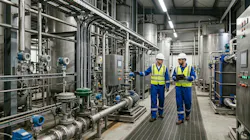
For process plants, a useful OT reliability baseline should be operationally grounded rather than theoretical. It should help engineering, operations and maintenance answer a short list of essential questions:
- What is installed today — not what the drawings say was installed years ago?
- Which communication paths are critical to process continuity, to safety-instrumented functions, and to regulated batch and data-integrity records?
- Where have field changes occurred over time, and were they captured in management of change?
- Which installed components represent the highest lifecycle or supportability risk in the next turnaround window?
- Which communication behavior is considered normal, and what is already trending toward instability?
A baseline should also include physical-layer review, documentation of critical segments, a record of recurring nuisance events that operators have learned to live with and a simple framework for prioritizing corrective action. The goal is not to make the plant perfect. The goal is to make it more knowable — which is the precondition for every form of planned reliability work, from reliability-centered maintenance to spare-parts strategy to meaningful shutdown scope.
Lifecycle discipline is a reliability issue
Another reason process plants normalize OT risk is that lifecycle exposure is often treated as a separate concern from operational reliability. In reality, they are tightly connected.
A network segment may appear stable in day-to-day operation but still represent serious operational exposure if critical spares are scarce, vendor support options are limited, replacement paths are unclear, or installed firmware has drifted beyond what the plant can realistically validate. The same is true when documentation no longer reflects the field, because every corrective action downstream has to start by rediscovering reality before it can change anything.
This is why spare-parts strategy, change control and lifecycle awareness should be treated as part of plant reliability — not as administrative concerns to be handled later. In brownfield process plants, the later these issues are addressed, the more likely the plant will be forced into a reactive decision during an outage, a regulatory audit or an unexpected failure event. That is rarely when the best engineering choices get made, and in a regulated environment it is rarely when the cheapest ones are made either.
Three things to do before the next turnaround
Process plants do not need to wait for a major incident to improve OT reliability. Meaningful progress almost always starts before failure. For a reliability or maintenance leader looking for a concrete way in, three steps are usually achievable within a single planning cycle:
- Capture the installed reality. Walk the critical segments, verify topology against the as-builts and record what has actually been modified since commissioning. Where practical, certify the physical layer — copper runs, M12 field connectors, grounding and shielding — against specification rather than trusting visual inspection. Treat the discrepancies as findings, not embarrassments.
- Identify normalized risk conditions. List the recurring nuisance events operators have stopped reporting, the panels that everyone knows to avoid opening, the legacy switch whose replacement is no longer stocked anywhere in the plant and the mixed-vendor spanning-tree configurations that have been tolerated because they do not trip every day. Each one is a small piece of OT debt.
- Tie OT condition to the next maintenance plan. Push the highest-consequence findings into the next turnaround scope, shutdown plan or reliability review, with an owner and a decision date. If an item cannot be closed there, it at least becomes a visible risk rather than an invisible one.
None of these steps requires new technology. They require discipline, honest documentation and a willingness to name what the plant has been tolerating.
The plants that manage OT risk well are not necessarily the ones with the newest infrastructure. They are the ones that treat OT networks as active production assets — assets that deserve the same visibility, discipline and lifecycle attention as pumps, valves, heat exchangers and instrumentation.
The lesson is straightforward: the OT risks that seem manageable in the background stay manageable only until production begins to feel them. When that happens, the network problem is no longer just a network problem. It becomes an operations problem, a maintenance problem and, often enough, a business and regulatory problem.
A more disciplined approach to OT visibility, physical-layer condition, and lifecycle planning reduces that risk before the plant has to pay for it in lost uptime, lost throughput or a lost batch.
About the Author
Darwin Anastacio Junior
Founder of Solaris Network Solutions
Darwin Anastacio Junior is an industrial network specialist with more than 25 years of field experience in industrial automation, network assessment, troubleshooting, and lifecycle support for brownfield and hybrid OT environments in process industries. He is the founder of Solaris Network Solutions, an independent industrial-network consultancy focused on auditing, troubleshooting, and certifying OT networks in process plants.