Practical factors behind better optical sorting
Key Highlights
- Ensure product presentation is clear and consistent by controlling flow rate and upstream handling to prevent overlaps and clumping.
- Maintain a controlled environment around the sorter by managing dust, steam, lighting, and vibration to optimize visibility and equipment performance.
- Implement routine preventive maintenance, including cleaning optical surfaces and inspecting reject systems, to identify issues early and prevent performance decline.
- Design outfeed and airflow systems thoughtfully to minimize product damage and maintain sanitation, supporting overall sorting accuracy.
- Standardize operating procedures and assign dedicated personnel to manage recipes, monitor performance, and reduce variability in sorting results.
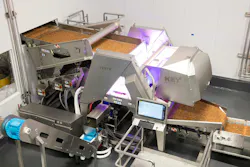
Optical sorting has become an important tool for food processors looking to improve product quality, protect yield and support food safety objectives. As inspection technology has advanced, sorters can evaluate increasingly complex product characteristics and make highly accurate decisions at production speeds. But the sorter itself is only one part of the equation.
In practice, sorting performance depends on the entire operating environment around the equipment. Product presentation, flow consistency, plant conditions, downstream handling, operator practices and maintenance all influence how effectively a sorter can inspect product and separate acceptable material from defects and foreign material.
That distinction matters because a sorter that appears to be underperforming may actually be responding to a problem somewhere else in the process. Before changing inspection settings, processors should look at the broader operation and determine whether the sorter has the conditions it needs to perform consistently.
Start with product presentation
Visibility is fundamental to optical sorting. Camera and laser sensors need a clear view of the product stream to evaluate individual objects accurately, making product presentation one of the most important variables in sorting performance. When product overlaps, one piece can partially or completely hide another, allowing defects or foreign material to pass through the inspection zone without being fully visible.
Flow rate is often where presentation breaks down. When the infeed surges, product separation that was adequate at startup can quickly collapse. Repeated swings between low and high flow can increase overlap and reduce inspection consistency. A steady, controlled incoming stream helps maintain separation while supporting effective throughput.
The handling equipment immediately upstream of the sorter plays a major role in maintaining consistent presentation. In many applications, the sorter uses a wider, faster infeed to spread product across the width of the inspection zone and from front to back. Depending on the product, specially designed shakers, chutes, diverters or other handling methods can further improve separation. If product continues to clump or overlap, processors should investigate presentation before compensating with sorter settings.
Upstream preparation matters, too. Removing fines, slivers, loose peel or other unnecessary material before sorting can reduce visual interference. For products conveyed in water, adequate dewatering before inspection helps prevent excess moisture from obscuring the sorter’s view.
Control the environment around the sorter
Conditions around the sorter can affect performance more than processors may realize. Steam and airborne dust can interfere with visibility or collect on optical surfaces, while direct or reflected sunlight can introduce variability in the inspection area. Processors should control dust and steam at the source where possible and maintain consistent lighting around the sorter.
Vibration presents a different challenge. Equipment installed on mezzanines or near vibration-producing machinery can experience movement that affects mechanical operation or product presentation. Processors should also pay attention to utilities. Compressed air supplied to the ejector system should remain dry, oil-free and properly filtered, while hard water can leave mineral deposits on optical surfaces in systems that use water for cleaning. These details can affect how consistently the equipment operates over time.
Protect product after inspection
Sorting performance does not end when the system makes an accept-or-reject decision. Good product still needs to transition back into the production line without unnecessary breakage or bruising.
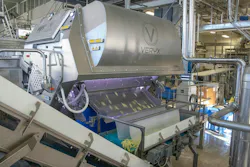
A poorly designed discharge can damage acceptable product after the sorter has done its job correctly. If product exits at speed and strikes a hard surface or chute wall, the impact may cause breakage or bruising. Handling equipment that receives product in the same direction as the sorter discharge can provide a gentler transition, although the best approach depends on the product and line configuration.
Processors should also consider airflow from the sorter’s ejection system. Frequent ejector firing can carry mist or dust toward inspection surfaces if the outfeed does not provide an appropriate path for the air. Over time, buildup can reduce inspection performance or create sanitation concerns. Outfeed geometry and airflow management should be part of line design, not an afterthought.
Standardize sorter operation
Even with good product presentation and a controlled environment, inconsistent operating practices can cause sorting performance to drift. Different operators may prefer different settings, teams may make repeated adjustments in response to normal product variation and recipes can multiply until no one is certain which version represents the validated standard.
Processors can reduce that variability by assigning clear ownership for the sorting system. One effective approach is to designate an in-house sorting lead who develops a deeper understanding of the equipment, the products being processed and the plant’s operating requirements. This person can help manage validated recipes, document procedures, coordinate training and provide a consistent point of escalation when problems occur.
Operators also need clear procedures for creating or modifying recipes, and validated recipes should be backed up. Just as important, teams should avoid unnecessary adjustments. If a recipe previously produced good results and performance suddenly changes, operators should first ask what else in the process may have changed. Flow instability, dirty optics, product overlap or environmental interference may be the real cause.
Maintain performance before failure occurs
Preventive maintenance plays a direct role in sorting accuracy and uptime because performance can begin to decline long before a component fails completely. Regular inspections help processors identify gradual changes before they lead to larger quality problems or unplanned downtime.
Many useful checks require little time. Operators or maintenance personnel can inspect optical surfaces and clean camera or lighting windows when buildup appears. On belt-fed systems, they can check the belt or inspection background for contamination and confirm that the belt is tracking correctly. Reject performance and compressed air conditions should also be reviewed at defined intervals, while ejector valves can be checked during scheduled downtime or product changeovers.
Processors should also validate what the sorter is actually producing rather than rely solely on the absence of alarms. A quick visual review of the pass and reject streams can identify obvious abnormalities, while periodic quality control samples provide a more objective assessment. A sudden change in reject levels deserves investigation because it may indicate a sorter issue, a change in incoming product or another process problem.
Treat sorting as a system
When sorting performance changes, plant teams can start by asking a few practical questions about the broader operation:
- Has the incoming flow shifted?
- Is product overlapping in the inspection zone?
- Are optical surfaces clean?
- Has the plant environment changed?
- Is the correct recipe being used?
- Has routine maintenance been completed?
Working through the conditions around the sorter can help identify the source of a performance issue before operators begin adjusting inspection settings. Those same factors also shape how well the sorter performs from day to day.
The most effective optical sorting operations take a systems approach. Stable flow, effective product presentation, controlled operating conditions, appropriate downstream handling and disciplined operating practices all help the sorter deliver accurate, repeatable results.