The key features that underlie flowmeter accuracy
Key Highlights
- Flowmeters vary in accuracy depending on how closely their output depends on precisely measured variables, categorized as tightly or loosely coupled systems.
- Magnetic and Coriolis flowmeters are examples of tightly coupled meters, offering higher accuracy due to their reliance on fundamental physical principles with minimal inference.
- Vortex, ultrasonic, and thermal flowmeters tend to be moderately or loosely coupled, with their accuracy influenced by multiple imprecisely determined variables such as flow profile, installation conditions, and fluid properties.
- Understanding the concept of coupling helps in selecting the right flowmeter for specific applications, balancing cost, accuracy, and environmental considerations.
- While new-technology flowmeters often emphasize accuracy, traditional meters like positive displacement can also be tightly coupled, whereas variable area meters are generally loosely coupled.
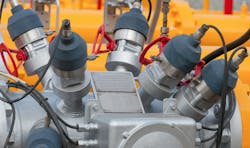
Flowmeters come in many shapes and sizes. This can make the task of selecting the right flowmeter challenging. Generally, end-users make their choice of a flowmeter based on the application it is being used for. However, in many cases, several different types of flowmeters will fit a given application. For example, both vortex and differential pressure (DP) flowmeters do an excellent job of measuring steam flow. Both Coriolis and positive displacement meters are widely used to measure petroleum liquids downstream from a refinery. Turbine, DP and ultrasonic flowmeters are used to measure the flow of natural gas in pipelines. People make choices based on accuracy requirements, repeatability, budget, familiarity with the technology, regulatory requirements and many other factors. Of all these, accuracy and repeatability stand out as especially important.
Since accuracy is such an important technical consideration when selecting flowmeters, it is worth taking a closer look. While flowmeter suppliers may promote their meters on the basis that they are accurate, some flowmeters are more accurate than others. For the most accurate flowmeters, there is a close connection between the operating principle of the flowmeter and the variables it depends on to generate the output. When those variables are small in number and they can be precisely determined, there is a tight connection between the flowmeter’s operating principle and the variables the flowmeter’s output depends on. Such a flowmeter is said to be tightly coupled. A flowmeter is loosely coupled when its output is influenced by variables whose values are not precisely determined by the operating principle.
Some flowmeters are more accurate than others because their operating principle is tightly coupled to mass or volumetric flow. Other require inference, modeling or secondary variables that introduce uncertainty because they cannot be measured with precision. What is “tight coupling” and why is it a key to understanding flowmeter accuracy?
Another perspective on flowmeter accuracy
Many flowmeter discussions focus on electrode materials, bluff body geometry, signal processing, Reynolds numbers, transducer signals, flow profile or installation effects. But beneath all of that lies a simpler, more fundamental truth: Flowmeters differ in accuracy in part because they differ in how much the output value depends on precisely measured values.
The relationship between coupling and accuracy can be viewed as a continuum. In general, tightly coupled flowmeters tend to support higher accuracy, moderately coupled meters tend to support moderate accuracy and loosely coupled meters tend to support lower accuracy. The concept of tight vs. loose coupling can be most easily seen by looking at examples.
Magnetic
Magnetic flowmeters operate directly on Faraday’s Law of electromagnetic induction, in which a conductive fluid moving through a magnetic field generates a voltage proportional to its average velocity. Magnetic flowmeters use wire coils mounted onto or outside of a pipe. A current (AC or pulsed DC) is applied to these coils, generating a magnetic field inside the pipe. The fluid itself acts as the moving conductor, and electrodes mounted in the inner wall of the meter body measure the induced voltage, allowing volumetric flow to be determined independently of pressure, temperature and density.
Magnetic flowmeters require electrical conductivity but relatively few secondary process variables. They are very stable if the pipe is full and the diameter is known. Magnetic flowmeters rely on magnetic field strength, electrode spacing, and induced voltage to determine flow velocity. These are precisely determined variables.
Magnetic flowmeters precisely determine the electromagnetic interaction between the fluid and the measuring field, but their output remains influenced by velocity profile and conductivity distributions that are not precisely determined by the operating principle. Factors that affect velocity profile include upstream piping, elbows, valves and reducers. Swirl and asymmetry shift the effective velocity averaging sensed by the electrodes. Partially conductive fluids or coatings change current paths. Electrode fouling alters the effective measurement volume. Particulate matter such as sand can damage or erode the electrodes, and cause uneven flow. Air bubbles can disrupt the conductivity of the meter. Because these variables are not precisely determined by the operating principle, magnetic flowmeters are moderately coupled.
Coriolis
Coriolis meters measure flow in a completely different way. In Coriolis flowmeters, the measured signal arises from the inertial resistance of flowing mass to transverse oscillatory acceleration imposed by the measuring structure. As finite amounts of mass are transported through the oscillating system, they must acquire and later relinquish transverse momentum. The inertial reaction associated with this momentum exchange produces equal and opposite forces at different locations along the structure, resulting in a measurable torsional response that appears as a time (phase) difference between inlet and outlet motion. This time difference is directly proportional to mass flowrate.
The phenomenon is commonly described using the Coriolis-force terminology because, when analyzed in an oscillating reference frame, the same inertial effects can be represented mathematically as Coriolis terms. This formulation is useful for calculation and calibration, but it is not required as a physical explanation. No continuous rotation of the tube or fluid is necessary; the measurement can be fully understood in an inertial frame as a direct consequence of mass, acceleration, and momentum conservation.
The phase difference ΔT detected between inlet and outlet motion is directly proportional to mass flowrate. There are few intervening variables. The flowmeter uses this phase difference to calculate mass flow. However, there are several other variables involved. Coriolis meters typically have a temperature sensor to determine the temperature of the flowtube. This information is important because flowtubes vary in flexibility, and temperature is one of the key factors in relation to their flexibility. This temperature measurement serves to normalize the mechanical response of the flowtube rather than to infer flow from process conditions. Furthermore, it can be precisely determined. As a result, Coriolis flowmeters are tightly coupled, since the measured signal depends on a small number of precisely determined instrument variables rather than on inferred process properties.
Vortex
Vortex flowmeters are moderately coupled. They operate by measuring the frequency of vortices generated downstream of a bluff body — a phenomenon that depends on velocity but is influenced by flow profile, pipe geometry, Reynolds number, bluff body shape, vibration and installation conditions. Vortex meters just count the vortices without regard to their size, strength, and coherence. They have looser coupling than Coriolis meters because the accuracy of vortex meters depends on a variety of imprecisely determinable conditions. This explains their lower accuracy under real-world conditions. Temperature and pressure readings are required for mass flow measurement, introducing two more variables.
One of the most important developments in vortex meters in the past 20 years was the development of multivariable vortex flowmeters. These meters incorporate a temperature and/or pressure sensor into the meter itself, rather than getting these values from an outside source. The sensors sense the temperature and/or pressure of the fluid. The vortex transmitter can then use these values to compute mass flow. Since multivariable vortex meters were first introduced, a number of other companies have come out with their own multivariable vortex flowmeters. These include ABB, Yokogawa, KROHNE and Endress+Hauser.
While multivariable flowmeters are somewhat more expensive than their single-variable counterparts, they enable users to obtain significantly more information about the process than a single-variable volumetric meter. This additional information can result in increased efficiencies that more than make up for the additional cost of the multivariable flowmeter. Multivariable vortex flowmeters also have the capability of measuring mass flow, and this makes them attractive, especially for steam and gas flow measurement. However, they are not necessarily more accurate than single variable meters that get their input from an outside source. They receive the same input internally rather than externally.
Ultrasonic
A transit time ultrasonic flowmeter has both a sender and a receiver. It uses piezoelectric transducers to send two ultrasonic signals across a pipe at an angle: one with the flow, and one against the flow. The meter measures the transit time of each signal. When the ultrasonic signal travels with the flow, it travels faster than when it travels against the flow. The difference between the two transit times is proportional to flowrate.
Transit time ultrasonic flowmeters are distinguished according to the number of “paths” they have. A path is the acoustic track of the ultrasonic pulse as it travels across the pipe. Many ultrasonic flowmeters are single or dual path, meaning that they send one or two signals across the pipe. Typically, there are two transducers for each path, functioning alternately as sender and receiver.
The coupling of ultrasonic meters varies with the type of ultrasonic technology employed. Transit-time ultrasonic flowmeters provide medium-to-high coupling depending on path configuration. Inline multipath meters come closest to a physically tight relationship between acoustic signal and flow, while clamp-on single-path meters sit near the bottom of the spectrum. Clamp-on meters depend on multiple variables that are not precisely determined. These include meter placement, the width of the pipe wall, build-up in the inner pipe wall and fluid properties. Doppler ultrasonic flowmeters, which rely on reflections from suspended particles, represent the loosest coupling of all ultrasonic technologies. This explains the wide accuracy range observed among ultrasonic flowmeters.
Multipath ultrasonic natural gas meters are volumetric in principle but supported by sufficiently precise determination of density and velocity profile to meet custody-transfer requirements. They compute mass flow via volume and density. Density is determined by precisely measuring pressure and temperature, and by determining gas composition. In addition to these factors, custody-transfer accuracy is achieved through multipath averaging, diagnostic checks and by redundancy. While the measurement output depends on several variables, the values of these variables are precisely determined. For this reason, multipath ultrasonic meters for custody transfer of natural gas are tightly coupled in practice.
Thermal
The operating principle for thermal flowmeters requires heat transfer from the sensor to the flowing fluid. There are two different methods for doing this. One method is called the constant temperature differential. Thermal flowmeters that use this method have two temperature sensors. One is a heated sensor, and the other sensor measures the temperature of the gas. Mass flowrate is calculated based on how much electrical power is required to maintain a constant temperature difference between the two temperature sensors.
The second method is called a constant current method. Under this method, thermal flowmeters also have two sensors: one heated sensor and one that measures the temperature of the flowstream. Power to the heated sensor is kept constant. Mass flow is measured based on the difference between the temperature of the heated sensor and the temperature of the flowstream.
Both methods make use of the principle that higher velocity flows result in greater cooling. Both compute mass flow by measuring the effects of cooling on the flowstream.
Thermal flowmeters precisely determine electrical power and sensor temperature; however, converting heat loss into accurate mass flow depends on several fluid properties that are not determined by the operating principle. These include specific heat capacity, thermal conductivity, density, gas composition and flow regime. In practice, thermal meters are calibrated for a specific gas composition and set of operating conditions, and deviations from those assumptions can introduce error. Flowrate is inferred from heat-transfer behavior, which itself depends on multiple fluid properties that are not precisely determined from the thermal flow principle. As a result, thermal flowmeters are loosely coupled.
Other flowmeters
This “tightly coupled” analysis could be performed on any flowmeter. The flowmeters considered here are all new-technology flowmeters; however, there is no special connection between new-technology flowmeters and being tightly coupled. Some conventional flowmeters are also tightly coupled, such as positive displacement meters. On the other hand, variable area meters are loosely coupled.
It is also important to say that just because a technology is generally considered tightly coupled doesn’t mean that every flowmeter with that technology shares this quality. As we saw with ultrasonic, some high-end ultrasonic flowmeters are tightly coupled, while Doppler and clamp-on ultrasonic meters are loosely coupled. Most insertion flowmeters of any technology are loosely coupled because they typically only measure flow at a single point and because their output is subject to multiple imprecisely determined values. These include temperature, pressure, viscosity, the presence of particles, installation conditions and other variables. Of course, end-users may still choose these meters due to cost considerations, because their accuracy requirements are not high, or because these meters meet their needs in other ways.
About the Author
Jesse Yoder
President, Flow Research
Jesse Yoder, Ph.D., is president of Flow Research Inc. He has 30 years of experience as an analyst and writer in instrumentation.