Improve process efficiency using self-verifying 80 GHz radar level instruments
Key Highlights
- 80 GHz FMCW radar sensors provide higher accuracy and better foam detection compared to traditional low-frequency or ultrasonic sensors.
- Built-in diagnostics such as Heartbeat Technology and RAI enable continuous, in-situ verification of instrument health, reducing the need for disruptive wet calibrations.
- Foam management is improved through radar signals that automatically analyze foam thickness and density, enabling precise control of antifoaming agents.
- Traceable, on-demand verification reports support regulatory compliance and facilitate extended calibration intervals, lowering operational costs.
- These advanced measurement solutions empower process manufacturers to achieve safer, more efficient operations with minimal downtime and enhanced process insights.

Across industries, accurate liquid level measurement is a foundation for efficient process control, improved safety and accurate inventory management. In recent decades, facility operators have increasingly relied on various contactless technologies — such as ultrasonic sensors or low-frequency radars — to monitor the contents of their tanks and silos, meeting these and other obligations.
However, as industrial processes become more demanding, precision matters more than ever. To address this and related challenges, today’s new generation of advanced radar level instrumentation provides contactless convenience with higher accuracy by leveraging 80 GHz high-frequency transmissions, frequency modulated continuous wave (FMCW) physics and sophisticated internal instrument diagnostics.
These modern technologies are transforming passive measurement points of the past into active, self-verifying analytical nodes, providing real-time process insights and traceable, in-situ accuracy verification. As a result, process manufacturers are effectively curtailing costs of routine calibration and instrumentation maintenance, while addressing persistent challenges related to foam generation.
Process media complexities and foam management
Foam generation is an often unavoidable side effect of agitation, aeration and fermentation, common in industries such as wastewater treatment, chemical processing and food and beverage. While it may sometimes appear benign, processors strive to minimize foam formation because it can alter the chemistry of primary processes and obscure liquid level measurement. Furthermore, unchecked foam can cause severe pump cavitation, damage ventilation systems and even cause vessel overflows, resulting in the loss of valuable product, hazardous environmental spills and costly cleanup efforts.
Historically, facilities addressed foaming uncertainty with a conservative and reactive approach by applying time-based dosing schedules to inject anti-foam chemical agents at set intervals, regardless of whether foam was actually present or posed a risk. This methodology frequently resulted in overdosing, adding unnecessary operating expenses, altering the finished product and complicating downstream neutralization processes.
However, modern 80 GHz free-space radar instrumentation addresses these and other challenges by leveraging the physics of high-frequency radar reflection to accurately detect the presence of foam. Unlike many older, low-frequency radar or ultrasonic measurements that are obscured by aerated foam layers, 80 GHz signals pass through foam with attenuation. Electronic algorithms within the instruments automatically analyze reflection amplitude, tracking the point at which a strong reflection occurs to identify the level of the liquid surface beneath.
Using this technology, a single radar instrument can be configured to provide both the standard liquid level signal, sent to the host controller, along with a secondary signal indicating the presence of foam. This data enables closed-loop control and efficient administration of antifoaming agents, ensuring they are used in the precise quantities required to keep foam at bay.
The calibration conundrum and maintenance burdens
In addition to mitigating foam generation, process manufacturers strive to achieve ongoing measurement accuracy. To this end, regulatory bodies and quality standards — such as ISO 9001 and FDA 21 CFR Part 11 — require that instruments are calibrated, inspected and checked regularly.
With older technologies, verifying a radar instrument’s accuracy requires full wet calibration or volumetric comparison measurement. These procedures are highly labor-intensive, requiring removal of the instrument from service — which exposes personnel to potentially hazardous environments, such as toxins, carcinogens or extreme temperatures — and relocation to a certified calibration rig. Even if wet calibration is performed in the process itself by comparing the instrument’s measurement to a precisely dosed reference volume, significant process downtime is required.
Shipping devices to accredited facilities further cut into maintenance budgets and introduced an additional layer of logistical inconvenience. The accumulation of all these factors had process manufacturers seeking out ways to extend the time intervals between disruptive wet calibrations, but without compromising safety or measurement reliability.
The evolving narrative with Heartbeat Technology and continuous diagnostics
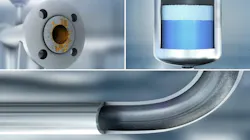
Bridging the gap between regulatory compliance and operational uptime, instrumentation verification technology — such as Endress+Hauser’s Heartbeat Technology, increasingly built into top-tier free-space radar instruments — has evolved to include integrated diagnostic and verification tools (Figure 1). These capabilities provide a suite of self-monitoring and diagnostic functionalities that occur continuously without interrupting the process.
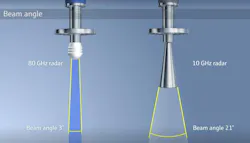
For example, in applications prone to foam, sticky media can leave behind buildup on the sensor antenna. Over time, this buildup degrades the radar instrument's performance, but continuous monitoring of signal strength over time provides early detection. Leading 80 GHz instruments, such as the Endress+Hauser Micropilot family, provide proactive alerting when the interference reaches a configured threshold so maintenance personnel know when cleaning or service is required, preventing sudden and unexpected failure (Figure 2).
Beyond basic diagnostics, these modern systems perform traceable verifications on demand by checking secondary process and instrument variables that correlate closely with level measurement. This information empowers plant personnel to generate tamper-proof verification reports without ever removing the device from service.
Improving radar accuracy
Endress+Hauser’s Radar Accuracy Index (RAI) is a primary example of modern, in-situ diagnostics in action. To fully grasp how RAI verifies measurement accuracy without a physical reference distance, one must understand the internal mechanics of an FMCW radar instrument.
The radar works on a shifting frequency basis over time, emitting a continuous signal that sweeps across a frequency band. When the signal hits a surface and reflects, the difference in frequency between the transmitted signal and the received signal is calculated, which is directly proportional to the distance to the product surface.
Because distance calculation relies entirely on frequency, the basis for all measurements is a high-precision, quartz-based oscillator. This electronic component generates the frequencies and oscillates at a known stable rate, but the oscillator itself must be verified to rule out the possibility of drift due to device aging or environmental stress.
Historically, this could only be determined with a full calibration. However, today’s leading sensors achieve onboard verification using two quartz-based oscillators, enabling the instrument to check the first against the second while the unit is in use, and vice versa.
RAI is the result of this internal comparison. The initial oscillator frequencies are precisely measured in the factory during instrument manufacture, and an RAI value is determined and checked against known frequencies. This creates an RAI fingerprint reference state that is permanently stored in the non-volatile secure memory of the device (Figure 3).
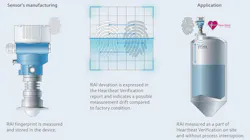
When a technician performs an on-site verification via a digital protocol — such as Bluetooth, HART, Ethernet-APL or IO-Link — the device initiates the RAI test sequence, measuring the current state of the oscillator and comparing it directly to the stored RAI fingerprint. The resulting RAI deviation is expressed in parts per million (ppm), and if the deviation remains within a specified acceptable range, the report confirms the health of the electrical oscillator system, and by extension accurate level measurement.
Actionable insights and regulatory compliance
The calculation and verification methods behind RAI are thoroughly validated and certified by independent third-party organizations. Because the factory fingerprint is traceable to international measurement standards, the field verification is fully ISO 9001 compliant.
If excessively high RAI deviation occurs, it provides a clear indication of potential measurement drift or electronic deterioration, signaling that corrective measures — such as a formal wet calibration or part replacement — are required. Conversely, if the verification is passed, it provides documented and auditable proof that the device is meeting specifications.
According to Current Good Manufacturing Practice (cGMP) regulations, calibration frequency should be based on the criticality of the measuring point. By integrating verified RAI checks into a preventive maintenance strategy, facilities can confidently extend their wet calibration cycles. For example, instead of pulling every device offline annually, plant personnel are often permitted to perform electronic verification at the same interval, or between batches, and only perform physical wet calibrations when a deviation is flagged.
Convenience without compromising quality
The recent advancement of radar level sensing and onboard instrument technology is helping propel process manufacturers beyond the static capabilities of the past. Today’s 80 GHz FMCW radar instruments are intelligent devices that empower plant personnel to solve complex operational challenges, from mitigating aggressive foam build-up to autonomously verifying their own metrological integrity.
Implementing these types of components with built-in capabilities such as RAI is supporting the move away from reactive maintenance and rigid calibration schedules toward dynamic, safe and efficient condition-based calibration and service, providing a foundation for process optimization with reliable data, minimal downtime and continuous quality assurance.