How magnetic level technology enhances safety across critical processes
Key Highlights
- Accurate level measurement is vital for safe and efficient operation across process industries, especially in high-pressure or hazardous environments.
- Traditional sight glasses have operational limitations and safety vulnerabilities, prompting the adoption of magnetic level indicators (MLIs) for improved safety and reliability.
- MLIs provide independent, mechanical level indication that remains operational during power outages and reduces leak risks by eliminating glass components.
- Regulatory standards from ASME, OSHA, NFPA, IEC, and API emphasize redundancy, containment integrity, and layered safety strategies in critical applications.
- Implementing MLIs supports compliance, reduces maintenance, and enhances operator situational awareness, contributing to safer plant operations.
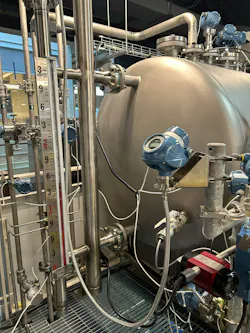
Across the process industries, accurate and reliable level measurement is fundamental not only to efficient operations but also to maintaining safe plant conditions. From hydrocarbon separators and chemical reactors to storage vessels and boiler systems, operators rely on accurate level indication to prevent unsafe operating conditions and protect critical equipment. In high-temperature, high-pressure or hazardous applications, even small measurement errors can quickly escalate into serious operational or safety events. As a result, level instrumentation is increasingly viewed as a key element within broader process safety strategies rather than simply a means of process control.
Major industrial incidents often develop gradually rather than resulting from a single isolated failure. Safety specialists refer to this as “creeping risk,” where minor equipment issues, degraded instrumentation or operational assumptions combine over time until a hazardous situation emerges. In high-risk processes, inaccurate level indication is frequently one of the contributing factors. Low liquid levels can expose equipment to overheating, loss of containment or mechanical stress, while high levels may cause overfills, contamination, carryover or damage to downstream assets. In systems handling flammable, corrosive or toxic substances, these events can also increase the likelihood of leaks, environmental releases or personnel exposure.
The causes are rarely limited to one issue alone. Instruments operating in harsh environments may gradually lose accuracy because of fouling, corrosion, scaling or vibration. At the same time, operators may place increasing reliance on automated systems without independent confirmation of process conditions. When actual vessel conditions no longer match the readings that operators expect to see, unsafe situations can develop unnoticed. For this reason, modern hazard mitigation philosophies emphasize the need for layered protection and independent verification. Facilities therefore increasingly implement multiple forms of level indication and monitoring so that a single instrument failure cannot compromise process safety or operational continuity.
Standards and safety expectations
Industry standards and regulatory guidance strongly reinforce the need for reliable level indication and redundant protection methods in critical applications. The American Society of Mechanical Engineers’ Boiler and Pressure Vessel Code (ASME BPVC), for example, requires redundant level indication in high-pressure boiler applications. Similar operational protection principles are widely applied throughout pressurized processing systems where maintaining containment integrity is essential.
Additional guidance from organizations including the Occupational Safety and Health Administration (OSHA) and the National Fire Protection Association (NFPA) places strong emphasis on minimizing leak points and reducing operator exposure in hazardous environments. International Electrotechnical Commission (IEC) standards such as IEC 61508 and IEC 61511 promote dependable instrumentation and independent protection layers within safety instrumented systems (SIS). Guidance from the American Petroleum Institute (API) similarly supports redundancy and robust overfill prevention strategies in hydrocarbon processing applications. In practice, these expectations have encouraged many operators to combine electronic transmitters with independent local indication technologies capable of providing direct process verification in the field.
The limitations of sight glasses
For decades, sight glasses and reflex gauges have served as the conventional method of direct level indication. Their simplicity and immediate visual feedback have made them widely used across industrial sites. They enable operators to visually verify liquid levels without relying on control systems or electronic outputs, providing an additional point of reference during routine operations. However, they also present several operational and safety limitations, particularly in demanding process environments.
Continuous exposure to steam, contaminants or corrosive chemicals can cloud, etch or foul glass surfaces over time. This reduces visibility and makes readings difficult to interpret accurately. Thermal cycling, vibration and harsh operating conditions may further affect reliability. More importantly, glass components themselves introduce a potential safety vulnerability in high-pressure applications. Mechanical impact, thermal stress or pressure fluctuations can lead to glass failure, creating the risk of leaks, operator exposure and process downtime. In services involving hazardous chemicals or hydrocarbons, even relatively small leaks can present serious operational and environmental concerns.
Magnetic level indicators
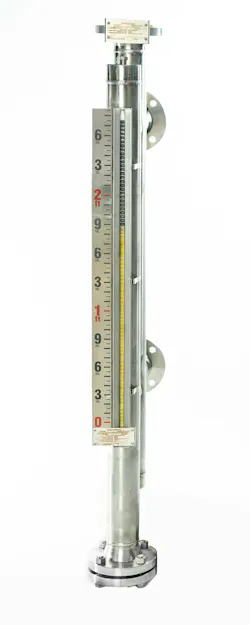
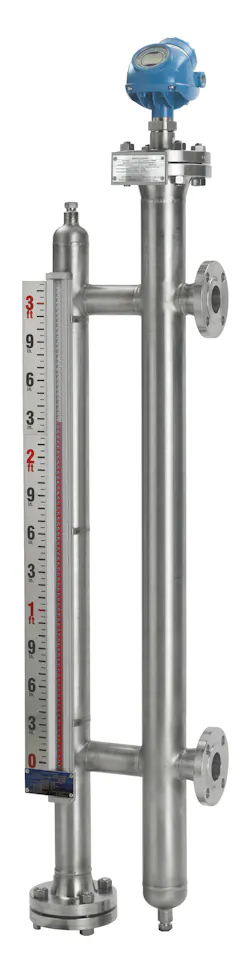
To address these challenges, many facilities have adopted magnetic level indicators (MLIs) as a safer and more resilient approach to local level indication. MLIs use a magnetically coupled float system housed within a sealed chamber attached to the vessel. As the liquid level changes, the float moves accordingly inside the chamber. Magnetic coupling then transfers this movement to an external indicator that clearly displays level outside the process boundary.
Because the indication remains completely isolated from the process fluid, MLIs offer several important operational and safety advantages. Operators can easily view level conditions from a distance, improving field visibility and situational awareness. As a purely mechanical indication technology, MLIs also remain operational during power outages or electrical faults, providing operators with continued local verification of the vessel level independently of electrical power or control system availability. The sealed design also eliminates many of the fouling and readability issues associated with conventional sight glasses. From a process integrity management perspective, one of the most significant benefits is improved containment integrity. By removing exposed glass components from the pressurized system, MLIs reduce potential leak paths and eliminate the risk of glass rupture. This aligns closely with modern safety objectives focused on minimizing operator exposure and maintaining process isolation in hazardous environments. MLIs can also reduce maintenance demands compared with traditional visual gauges, since they do not require frequent cleaning, replacement or inspection of glass components.
Supporting redundant safety strategies
In addition to providing local indication, MLIs contribute to broader plant safety architectures by supporting layered protection strategies. Electronic measurement technologies such as guided wave radar and differential pressure transmitters remain essential for process control and optimization, but MLIs provide an independent mechanical reference that operators can use to validate instrument readings and identify inconsistencies. This independent verification capability strengthens overall measurement redundancy and supports safer operation in critical applications.
Many MLIs can also incorporate externally mounted switches and transmitters linked to the magnetic float position. These accessories allow the devices to support alarms, remote indication and integration into distributed control systems and SIS. As a result, MLIs combine the advantages of independent mechanical indication with compatibility for modern automation and functional safety requirements.
Applications across the process industries
Although often associated with boiler systems, MLIs are widely used throughout numerous industrial sectors where process reliability and containment are priorities. In oil and gas processing facilities, MLIs are commonly installed on separators, knockout drums, scrubbers, hydrocarbon coalescers and pressurized storage vessels handling flammable media under demanding operating conditions. Reliable local indication and minimized leak potential are particularly important in these environments.
Chemical plants also use MLIs extensively on reactors, surge tanks and vessels containing corrosive or hazardous chemicals, where protecting personnel and maintaining process isolation are central safety concerns. Within power generation sites, MLIs support safe operation not only on boilers but also on feedwater systems, condensate vessels and deaerators. Refining, petrochemical and LNG operations likewise continue to expand MLI adoption as operators seek durable, low-maintenance technologies that align with evolving safety standards and operational reliability goals. As a result, MLIs are increasingly viewed as a preferred solution for critical level indication points where uptime, safety and compliance are key operational priorities.
Improved safety at a gas processing plant
A project at a gas processing plant in the Middle East highlights the value of MLIs in a safety-critical environment. The plant had been using sight glasses and reflex gauges across a range of processes, including separators, hydrocarbon coalescers and acid gas knockout drums. However, incidents involving sight glass breakage at one of its sites raised concerns about leaks, operator exposure and overall process safety.
In response, a formal hazard and operability (HAZOP) review was conducted, which recommended replacing sight glasses and reflex gauges with MLIs to reduce the risk of leaks and related safety incidents. At the same time, the site was preparing for two planned shutdowns scheduled within a three-month period, creating additional pressure to restore safety standards and ensure regulatory compliance within a limited timeframe.
To address these challenges, the plant standardized on Emerson’s Rosemount 9930 Magnetic Level Indicators to replace the existing sight glasses across all relevant applications. The solution provided a process-isolated alternative that minimized the potential for leak paths and eliminated direct contact between the process fluid and the indication system. This not only removed the risk of glass breakage but also reduced ongoing maintenance requirements associated with sight glasses.
The improved visibility offered by the external indication also enhanced operator awareness. With clear, easily readable indication from field locations, personnel could assess process conditions more quickly and safely, supporting more effective decision-making. As a result, the facility achieved a measurable improvement in safety performance, and compliance with safety requirements was restored more efficiently during the planned shutdowns. At the same time, the changes contributed to improved environmental protection by reducing the likelihood of spills and process upsets.
Conclusion
Industrial facilities face growing pressure to improve safety performance, maintain reliability and meet increasingly stringent regulatory expectations. In many applications, achieving these objectives requires a shift toward layered safety strategies that incorporate both continuous electronic measurement and independent local verification. Magnetic level indicators support this approach by combining reliable visual indication with enhanced process isolation and compatibility with modern safety systems. By improving containment, reducing leak potential and enabling independent verification, MLIs strengthen resilience and support safer plant operations. As operators prioritize risk reduction and long-term reliability, MLIs will play a growing role in modern industrial level measurement strategies.
About the Author
 Chandler Loupe
 Chandler Loupe
Product management engineer with Emerson's Measurement Solutions business
Chandler Loupe is a product management engineer with Emerson's Measurement Solutions business. He specializes in magnetic level indication, level measurement technologies and product development, working closely with customers and industry partners to advance measurement solutions across process industries. He holds a Bachelor of Science in Industrial Engineering from Louisiana State University.