Pump station controller supports variable frequency drive integration
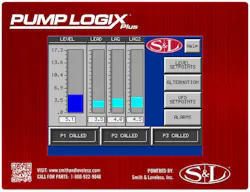
PumpLogix Plus pump station controller from Smith & Loveless Inc. is designed to modernize wastewater and stormwater operations while reducing system complexity and long-term costs.
According to Smith & Loveless, the PumpLogix Plus controller provides a standardized, HMI-ready solution for duplex and triplex above-ground pump stations. It is intended as an upgrade for existing relay logic control panels, offering a more flexible and user-friendly control platform.
The controller features a front-mounted touchscreen liquid crystal display that gives operators access to navigation tools, built-in help screens, and real-time system data. It includes integrated input and output capacity to support two- or three-pump configurations without requiring customization. Standard features include four relay outputs for pump control and station alarms, along with a level transducer and backup float system.
PumpLogix Plus also provides real-time visibility into wet well conditions through a simulated level display, helping operators assess system performance more quickly. The system can control variable frequency drives, allowing pump speed to adjust based on wet well levels to improve operational efficiency.
The controller is rated NEMA 4/4X for use in wastewater and stormwater environments and meets industry requirements for lift station electrical panels. It is also compatible with the S&L RemoteView system, enabling remote monitoring and troubleshooting to reduce onsite maintenance needs.
Smith & Loveless states that PumpLogix Plus is designed for municipal utilities, industrial facilities, and commercial developments, as well as infrastructure in remote or sensitive locations. The standardized design and integrated monitoring capabilities are intended to improve reliability, simplify operation, and lower lifecycle costs across a range of pumping applications.