Rethinking material selection in media-isolated valve design for modern process applications
Key Highlights
- Media isolation in valves helps prevent corrosion, contamination, and wear by separating internal components from aggressive process fluids.
- Material selection should go beyond chemical resistance, factoring in fatigue, flexibility, temperature stability, and long-term behavior under cycling conditions.
- Over-reliance on high-performance materials like PEEK or FFKM can be costly and may not always yield better results; application-specific choices are more effective.
- Design flexibility, such as interchangeable diaphragms, allows for better matching of materials to process conditions, enhancing reliability.
- A holistic approach to material and design selection leads to improved system uptime, easier troubleshooting, and cost savings over the valve's lifespan.
Across the process industries, the fluids being handled today are not the same as they were even a few years ago.
Systems that used to deal with relatively stable chemistries are now exposed to more aggressive media, tighter purity requirements and more frequent and more intense cleaning cycles. In food and beverage, chemical processing and life sciences, it is now common to see combinations of conditions that would have been considered edge cases before.
At the same time, expectations have not gone down. If anything, they have gone up. Uptime matters more. Contamination risks carry more weight. And once something fails in the field, the cost of tracking it down and fixing it is not trivial.
That puts pressure on components that do not always get a lot of attention during design — especially valves.
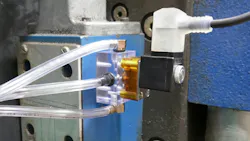
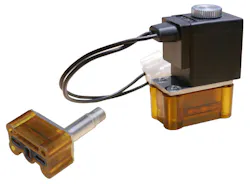
Media-isolated designs, including rocker-style valves, have become a go-to solution in many of these applications. The idea is straightforward: keep the process fluid away from internal mechanical components. That alone solves many problems related to corrosion, contamination and wear.
But it does not solve everything. What has started to show up more often is that once the media is isolated, the performance of the valve starts to depend heavily on what materials are actually in contact with that fluid. And that is where things can get tricky.
The growing role of media isolation in valve design
Media isolation was not always the default approach. It was something you would see in applications where there was a clear risk, either from aggressive chemicals or from the need to keep the fluid path clean.
That has changed. Now, in many systems, it is just assumed that you are going to isolate the media. It gives designers more flexibility. Internal components can be optimized for strength and actuation, while the wetted side is handled separately through a diaphragm or similar barrier.
Rocker-style valves have fit into this pretty well. The actuation mechanism stays separated, and the design itself is relatively simple, which helps with consistency over time. For applications with frequent cycling or strict cleanliness requirements, that is a big advantage.
But once you introduce that barrier, everything comes down to how that barrier behaves.
It is easy to think of the diaphragm or sealing surface as just another component. In reality, it becomes the most critical part of the valve. If it does not hold up, nothing else really matters.
Where material selection becomes a point of failure
Many of the issues that show up in the field are not because the valve design itself is flawed. They come down to how the materials interact with the process conditions over time.
On paper, a material might check all the right boxes. It might have strong chemical resistance, good temperature ratings and a track record in similar applications. But once it is put into a system that is cycling constantly, exposed to cleaning agents or dealing with mixed chemistries, the behavior can change.
One example that comes up fairly often is diaphragm fatigue. A material might handle the chemistry without obvious degradation, but after repeated cycling, it starts to lose elasticity. The seal is not as consistent. Small leaks show up. Eventually, it fails.
In other cases, stiffness becomes an issue. Some high-performance materials are selected because they can handle aggressive fluids, but they do not flex the same way under load. That changes how the valve actuates and can introduce stress in places that were not originally a concern.
In high-purity systems, the problem can look different. You might not see obvious mechanical failure, but you run into extractables or leachables that were not fully considered during selection. That is a different kind of failure, but just as serious.
What all of this points to is a pretty simple issue: selecting materials based on a single property, usually chemical resistance, does not tell the full story.
The limitations of “high-performance” materials
It is pretty common to see materials such as PEEK or FFKM used as a default in more demanding applications. And to be fair, they do solve a lot of problems. But they are not a universal fix.
One thing that comes up in practice is that these materials are often selected with the assumption that more resistance equals better performance. In reality, that is only part of the equation.
Take something like a diaphragm. It does not just need to survive the fluid. It has to move, repeatedly, without losing its properties. If the material is too stiff or does not handle fatigue well, it can create issues that would not show up in a static compatibility chart.
Cost is another piece of it. In some applications, using a premium material makes sense. In others, it is overkill and adds expense without actually improving performance in a meaningful way.
There is also a tendency to use material upgrades as a workaround. If something is not performing well, the instinct is to move to a higher-end material. Sometimes that helps. Other times, it just shifts the problem. Over time, more engineers are starting to question that approach.
Moving toward application-specific material selection
What is starting to take its place is a more balanced way of thinking about material selection.
Instead of asking, “What is the most resistant material we can use?” the question becomes, “What actually holds up best under these specific conditions?”
That includes a few different factors working together:
- Chemical compatibility, which still matters, but is not the only driver.
- Mechanical behavior, especially how the material responds to repeated movement.
- Temperature exposure, including both process conditions and cleaning cycles.
- Long-term performance, not just initial properties.
- Cost, in the context of what the application really demands.
In many cases, this leads to different choices than you might expect. Materials that are not considered “top tier” on paper can perform better simply because they are better suited to the way the valve is actually being used.
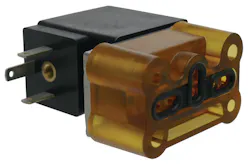
Another piece of this is flexibility in design. Instead of locking into a single material for all applications, some valve designs allow for different diaphragm or sealing options. That makes it easier to match the material to the process instead of forcing the process to work around the material. It is a small shift, but it changes how problems are approached.
Implications for valve design and system reliability
As this way of thinking becomes more common, it is starting to influence how valves are designed overall.
There is more focus on how materials behave under real conditions, not just how they perform in testing. That includes how stress is distributed, how components interact during actuation and what happens after thousands or even millions of cycles.
For system designers, it also means taking a closer look at the application itself. It is not enough to rely on standard selections or what has worked before. Conditions change, and the design has to reflect that.
The upside is that when materials are selected with the full picture in mind, reliability improves. Failures become less frequent, and when they do happen, they are easier to understand.
It can also simplify things in the long run. Using the right material for the job, rather than the most extreme option available, often reduces cost and avoids unnecessary complexity.
A more practical approach to material selection
Media-isolated valve designs are not going away. If anything, they are becoming more common as process demands continue to increase.
What is changing is how materials within those designs are being selected.
The shift is away from one-size-fits-all solutions and toward decisions that are based on how the valve will actually be used. That means looking at the full set of conditions, not just one or two key properties.
It is a more practical approach. Not as simple, maybe, but more reliable over time. And in environments where performance, uptime and consistency matter, that tradeoff is usually worth it.
About the Author
 Todd Harmon
Todd Harmon
Vice President of Canfield Industries, Inc.
Todd Harmon is the vice president of Canfield Industries, Inc., a position he has held since 1999. With more than 35 years of experience in the fluid power industry, Todd brings a deep understanding of custom valve engineering, sales strategy and operational leadership. He originally joined Canfield in 1988 as National Sales Manager and attended Youngstown State University with a focus on Business Administration and Management. In his current role, Todd oversees key executive functions while continuing to drive product innovation and customer success across the Canfield Connector and Spartan Scientific divisions.