Pack Expo International 2026 Preview: METTLER TOLEDO Product Inspection Group


PACK EXPO International 2026 allows attendees to see the latest packaging and processing equipment and technologies up close and in person. But the show also provides an opportunity to take a broader look at the challenges and trends impacting the industry.
With that in mind, Processing asked PACK EXPO International 2026 exhibitors about the products and technologies they will have on display at the event, along with the biggest processing or operational challenges their customers are facing today. We’ll be publishing their responses in the weeks leading up to the show, which takes place October 18-21 at McCormick Place in Chicago. In this installment, we hear from Tom Koshy, sales director at METTLER TOLEDO Product Inspection Group.
Q: What products, technologies, or live demonstrations will visitors be able to see at your booth during PACK EXPO International 2026, and which applications or manufacturing challenges do they address?
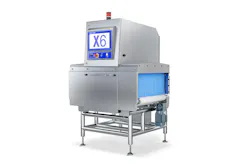
A: METTLER TOLEDO will showcase a broad range of product inspection technologies in booth S-2122, led by several new introductions. The new LightningBuild program launches with the X12 LightningBuild x-ray inspection system and C31 LightningBuild checkweigher, providing select systems from purchase order to the customer’s dock within four weeks to help manufacturers respond quickly to changing production needs. Also making its Pack Expo debut is the X56 DXD+ dual-energy photon-counting x-ray system with AI capabilities, designed to improve detection of difficult low-density contaminants while supporting more reliable quality checks and fewer unnecessary rejects.
Other booth highlights include the new curtainless X32, designed to improve product handling for lightweight products and open trays, and the compact X37 x-ray system for horizontal inspection applications such as cans. Visitors will also see additional x-ray, metal detection, checkweighing and combination systems addressing product safety, quality control, weight compliance and production efficiency.
Beyond the booth, Stuart Thomas will present on inspection technology selection and food safety certification at the Processing Innovation Stage (LU-7764) Monday, Oct. 19, from 4 to 4:30 p.m.
Q: What are the biggest processing or operational challenges your customers are facing today, and how are your latest solutions helping manufacturers improve efficiency, product quality, flexibility, safety, or sustainability?
Today's manufacturers balance a more complex set of priorities than ever. We hear the same challenges consistently: labor shortages, rising input and energy costs, tighter quality requirements and pressure to run more product variations with less downtime. Plants also face demands to improve traceability, reduce waste and make operations safer and more sustainable, all while proving ROI on a shorter clock. A difficult macroeconomic picture compounds the problem, and ongoing geopolitical tension pushes many manufacturers to defer investment decisions.
Our latest solutions focus on reducing manual intervention, improving process consistency and supporting data-driven decisions on the line. Intuitive interfaces and guided workflows simplify product setup, while faster changeovers and real-time performance visibility help plants increase throughput without giving up product quality or food safety. That same flexibility lets producers respond quickly to shifting demand without sacrificing efficiency or compliance. We are also addressing speed of delivery through our new LightningBuild program, and we support installed equipment through repair services, on-site retrofits, upgrades and rental options.
Across all of this, our goal is to help manufacturers do more with less, improving productivity, strengthening food safety and building more resilient operations.
Q: What technology or industry trends are having the greatest impact on processing equipment design and investment decisions today?
Digitalization, AI and automation are among the biggest trends shaping product inspection equipment. Customers expect equipment to stay reliable while also generating actionable data, integrating with plant systems and simplifying routine operation. AI can improve inspection performance in complex applications while reducing unnecessary rejects. Labor constraints are driving demand for intuitive interfaces, automated workflows and systems that require less manual intervention, which in turn improves repeatability and supports more standardized processes across shifts.
Flexibility is another major factor as manufacturers run more SKUs, smaller batches and more frequent changeovers. Buyers are also putting greater weight on resilience and total cost of ownership, evaluating uptime, maintenance requirements, serviceability and long-term performance rather than focusing on purchase price alone. These priorities are pushing equipment design toward systems that are easier to operate, integrate, maintain and adapt as production needs change.
Q: If a process engineer, operations manager, or plant executive visits your booth, what are one or two key insights, best practices, or innovations you hope they take away from the conversation?
A: First, we hope visitors leave with a clearer understanding that improving product inspection does not have to come at the expense of flexibility or efficiency. With the right technology and process design, manufacturers can increase throughput, reduce waste and maintain or improve inspection performance.
Second, we want manufacturers to know our equipment is within reach regardless of their size, budget or operation. We build solutions to fit a wide range of budgets and needs, and we work with customers to reach a return on investment as quickly as possible, from improving changeovers to reducing manual steps or gaining better control over critical process variables.
If visitors leave the booth with one takeaway, it should be this: the most successful plants use product inspection technology to build agile, reliable, future-ready operations rather than to satisfy a compliance requirement or replace a single manual step.
About the Author
 Jesse Osborne
Jesse Osborne
Chief Editor
Jesse Osborne is Chief Editor of Processing, a position he has held since 2019. Prior to joining Processing he served as editor for a publication covering the food manufacturing industry. He can be reached at [email protected].