Is hauling industrial wastewater the cheapest option?
Key Highlights
- Wastewater hauling involves transporting waste off-site for treatment or land application, often used by industrial facilities for challenging byproducts like sludge and digestate.
- Risks associated with hauling include spills, legal liabilities, increased emissions, and operational disruptions, which can lead to significant financial and reputational damage.
- Hauling wastewater incurs ongoing costs that tend to increase over time, with no opportunity for return on investment, unlike onsite treatment solutions.
- Onsite treatment provides long-term cost savings, greater control over wastewater management, and supports sustainability goals by reducing emissions and liabilities.
- Facilities should evaluate the true costs of hauling versus onsite treatment to make informed decisions that support operational efficiency and long-term growth.
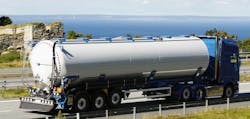 69a06e132fe1b0ac06b4263a Dreamstime Xxl 33633739
For many years, hauling wastewater for off-site disposal has been the most viable option for industrial facilities. A hauler may discharge to more specialized treatment or may land-apply the wastewater depending on regional regulations. This is often seen as the most cost-effective option, especially for new facilities.
But is hauling wastewater truly the cheapest and least risky option? Or is it time to change the status quo for industrial facilities?
What is wastewater hauling?
Wastewater hauling is a method of wastewater disposal that utilizes environmental service providers to haul wastewater away from the facility where it is generated and transport it off-site for treatment or land application.
This method is typically used by industrial facilities for the challenging wastewater from production and wastewater treatment byproducts such as wasted sludge or digestate that are produced onsite and often cannot be sent to the local collection system. To minimize costs, sludge and digestate are often dewatered and then scheduled for pick up by third-party haulers. From there, it is taken to appropriate sites for disposal. However, process water that includes high levels of soluble organic pollution cannot be dewatered before hauling and must be sent to different disposal facilities, which increases overall wastewater management costs.
While hauling seems straightforward, it actually has hidden business and financial impacts that need to be taken into account to assess its true cost.
Business impacts of hauling wastewater
The reality of wastewater hauling is more complicated than the line item on a facility's P&L. The risks and recurring expenses can quickly outweigh the upfront savings and are often not considered when making this a primary wastewater treatment option.
Spills and liability
Any time wastewater is transported, there is a risk of spills. And this risk is higher than you think. In 2024 alone, there were over 8,500 reported spill incidents by trucks in transit and over 12,000 spill incidents on disposal of the materials they carried, according to the US Department of Transportation Pipeline and Hazardous Materials Safety Administration.
This resulted in over $80B in damages.
Unfortunately, these fines fall onto the company contracting the haulers. In spill events such as these, the contracting company is always named, so they can face significant reputational damage that can last for years.
And the impact goes far beyond penalties. A single incident can disrupt or even shut down operations from both the legal and financial fallout, as well as the consumer backlash, loss of trust, and long-term brand damage.
Emissions costs
Hauling wastewater means putting more trucks on the road. Each trip carries with it a heavy fuel cost and significant emissions. The farther wastewater needs to travel, the larger a facility’s carbon footprint becomes.
These emissions are classified as Scope 3 emissions, which are currently a major target for reduction in many corporate sustainability strategies, yet are the most difficult to reduce.
If a facility's sustainability goals involve reducing this emissions category, you may need to reconsider hauling.
Reliability and operational risks
As we all know, production is never constant. If a facility wants to expand production, open new product lines or simply move to a new location, all these things need to be coordinated with the hauling company.
When volumes spike, emergency pickups are often needed. These last-minute trucking requests often come with exorbitant fees, or in the worst case, may not be possible, resulting in a production shutdown until a company can find a solution.
Worse, what happens if the hauler can no longer accept a company's wastewater at all? Now the facility has to scramble and find another solution, which may involve discharging to its utility, incurring extraordinarily high surcharges and compliance fees, and bringing more reputational and production risk.
Management costs
As much as hauling appears to be a hands-off approach to wastewater treatment, it still requires oversight. Someone must manage scheduling, coordinate with haulers and handle production changes that impact wastewater volumes. If a facility does not have calamity tanks onsite to store its wastewater before a hauling company arrives, then it must also rent frac tanks, which will add more cost to solving the problem.
These resource demands divert a facility's attention from core operations and add ongoing administrative burden. Resources and funding that could have otherwise been used to increase production and provide a greater profit.
It’s not an investment
Perhaps the biggest drawback: hauling is not an investment.
Every dollar spent on hauling is gone for good, with no return. Most facilities see year-over-year increases in hauling fees, meaning costs only climb over time.
In short, hauling is a short-term or emergency option but should never be a long-term wastewater solution for companies that want to reduce costs and grow sustainably.
A cost-effective alternative
So, is hauling wastewater really the cheapest option? On the surface, maybe. But once hidden costs are factored in — spills, emissions, reliability and reputational risks, management resources, and ongoing fees — the long-term costs are staggering.
The true most cost-effective, long-term wastewater management strategy is onsite treatment.
Onsite treatment is the only wastewater management method that enables a facility to actually see a return on investment. It not only reduces costs over time but also gives facilities more control, scalability and compliance security.
But the treatment method a facility chooses does matter if it wants to maintain those low costs.
The bottom line
Hauling wastewater may feel like the safe, easy choice, but in reality, it is a short-term solution with long-term consequences. Onsite treatment is the only approach that delivers both financial and operational benefits over time.