Designing for faster changeovers in hygienic processing environments
Key Highlights
- Reducing changeover time minimizes non-productive periods, directly increasing manufacturing efficiency and profitability.
- Designing equipment with smooth, nonporous surfaces, flush welds, and accessible gaskets enhances cleanability and reduces cleaning time.
- Modular equipment allows quick swaps of validated components, enabling parallel processing and simplifying cleaning verification.
- Fast disassembly features like tool-free mechanisms and color-coded parts significantly cut down teardown and setup durations.
- Organizing workflows to separate internal and external activities ensures minimal line downtime during changeovers, boosting overall productivity.
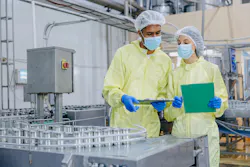
The adage “time is money” is never so true as it is in hygienic processing environments, where every minute a production line sits idle between runs costs money. Cleaning protocols must be followed to the letter, which is why they are so strict, and why they often take so much time to complete. Regulatory requirements cannot be flexible. The margin for error? Zero.
There is a solution that does not stretch changeover speed, hygiene requirements, profit margins and compliance regulations in opposite directions. When equipment and workflows are fabricated with changeover speed being prioritized, hygienic processing environments operate with machine-like precision.
Addressing changeover time
Changeover time is the span between the last good product from one run and the first good product from the next. Every millisecond in between is non-productive time. Time where product is not being processed, time where money is not being made. Yet it is inherent, so it must be addressed first, especially in hygienic processing environments. Why? Because that window tends to be bigger than in standard manufacturing. Cleaning, sanitizing, inspection and verification all have to happen in that span of time before the next run can even be thought about.
Trimming changeover time reaps benefits that go beyond running more product. Hygienic processing facilities also gain flexibility by addressing changeover time. Trimmed changeovers make smaller batch sizes economically viable. Smaller batches essentially equate to faster response to modulating demand. Faster demand response translates into a competitive advantage that adds up over time.
Reduced changeover time also cuts the rate of defects and product rework. When the exact steps are laid out and protocols are put in place, things change in a good way. But the equipment has to cooperate, too. It should not be like assembling a box of furniture parts from overseas and an engineering degree to do whatever tear-downs have to be done.
Give workers the right tools, protocols and steps to follow and slip-ups and wasted time go the way of eight-track tapes and fax machines.
Build cleanability into the design
It is probably not a big surprise to hear, but most changeover time is spent cleaning; that is, in hygienic processing environments. So, when there is equipment that makes that task harder, that is not conducive to productivity.
What constitutes equipment situations that make cleaning trickier?
- Hard to reach areas on the equipment itself
- Located in tight areas with little “move around” space
- Lots of nooks and crannies
- Static electricity that makes dust and debris cling
- Porous surface
If the situation looks like it would be hard to dust at home, imagine the challenges a worker faces when trying to clean it in a hygienic processing facility.
The answer is building “cleanability” into the design. Doing that is not hard; it just requires some thoughtfulness. The goals should be:
- Smooth, nonporous surfaces
- No crevices or threaded cavities where residue goes unnoticed
- Welds ground flush so there is nothing for biofilm to grab onto
- Gaskets and seals positioned so a worker can pull and replace them without hunting for tools
- Drainage that actually works (because equipment that holds pooled liquid is just a contamination harborage waiting to cause a problem)
None of that applies to only one area or piece of equipment, either. Everything has to be able to be cleaned well. Tanks, pumps, valves, conveyors, filling heads, sanitary hoses; the whole line has to meet the same standard. If there is just one component that takes twice as long to clean as everything else? That is a chink in the cleaning operations that is going to carry on down the line in terms of time spent cleaning.
Try modular designs as a time-saving measure
Modular equipment design is the greatest invention since sliced bread, especially in environments where hygienic processing is taking place. When facilities are serious about saving time, modular design is the way to go. With this model, modular systems get built from standardized, interchangeable components that can be swapped out almost in the blink of an eye, all without reconfiguring the entire line.
Here is how simple it can be: When a facility switches from one product to another, product contact parts often need to change to prevent cross-contamination. With modular equipment, workers pull one validated module out and drop a clean one in. The replaced module goes through whatever cleaning it needs, offline. In the meantime, production on the next run is already underway. That is parallel processing applied to changeover logistics, and it is a time-saver.
This kind of design also makes cleaning verification easier. Each module comes with its own defined, validated cleaning procedure. Operators know exactly what steps to follow and in what order. This step work can be easily passed on to new workers, who only have to follow written directions. There is no worry about it not being done correctly, because the validated procedure covers it.
Disassembly speed changes everything
If equipment takes a lot of time to tear down and put back together, no one is getting that time back. It is going to derail everything. But equipment engineered for fast disassembly changes the landscape.
Tool-free disassembly is the gold standard to adopt. No one has to go walking for 15 minutes to get to the other side of the facility to fetch a tool, come back and realize they brought the wrong sized wrench.
Clamp fittings, quick-release mechanisms and standardized connection points let workers break down product contact zones in minutes rather than half an hour. When every fastener and connection gets designed for speedy tear down, the cumulative time savings across hundreds of changeovers per year adds up to a significant production gain.
Color-coding components is another little time-saving trick that is incredibly easy to put into place. Workers spend less time thinking and less time verifying. Correctly color-coded kits are already staged and ready. The equipment tears down and gets put back together quickly.
Workflow organization as a key factor
Equipment design is not going to solve every part of the problem. Workflow organization handles the rest. The lean manufacturing concept of separating internal and external activities applies directly to hygienic changeovers.
Internal activities are those that require the line to be shut down. External activities can go on while the line is still running. The goal is to push as many tasks as possible into the external category since they do not interfere with line operations.
Cleaning chemical preparation, replacement part staging, documentation completion and post-cleaning verification forms can all get handled externally before the line stops. Then, when the shutdown happens, workers move into step mode, where they handle changeover tasks.
Standard operating procedures, updated as needed, that map every changeover task in sequence, with assigned owners and time targets for each step, keep teams aware and minimize any possibility for confusion about who does what when.
Measurement drives ongoing improvement
Facilities that measure changeover performance improve it. The starting point is getting accurate baseline data. To do that, consider breaking the changeover process into individual timed steps. This will reveal exactly where the time disappears to.
Once the baseline is established, improvement targets stand out. Facilities can identify which steps offer the greatest reduction opportunities, invest in the equipment modifications or procedural changes that deliver results, and re-measure to make sure they got it right.
Employee engagement in the improvement process adds to the results ratio. Workers who perform changeovers daily know where the friction points are. Structured opportunities for that knowledge to be shared and get acted upon turn worker experiences into documented process improvements.
The investment in hygienic design, modular architecture and workflow optimization pays back through every changeover for the life of the equipment. Getting the design right from the start costs far less than retrofitting a line that was not built with changeover speed in mind.
About the Author
Jill Nagg
Marketing manager for Ace Sanitary
Jill Nagg is the marketing manager for Ace Sanitary, a leading manufacturer of sanitary and high-purity liquid transfer solutions. Jill oversees brand strategy, digital initiatives and go-to-market campaigns translating into product sales. With two decades of experience in B2B manufacturing, she’s passionate about transforming complex technical products into clear, customer-driven value stories that grow market share.