Previewing PACK EXPO International 2026 with John Giordano of LJ Star

PACK EXPO International allows attendees to see the latest packaging and processing equipment and technologies up close and in person. But the show also provides an opportunity to take a broader look at the challenges and trends impacting the industry.
With that in mind, Processing asked PACK EXPO International 2026 exhibitors about the products and technologies they will have on display at the event, along with the biggest processing or operational challenges their customers are facing today. We’ll be publishing their responses in the weeks leading up to the show, which takes place October 18-21 at McCormick Place in Chicago. In this installment, we hear from John Giordano, director of sales at LJ Star.
Q: What products, technologies, or live demonstrations will visitors be able to see at your booth during PACK EXPO International 2026, and which applications or manufacturing challenges do they address?
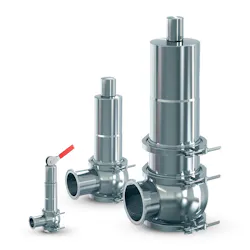
A: In booth N-4703, for the first time at PACK EXPO, LJ Star will feature its Goetze line of pressure relief valves.
Overpressure in a pressurized vessel is a worker hazard and can damage the product and downstream process equipment. This is why safety relief valves are mandated and are especially important in breweries, dairy and beverage filling, where overpressures are routine. By the nature of how valves operate, cleanability is always a concern. Goetze pressure relief valves have a highly hygienic, cleanable design that minimizes the risk of cross-batch and bacterial contamination.
For sanitary and hygienic service, the Goetze series is built around the constraints that govern food, beverage and biopharma lines. Its cone-shaped diaphragm separates the wetted process area from the spring chamber, so seals can be swapped without recertifying the valve, which keeps qualified equipment in service through batch changeovers.
Wetted surfaces are finished to a roughness of Ra less than 0.75 µm, with minimal dead space, exposed and rinsed o-ring seals, and a body geometry that avoids pooling after the valve reopens, so there are fewer crevices where microbial growth can take hold.
A pneumatic lifting device makes the valve suitable for CIP and SIP without disassembly, and the line is offered from DN 25 to DN 100 in 316L stainless steel with tri-clamp, butt-weld and hygienic threaded connections. Tested to EHEDG and DGUV requirements, the hygienic series gives QA and validation teams the third-party documentation they need at audit.
The Goetze line complements LJ Star’s complete line of process optimization products, including sight glasses, process cameras, sight flow indicators, process lighting and sanitary fittings, all on display at the booth.
Q: What are the biggest processing or operational challenges your customers are facing today, and how are your latest solutions helping manufacturers improve efficiency, product quality, flexibility, safety, or sustainability?
The challenges we hear most come down to visibility and verification under tightening compliance. Our food, beverage and pharmaceutical customers are under real pressure from FSMA and USP requirements to prove what is happening inside a closed process, not assume it, and to do that without adding contamination or safety risk.
Because the glass is reusable rather than discarded after each cleaning, it also cuts the recurring replacement cost that operators quietly absorb with conventional discs. From there, the newer equipment extends what teams can see and do.
PoE process vessel cameras let operators observe multiple vessels remotely and capture footage for diagnostics, which is how one brewer traced a run of off-flavor batches to CIP residue that was not fully flushing, and how a whey protein spray-dryer caught a clogging nozzle before it interrupted production.
Lighting solves a subtler quality problem: polished stainless steel can appear scratched when viewed under undiffused light when, in fact, there are no scratches. This may trigger needless contamination flags; a diffused LED luminaire gives inspectors a true read without the glare.
And for overpressure protection on hygienic lines, the Goetze 4000 series pressure relief valve lets teams change seals without recertifying the valve, which keeps qualified equipment in service through batch changeovers.
Across these solutions, better process optimization directly protects yield, batch integrity and the people on the line.
Q: What technology or industry trends are having the greatest impact on processing equipment design and investment decisions today?
A few forces are converging on how our customers spec and buy. Food and beverage processors are squeezed from many directions. Tariffs and inflation on ingredients and shipping are raising costs, and they cannot always pass all of that increase to customers. At the same time, the growing challenge of attracting and retaining plant floor workers is driving up wages.
Compliance pressure keeps climbing. FSMA, USP and ASME-BPE requirements are pushing sanitary and pharmaceutical buyers toward equipment they can document to a third party at audit, not just trust from a datasheet, which is reshaping vendor selection around who can actually prove standards compliance.
Worker safety concerns are putting pressure on the mechanical side, with EHS programs and insurers favoring components that fail predictably, which is part of why fused-glass construction keeps displacing conventional glass discs in critical service. LJ Star’s METAGLAS sight glass, consisting of a fused metal ring holding borosilicate glass in place, has never had a documented explosive/shatter failure in the field, so its reliability as a sight glass for extreme applications is significant.
Finally, growth in biogas, hydrogen and other renewable applications is expanding demand for hazardous-location-rated observation and lighting, which brings ATEX, UL and NEMA ratings into projects that would not have needed them a decade ago.
The through-line is that process optimization equipment offered by LJ Star is being treated less as an accessory and more as instrumentation, with the documentation, reliability and integration expectations that come with that.
Q: If a process engineer, operations manager, or plant executive visits your booth, what are one or two key insights, best practices, or innovations you hope they take away from the conversation?
A: Sight glasses and related process optimization equipment are highly engineered components. High pressure, high temperature and caustic or acidic products may require investing in fully certified, fully traceable equipment that is proven to perform in extreme conditions. LJ Star’s METAGLAS and MetaClamp sight glasses are stronger than comparable products. Operators need to recognize when an application may not be successful with a low-cost sight glass.
About the Author
 Jesse Osborne
Jesse Osborne
Chief Editor
Jesse Osborne is Chief Editor of Processing, a position he has held since 2019. Prior to joining Processing he served as editor for a publication covering the food manufacturing industry. He can be reached at [email protected].