Tube fitting essentials for small-molecule gases
Key Highlights
- Double-ferrule fittings provide superior sealing and vibration resistance, making them ideal for small-molecule gases like hydrogen and methane.
- Proper material hardness and specialized processes like carburization are crucial to prevent galling and corrosion, ensuring long-term reliability.
- Design features such as hinging back ferrules and distinguishable color coding enhance safety and ease of identification in complex systems.
- Swagelok's FK series exemplifies tailored solutions for high-pressure, rapid thermal change environments, incorporating unique structural and material enhancements.'
- Selecting the right fitting requires understanding specific operational needs and consulting with suppliers to ensure safety and performance.
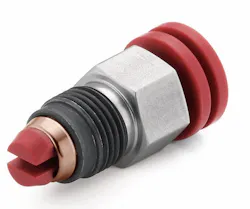 Swagelok's FK series includes a specific fitting for hydrogen which uses a female body and a male nut, providing additional strength for higher pressure systems.
Swagelok's FK series includes a specific fitting for hydrogen which uses a female body and a male nut, providing additional strength for higher pressure systems.
Small-molecule gases such as hydrogen and methane are a challenge to safely contain and manage at every stage, from production and compression to storage and end-user applications. These gases are prone to escaping through miniscule gaps and are capable of diffusing themselves into the materials intended to contain them, even as operators must account for a wide range of storage pressures and rapid thermal changes that arise from pressure changes in various processes.
Under these conditions, traditional cone and thread fittings are not always the best fit for the job — but not all bite-type compression tube fittings are created equal, either. It is important to spec fittings that will deliver tube grip, a tight gas seal and vibration protection in order to optimize safety and performance, and to know what kind of fitting designs meet these criteria.
One ferrule or two?
Among the types of common compression tube fittings, one of the most basic design differences is single-ferrule versus double-ferrule. Unlike their threaded counterparts, these types of fittings work by compressing one or two ring-shaped ferrules between the nut and the fitting body, gripping the tube and creating the seal. This type of fitting has been used effectively in the hydrogen industry for the past 75 years — it is a proven and reliable technology. And since gas seal performance is one of the most difficult aspects to engineer in a tube fitting, especially when you are working with the smallest molecule gases, you will find that double-ferrule fittings offer key advantages.
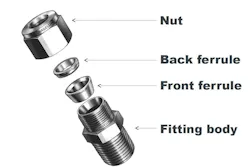
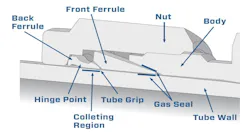
When a double-ferrule fitting is assembled, the nut pushes the back ferrule into the front ferrule, causing a few things to happen as ferrules move both plastically and elastically. Plastic deformation describes change which remains after applied pressure stops, changing the shape of something. Elastic deformation sees an object return to its original shape.
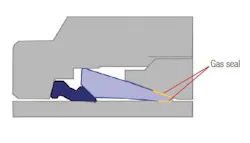
As the nut pushes the back ferrule against the front ferrule, the front ferrule is lifted. Because the front ferrule meets the body with a slighly different angle, it slides down and burnishes the metal surface of the body to create a very tight seal. A similar seal is formed where surface of the front ferrule meets the tubing.
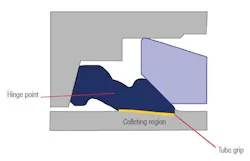
The primary gas sealing area is where the nose of the front ferrule nests and meets the fitting body. As a general rule, longer is better when it comes to an effective and safe seal here. For optimal performance and vibration resistance, though, you will want a back ferrule that is engineered for hinging and colleting: This means it bends in the middle and dives into the tubing when the front ferrule stops moving.
Not all double-ferruled fittings are designed to do this, and it provides extra grip while protecting an area of the tube that could be a potential stress riser. A well-designed rear ferrule also stays partially elastic through its entire life, enabling it to respond to changes in pressure and temperature, holding pressure and protecting the tube grip.
Key design details
Another important factor when selecting fittings for small-molecule gas handling is construction that delivers hardness while retaining ductility and corrosion resistance. Once the ferrules are swaged onto the tubing, they are permanent, so if they are made of the same material as the tubing, they need to be hardened in order to cut into the tubing for grip. If your ferrules do not exhibit tool steel hardness, the materials just mash together and gall, which opens the door for corrosion.
Swagelok, for instance, uses a process called SAT 12 which removes the clear oxide on the outside of the ferrules and forces carbon into the surface. This carburization creates a Vickers of 1600, which is about what tool steel is, allowing the ferrule to cut into any hardness tubing, including those defined within standards for small-molecule gases such as hydrogen. Be wary of chemical approaches to hardening ferrules, as this can increase the risk of cracking when they move dynamically.
One additional measure taken by Swagelok is to design a fitting specifically for hydrogen. The Swagelok FK series maintains the double-ferrule design, but incorporates a female body and a male nut, which provides some strength characteristics that enable it to handle higher pressure systems. Swagelok also altered the thermal oxide on the front ferrule to make it red, which means it is easily distinguishable from a standard fitting in the shop.
Safely handling small-molecule gases requires uncompromising performance from fittings that often need to handle high-pressure systems and rapid thermal and pressure change. Knowing exactly what you need and what specific questions to ask your supplier will set your facility up for operational success and employee safety.