U.S. Steel Clairton explosion linked to valve procedure and facility siting
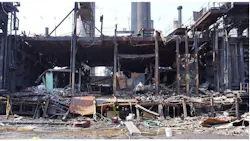
The U.S. Chemical Safety and Hazard Investigation Board (CSB) has identified failures involving procedures, facility siting and process safety management as key factors in the August 11, 2025, explosion at U.S. Steel’s Clairton Coke Works in Clairton, Pennsylvania.
The explosion occurred during maintenance on an isolation valve supplying coke oven gas to Battery 13. Two workers died, 11 others were injured, including five who suffered serious injuries. The incident also caused an estimated $52.5 million in property damage.
According to the CSB’s final report, U.S. Steel employees and contractors from MPW Industrial Services were attempting to exercise a cast iron double-disc gate isolation valve. Workers used pressurized water to remove coke oven residue after the valve did not fully close.
U.S. Steel had an operating procedure for exercising valves, but the procedure did not address the use of water. The company also did not have a formal procedure for washing valves with pressurized water, although employees had used the practice on an informal basis for at least three years.
During the maintenance operation, workers closed or nearly fully closed the valve’s two gates while applying pressurized water. This created an enclosed space between the gates, allowing pressure to build inside the valve beyond its containment capability.
The valve then failed, releasing toxic and flammable coke oven gas into the surrounding area. The gas ignited within minutes, causing the explosion.
The failed valve was manufactured in 1953 and refurbished in 2013. The CSB noted that cast iron is a brittle material and that safety publications warn against or prohibit its use in some hazardous applications involving flammable substances.
Facility siting also increased the severity of the incident. The explosion occurred in a transfer area between Coke Batteries 13 and 14, where several buildings were routinely occupied by employees. The buildings were located less than 20 feet above the coke oven gas piping involved in the release.
None of the buildings had been designed or constructed to withstand an explosion, and all sustained catastrophic damage. Two workers who died were in or near separate control rooms, while two seriously injured workers were inside a break room at the time of the explosion.
The CSB identified three primary safety issues: procedures and hazard analysis, facility siting, and process safety management systems.
The agency recommended that U.S. Steel evaluate the siting of all occupied and potentially occupied buildings at Clairton Coke Works and address identified hazards. It also recommended a written procedure for washing valve seats with pressurized water and a comprehensive process safety management system covering coke oven gas processes.
The CSB also recommended that Nippon Steel North America establish a corporate process safety governance program, conduct regular facility audits and correct identified deficiencies. For MPW, the agency recommended written procedures for cleaning piping systems containing flammable or toxic gases and training for workers performing those operations.
The recommendations follow an investigation that the CSB said demonstrates the consequences of performing hazardous tasks through informal practices without adequate procedures, hazard analysis and worker training.