Application Corner: Ideal flowmeters (Part 2)
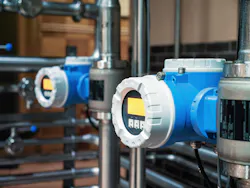
Ideal flowmeters are accurate, repeatable, linear, safe and have little dependence on physical properties, little dependence on hydraulic characteristics of the flowmeter and of the fluid, low maintenance requirements, low cost, are easy to install, and the like. As a practical matter, ideal flowmeters do not exist. However, highly accurate flowmeters do exist, but are expensive to purchase, install and maintain. Are highly accurate flow meters worth the expense?
Applications that deserve special attention are those in which inaccurate flow measurements can cause financial shortfalls that can be exorbitantly higher than the cost of the flowmeter. In custody transfer applications, a highly accurate flowmeter ensures that the customer is invoiced for the proper amount of fluid received. When adding chemicals to a reactor, a more accurate flowmeter ensures that the proper amount of fluid is fed to maximize chemical conversion.
Are more accurate flowmeters appropriate for the large number of flowmeters used to manage plant operations? Well, it depends. Inaccurate measurements to calculate process efficiency or assess a processes health can adversely affect decision-making and the ability to improve the process. On the other hand, flowmeters that monitor flow to (say) ensure adequate cooling water flow need not be more accurate.
Conversely, the benefits of more accurate flow measurements can be squandered, such as when a non-optimal control strategy is implemented. For example, tank level can be maintained near its controller setpoint by manipulating an inlet or outlet control valve, the flow through which is measured. The added cost of a more accurate flow measurement will likely provide little or no benefit to the operation.
However, these instruments can be integrated into a cascade control loop in which a level controller sets the setpoint of a flow controller that manipulates the control valve. This strategy enables the level and flow controllers to be tuned separately, which typically results in a steadier flow rate, enabling the process to operate in a more stable manner while potentially providing the operator with valuable process information. Therefore, more accurate flow measurement would likely be beneficial to the process.
The value of more accurate and highly accurate flowmeters can vary widely in different applications, so they should be considered carefully on an application-by-application basis.
About the Author
David W. Spitzer
David W Spitzer’s new book Global Climate Change: A Clear Explanation and Pathway to Mitigation (Amazon.com) adds to his over 500 technical articles and 10 books on flow measurement, instrumentation, process control and variable speed drives. David offers consulting services and keynote speeches, writes/edits white papers, presents seminars, and provides expert witness services at Spitzer and Boyes LLC (spitzerandboyes.com or +1.845.623.1830).