Medium voltage drives: The hidden heroes of energy efficiency
Key Highlights
- MV drives optimize motor performance by matching speed to real-time demand, reducing energy consumption by up to 50%.
- They significantly lower emissions in hard-to-abate sectors like cement, steel, and oil, contributing to global decarbonization efforts.
- Advanced drives such as ABB’s ACS8080 incorporate digital connectivity, diagnostics, and customization features to enhance industrial efficiency.
- Replacing traditional flow-control methods with MV drives results in smoother operations, less wear and tear, and lower maintenance costs.
- Innovations in motor control technology, like MP3C, reduce harmonic distortions, extending equipment lifespan and further saving energy.
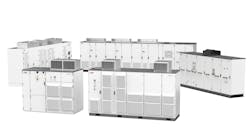
As the world accelerates towards a low-carbon society, there are certain technologies that constantly steal the spotlight — carbon capture and storage, for instance. Meanwhile, behind the scenes, a hidden hero is working hard to convert energy use in hard-to-abate sectors: Medium Voltage (MV) drives. The increasing electrification of fossil-fuel-driven processes makes energy efficiency more critical than ever, and these types of drives help industries to cut energy waste, reduce emissions and enhance operational performance with exceptional accuracy and reliability.
They are key components in industrial motor systems, controlling the speed and torque of motors that power everything from compressors and pumps in the oil and gas sector, to crushers and conveyors in the mining sector, to fans and pumps across the board. Unlike direct online (DOL) fixed-speed motors that run at full speed unnecessarily, MV drives allow motors to operate at the optimal speed to match real demand. This simple shift unlocks profound effects.
Reduced emissions
The energy savings potential of MV drives is significant. By matching motor speed to load demand, MV drives can reduce energy consumption by up to 50%. This not only cuts electricity bills but also significantly lowers carbon emissions — key priority for hard-to-abate sectors such as iron and steel, cement, chemicals, mining and oil and gas. Combined, these sectors represent 25% of global GDP and contribute nearly one third of total greenhouse gas emissions. Because of their scale, even small efficiency gains can have an impact on the global energy transition.
In some applications, traditional systems often rely on throttling or, in the case of fan systems, dumping methods to control flow. This wastes energy and puts unnecessary strain on equipment. MV Drives on the other hand, optimize how pumps and fans move fluids and gases by controlling motor speed, delivering smoother, more efficient performance. While in more sophisticated systems, there may be no simple alternative. The most significant energy savings are achievable in pumping and fan applications, where replacing traditional flow-control methods with motor speed control provides a smarter, cleaner way to manage industrial processes.
Reduced costs
MV drives do not just reduce energy consumption and emissions — they also deliver substantial cost savings. By reducing motor speed when full capacity is not needed, they help minimize wear and tear. They lead to fewer breakdowns, lower maintenance costs and longer asset lifespans. For plant operators, this translates into a stronger return on investment. Their ability to fine-tune motor performance helps systems run more smoothly under fluctuating loads or harsh operating conditions. And while a drive does not inherently increase the reliability of a system, its advanced functionalities can help minimize downtime and support more stable operation in processes where even interruptions can result in millions of dollars in lost productivity.
MV drives also offer exceptional accuracy in speed and torque control, enabling reliable operation even in the most demanding industrial environments. With maximum output frequencies and dynamic response capabilities, they ensure stable, high-performance operation without compromising industrial output.
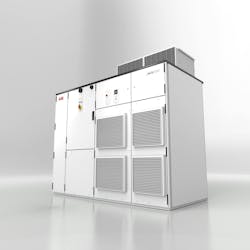
Innovation in action: The ACS8080
One example of MV drive innovation is ABB’s ACS8080 — a next-generation drive designed with modular architecture, making it an optimal match not only for new applications, but also for retrofitting existing drive systems or DOL machines.
The ACS8080 excel in eliminating inefficiencies through advanced motor control technologies. Innovations such as MP3C — the latest evolution in motor control — deliver remarkable efficiency and motor friendliness. It reduces harmonic distortions by approximately 50% compared to traditional control schemes. This not only extends equipment life but also unlocks further energy savings.
ACS8080 feature next generation control hardware enabling the collection of up to 10 times more diagnostic data for better and faster monitoring solutions. The new ABB Connectivity Edge Gateway allows connectivity whether on premises or to the cloud, making it an optimal fit for many digital needs. The built-in sensing solutions enable Asset Health and Performance Management (AHPM) capabilities, reliability monitoring and data-supported inspection for faster troubleshooting and failure detection.
Additionally, equipped with Crealizer, an open software platform, the ACS8080 enables customers to develop and deploy tailored solutions quickly and easily. This flexibility allows industries to adapt to evolving process needs, integrate digital tools, and continuously improve performance.
Whether it is optimizing a mining conveyor system or fine-tuning a chemical processing line, the ACS8080 exemplifies how MV drives are evolving to meet the demands of modern industry.
Conclusion: MV drives are the new heroes
MV drives may not grab headlines, but their impact is undeniable. They are quietly transforming how industries consume energy, offering a pathway to reduce emissions, costs and inefficiencies. In sectors where sustainability is both a challenge and a necessity, MV drives are proving to be indispensable allies.
As innovations such as the ACS8080 continue to push the boundaries of efficiency and control, MV drives are stepping out of the shadows. These hidden heroes are not just enabling industrial performance — they are powering a cleaner, smarter and more sustainable future.