Previewing Pack Expo International 2026 with Doan Pendleton of Vac-U-Max
PACK EXPO International 2026 allows attendees to see the latest packaging and processing equipment and technologies up close and in person. But the show also provides an opportunity to take a broader look at the challenges and trends impacting the industry.

With that in mind, Processing asked PACK EXPO International 2026 exhibitors about the products and technologies they will have on display at the event, along with the biggest processing or operational challenges their customers are facing today. We’re publishing their responses in the weeks leading up to the show, which takes place October 18-21 at McCormick Place in Chicago. In this installment, we hear from Doan Pendleton, president of Vac-U-Max.
1. What products, technologies, or live demonstrations will visitors be able to see at your booth during PACK EXPO International 2026, and which applications or manufacturing challenges do they address?
VAC-U-MAX will demonstrate how automated vacuum conveying can provide a reliable, controlled supply of powders and other bulk materials to packaging equipment. Our booth will feature an auger filling machine integrated with VAC-U-MAX conveying technology, allowing attendees to see how material can be automatically transferred and delivered to the filler as needed.
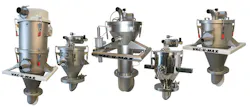
We will also showcase our Signature 1500 and 3500 Series pre-engineered vacuum conveying systems. The 1500 Series handles conveying rates up to 1,500 pounds per hour, while the larger 3500 Series accommodates rates up to 3,500 pounds per hour. Both are modular, highly configurable systems designed for conveying free-flowing and non-free-flowing powders, granules and other bulk materials.
Although the live demonstration features an auger filler, VAC-U-MAX systems can be engineered to refill virtually every type of packaging machine, including vertical form-fill-seal systems, pouch and stick-pack machines, rotary fillers, cup fillers, bottle-filling lines, tablet and capsule equipment, and other automated filling systems.
These solutions address several common manufacturing challenges: maintaining a consistent supply of material to the packaging machine, reducing manual lifting and dumping, controlling fugitive dust, improving operator safety and preventing packaging-line interruptions caused by insufficient or inconsistent product feed.
2. What are the biggest processing or operational challenges your customers are facing today, and how are your latest solutions helping manufacturers improve efficiency, product quality, flexibility, safety, or sustainability?
Manufacturers are being asked to increase throughput with fewer operators while accommodating more products, shorter production runs and increasingly frequent changeovers. At the same time, they must maintain product quality, sanitation and worker safety while controlling operating costs.
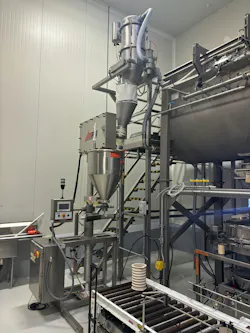
VAC-U-MAX vacuum conveying systems automate this transfer within a substantially enclosed process. Level controls can signal the conveying system to deliver material when the packaging machine requires it, helping maintain the appropriate amount of product in the hopper without overfilling it. A stable material supply can support more consistent filler operation, reduce interruptions and help protect fill accuracy and product quality.
Our modular and mobile system configurations also give manufacturers the flexibility to support multiple products, packaging formats or production lines. Sanitary construction options, tool-less access and application-specific receiver, filter and discharge designs can simplify cleaning and reduce changeover time. Enclosed transfer also helps reduce product loss and housekeeping requirements, allowing more material to reach the package rather than becoming fugitive dust or waste.
3. What technology or industry trends are having the greatest impact on processing equipment design and investment decisions today?
Automation, workforce availability, production flexibility and faster sanitation are having a significant impact on equipment investment. Manufacturers are no longer evaluating an individual machine solely by its rated output. They are examining how well the entire process works together, from ingredient receiving and material transfer through filling, packaging and final handling.
This is increasing demand for modular equipment that can be integrated with upstream and downstream systems and communicate with packaging-machine controls. Manufacturers want conveying systems that respond automatically to product demand, support reliable line operation and can be adapted as products or packaging formats change.
We are also seeing greater emphasis on dust containment, hygienic design, combustible-dust considerations, operator ergonomics and accessibility for cleaning and maintenance. Equipment must be designed around the characteristics of the actual material, not simply the desired conveying rate. Particle size, bulk density, moisture or fat content, flowability, cohesiveness and susceptibility to segregation or degradation can all influence the correct receiver, filter, vacuum source, conveying velocity and discharge configuration.
4. If a process engineer, operations manager, or plant executive visits your booth, what are one or two key insights, best practices, or innovations you hope they take away from the conversation?
The first takeaway is that the performance of a packaging machine depends heavily on how consistently material is delivered to it. The vacuum conveyor and respective hopper should be considered as an integrated process. Properly controlling the refill cycle and maintaining appropriate material levels can help minimize line interruptions and support more consistent packaging performance.
The second is that successful pneumatic conveying begins with the material and the complete process, not with a catalog model alone. Two powders with similar names can behave very differently. Conveying system design should account for the material’s flow characteristics, the required rate and distance, pickup conditions, packaging-machine demand, available utilities, sanitation requirements and the need to preserve product integrity.
At VAC-U-MAX, we combine pre-engineered system platforms with application-specific configuration. This provides manufacturers with a practical path to automation while ensuring that the conveying system is engineered around the material, the packaging equipment and the operating environment. Our goal is to make powder and bulk-material transfer safer, cleaner and more reliable while keeping the packaging line continuously and consistently supplied.