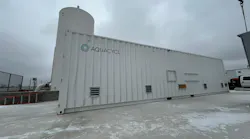
Processing Q&A: Turning industrial wastewater from penalty to power
Key Highlights
- Wastewater can contain recoverable energy, heat, water and materials that may reduce treatment costs and demand for production resources.
- Industries with organic-rich wastewater—including food processing, brewing and ethanol production—may have strong potential for energy recovery.
- BOD, COD, TSS and other wastewater characteristics can help facilities screen opportunities, but feasibility depends on site-specific conditions.
- A food manufacturing project is projected to save more than $5 million annually and offset about 7,500 metric tons of CO2 emissions.
- Facilities should establish a baseline, define desired outcomes and use a phased, data-driven approach before selecting technologies.
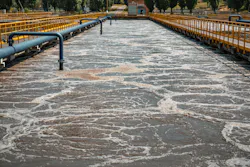
Industrial wastewater is often seen as an unavoidable treatment and compliance expense, but it can also create opportunities to recover energy, water and valuable materials. As facilities face rising operating costs and growing sustainability pressures, wastewater resource recovery offers a way to improve efficiency and reduce expenses. In this Processing Q&A, Ya-Chi Tsao, Ph.D., senior efficiency engineer at Ecosave, discusses how industrial facilities can identify resource recovery opportunities, evaluate their economic potential and turn wastewater from a cost burden into a valuable resource.
Q: Why should industrial facilities view wastewater as an energy source, and a resource to improve process economics, rather than exclusively as a treatment cost?
A: Industrial wastewater can contain valuable resources that facilities overlook, instead focusing on its treatment or discharge. Recovering and reusing these resources can lower operating costs while improving the economics of the overall production process. Specifically, facility operators can convert degradable organic matter into an energy source, recover heat, treat water for reuse and recycle certain materials found in the discharge to their industrial production processes.
Resource recovery can also support a circular economy, which emphasizes preventing waste and keeping resources in productive use for as long as possible. Reusing recovered water and materials within the facility or in other beneficial applications can help reduce demand for required and, sometimes, costly production resources. Resource recovery is one part of this broader approach, complementing efforts to minimize water, energy and material losses.
Moreover, the net financial impact by not recovering resources can be substantial. Facilities may incur treatment costs, discharge fees and wastewater surcharges, and, in cases of noncompliance, penalties, while also losing revenue. Viewing it as an opportunity, rather than simply a compliance obligation, can help facilities reduce costs and support broader sustainability goals. Facilities can also reduce greenhouse gas emissions when the benefits of recovery outweigh the emissions from operating the recovery system. For facilities facing rising energy, water and wastewater treatment costs, resource recovery can become an increasingly valuable business strategy provided the benefits justify the investment and ongoing operating costs.
Q: Which industries offer the greatest opportunities for wastewater resource recovery?
A: Many facilities that discharge wastewater may have opportunities for resource recovery, although technical feasibility and economic viability vary. Certain industries have especially strong potential for energy recovery because of the composition of their waste streams. These include dairy and cheese processing, meat and poultry processing, rendering, brewing, distilling, and sugar, starch, and ethanol production, where wastewater can contain substantial amounts of biodegradable organic material.
The industry is only the starting point. Two facilities in the same sector can have very different opportunities depending on their processes, wastewater characteristics and what they currently discharge. That is why the next step is to understand what is in the waste stream and which recovery opportunities are economically viable for that facility.
Q: What wastewater characteristics or inputs should facilities evaluate when identifying resource recovery opportunities?
A: Facilities should focus on what they currently treat as waste and determine whether it represents a cost, a recoverable resource, or both. Key parameters such as BOD, COD and TSS can serve as initial screening tools, along with an assessment of fats, oils, grease, phosphorus, nitrogen, metals and minerals. These parameters help characterize the wastewater, but further evaluation is needed to determine its recoverable value. Facilities should also consider the water itself and adjacent process streams that may offer opportunities to recover heat or energy from pressurized streams, where sufficient flow and pressure are available.
For example, wastewater with high organic matter loading may offer an opportunity to convert organic carbon into biogas, which can then be used onsite to generate heat and electricity. Suitability depends on the wastewater’s characteristics and operating conditions. Recovered organic solids or sludge may also be converted into products such as biochar, depending on their composition and the conversion process. Suitable fats, oils and grease may serve as feedstock for biodiesel after appropriate separation and pretreatment. Valuable metals may be recovered instead of being removed into treatment residuals for disposal, and water can be treated to a quality suitable for reuse within the facility.
The key is to define the resource and desired outcome before selecting equipment. Ecosave, for example, takes a technology-agnostic approach, using facility data, operational goals and costs to determine the best combination of solutions.
Q: Can you share an example of how resource recovery can reduce costs while supporting energy and sustainability goals?
A: At one large food manufacturing facility, wastewater had become a major operating expense, with reported discharge costs approaching $7 million a year. Ecosave evaluated the facility’s energy and water use and developed a solution centered on anaerobic wastewater treatment and resource recovery. The solution converts organic carbon in the wastewater into biogas to support combined heat and power generation.
The wastewater treatment and combined heat and power solution is projected to deliver more than $5 million in annual savings while offsetting approximately 7,500 metric tons of CO2 emissions annually, subject to confirmation of the calculation scope and reporting basis. The strategy also provides a pathway for additional resource recovery. Potential future phases include nutrient recovery and further effluent treatment and polishing for water reuse. Aquifer recharge could also be evaluated, subject to water-quality requirements, site suitability and applicable approvals.
Q: What should facilities evaluate first when developing a wastewater resource recovery strategy?
A: The first step is to define the problem before choosing a technology. Facilities need to understand what they are trying to address, the scale of the problem and what can be reasonably achieved. This means mapping inputs and outputs across the operation, understanding wastewater characteristics and discharge requirements, and assigning costs to those streams.
Once that baseline is established, facilities can model different approaches and identify opportunities to recover water, materials, heat or energy. A strategy can then be developed in phases based on their priorities. When wastewater characteristics and operating needs support it, a project may begin with heat recovery, anaerobic wastewater treatment, combined heat and power, or fuel cells. Later phases could focus on nutrient recovery, such as phosphorus recovery, and additional water treatment and reuse, subject to technical and economic evaluation. Consider these future opportunities during initial planning because early treatment choices can affect the feasibility of later recovery steps.
A phased approach also matters because resource recovery doesn't have to be an all-or-nothing undertaking. The facilities’ data should guide what to address first, what offers the strongest operational and financial benefits, and how to incorporate additional recovery opportunities over time. Rather than beginning with a predetermined technology, Ecosave evaluates the entire facility and develops a solution around the outcomes the customer wants to achieve.