Previewing PACK EXPO International 2026 with Matt Hale of HRS Heat Exchangers
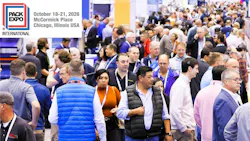
PACK EXPO International 2026 allows attendees to see the latest packaging and processing equipment and technologies up close and in person. But the show also provides an opportunity to take a broader look at the challenges and trends impacting the industry.
With that in mind, Processing asked PACK EXPO International exhibitors about the products and technologies they will have on display at the event, along with the biggest processing or operational challenges their customers are facing today. We’ll be publishing their responses in the weeks leading up to the show, which takes place October 18-21 at McCormick Place in Chicago. In this installment, we hear from Matt Hale, global business development director for HRS Heat Exchangers.
Q: What products, technologies or live demonstrations will visitors be able to see at your booth during PACK EXPO International 2026, and which applications or manufacturing challenges do they address?
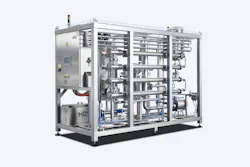
A: HRS will be highlighting their wide range of heating and cooling solutions for every scale of project — from trial units to bespoke skid-based systems for easy installation, to turnkey systems for pasteurization, evaporation and complete process lines. Experienced staff will be on hand to discuss how every HRS heat exchanger or system is custom built to the client’s exact requirements — something that is equally true for the smallest skid-mounted unit to the largest multi-component solution.
Q: What are the biggest processing or operational challenges your customers are facing today, and how are your latest solutions helping manufacturers improve efficiency, product quality, flexibility, safety or sustainability?
A: The global economic outlook remains challenging, but successful food and beverage manufacturers know that investment and continual process improvement are essential for continued success and growth. They are therefore looking for efficient solutions that offer real return on investment over the operating life, including features such as energy efficiency and reuse, reliability, longevity and ease of use and maintenance. Because all HRS heat transfer solutions are designed specifically for the process, rather than being off-the-shelf standard models that may not be an exact fit with existing products, processes or equipment, our clients know that they are receiving an optimal solution to help them improve efficiency, product quality, sustainability and other parameters.
Q: What technology or industry trends are having the greatest impact on processing equipment design and investment decisions today?
A: In terms of heat exchangers specifically, the use of HRS corrugated tube and scraped surface technology, together with high-quality durable materials such as AISI 304 and AISI 316L stainless steel underpin our ability to provide products that maximize energy efficiency while minimizing product losses.
Q: If a process engineer, operations manager or plant executive visits your booth, what are one or two key insights, best practices or innovations you hope they take away from the conversation?
A: We hope that visitors to our stand will understand that every HRS heat exchanger or system is custom built to the client’s exact requirements. For every project, specific elements such as heat transfer, pressure drop and orientation are carefully calculated. Our bespoke approach to every project means that no two units are ever the same, whether that is a small trial unit or a large integrated system comprising hundreds of heat exchanger elements.
About the Author
 Jesse Osborne
Jesse Osborne
Chief Editor
Jesse Osborne is Chief Editor of Processing, a position he has held since 2019. Prior to joining Processing he served as editor for a publication covering the food manufacturing industry. He can be reached at [email protected].