Controlling nuisance dust Part 2: Engineering strategies for dust collection and containment
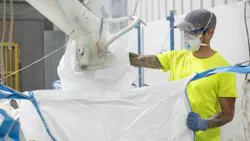
In Part 1 of this article, we explored why nuisance dust is far more than a housekeeping issue and examined the common operations that generate fugitive dust throughout industrial facilities. Once the sources of dust generation are understood, the next challenge becomes controlling those emissions before they affect product quality, worker safety, or plant operations.
Effective dust management requires more than simply adding a dust collector after a problem develops. Successful containment strategies consider source capture, airflow management, filtration, equipment design, housekeeping practices, and long-term maintenance requirements. This article examines practical engineering approaches that can help facilities reduce fugitive dust and improve overall process performance.
Engineering approaches to dust containment
Combating nuisance dust requires a combination of engineering controls applied at different stages of the process. Key strategies include containing dust where it is generated, managing the movement of air that carries dust, and using local collection when needed — all while maintaining a neutral, performance-focused perspective.
Containing dust at the source: The most effective dust control strategy is to prevent dust from escaping in the first place. This means capturing dust right at the point of generation. Design equipment and interfaces to be as enclosed and dust-tight as practical.
For example, enclosed transfer chutes, covered conveyors, and sealed loading/unloading interfaces greatly reduce fugitive emissions compared to open designs. Use consistent flange standards, proper gasket materials, and robust seals on all connections where solids or air might leak. Flexible connectors (sleeves, boots) should be made of durable materials and properly clamped to avoid gaps.
Where materials are manually handled (such as bag dumps), incorporate features such as small-volume enclosures or glove boxes that physically confine dust. By eliminating unnecessary openings and maintaining equipment integrity, you ensure that any dust generated stays within the process equipment until it can be safely collected or cleaned, rather than escaping into the workspace.
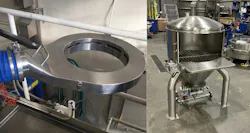
Managing displaced air: Airflow management is central to dust control. During filling, emptying, or any situation where material movement displaces air, that air must have a path to exit without carrying dust into the environment. Properly sized vents, filters, or local exhaust points should be provided on vessels and enclosures to direct the flow of displaced air.
The goal is to create a predictable airflow path where dust is trapped by a filter or drawn into a controlled exhaust rather than letting pressure build and force dusty air through unintended crevices. Poorly defined or insufficient venting often results in dust “burping” out of seemingly sealed equipment.
A critical aspect of air management is filter design and sizing. Nearly every dust control system relies on filters to separate particles from air, so an undersized filter becomes a weak link that allows dust bypass. One key design parameter is the filter’s face velocity (air-to-cloth ratio), which is essentially how many cubic feet of air per minute pass through each square foot of filter media.
Many industrial dust filters are designed for face velocities on the order of only a few feet per minute. If airflow through the filter exceeds that value (meaning the filter surface area is too small for the air volume), dust may not fully settle on the media and can blow through or around the filter. By calculating the required airflow for each vent or pickup point and applying conservative face velocity guidelines, engineers can determine the necessary filter surface area for effective dust capture.
In practice, opting for larger or multiple filters (lower air-to-cloth ratio) provides a safety margin that improves dust retention and reduces pressure buildup. For example, a vent filter on a mixer should be sized not just for normal displacement during filling, but also for any additional purge gas or upset conditions to ensure that no dust-laden air escapes via relief ports or gaskets.
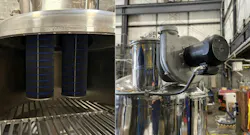
Role of local dust collection: In many cases, even after improving source containment and ventilation, some dust will still become airborne. Local dust collection systems, such as point-source fume/dust extractors or central dust collectors connected by ductwork, serve as a secondary line of defense. Strategically placed pickup hoods or suction points can capture dust from operations such as bag dumping or material transfer before it spreads widely.
For example, a bag dump station might be connected via duct to a dust collector that pulls air downward through a grate as the operator empties each bag. To be most effective, these systems should be integrated as part of the process design, not tacked on as an afterthought. Good dust hood design (adequate capture velocity, proper positioning), balanced airflow (so one pickup doesn’t steal flow from another), and regular maintenance (preventing clogged filters or ducts) are all essential for sustained performance.
It is also important to consider safety features for dust collectors handling combustible dusts — for instance, explosion vent panels, isolation valves, suppression systems, etc., as recommended by standards and dust hazard analyses. A local dust collector should itself be designed and maintained with the same rigor as any key process equipment to ensure that it doesn’t become a source of risk (for example, through filter failures or accumulated dust in the unit).
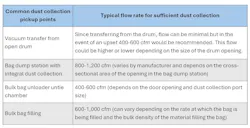
Table 1 lists some of the most common applications encountered but is only a handful of the many processes that generate dust within the industry.
Housekeeping and proper cleaning practices
Even with strong engineering controls, effective housekeeping remains a crucial element of dust management. No containment system captures 100% of dust at all times, so regular cleaning prevents small releases from accumulating into larger hazards. However, not all cleaning methods are equal.
Avoid ineffective cleaning methods: Traditional cleaning methods such as dry sweeping or blow-down with compressed air can actually worsen a dust problem. Sweeping tends to stir up settled dust back into the air, and using compressed air to “clear off” equipment just re-disperses dust into the workplace atmosphere (and potentially into unreachable overhead areas).
These methods may give surfaces a temporary appearance of cleanliness at the cost of distributing dust everywhere else — and in the case of combustible dusts, creating dense clouds that could ignite. In fact, industry guidelines strongly discourage open-air blow-down cleaning of combustible dust for this reason.
Use vacuum-based dust removal: The preferred approach for dust removal is to use vacuum cleaning systems designed for industrial dust. This can range from portable, certified industrial vacuum cleaners (with appropriate filtration and electrical grounding for hazardous dusts) to built-in central vacuum systems with piping to various locations in the plant. Vacuum systems actually remove dust from surfaces and contain it for proper disposal, rather than just relocating it.
For example, workers can vacuum around a packaging line or floor with far less airborne re-entrainment than sweeping would generate. It is vital to ensure that any vacuum or suction device used is rated for the type of dust being cleaned (e.g., explosion-proof or non-sparking for combustible dust, HEPA filtration for toxic dust, etc.).
Prioritize maintenance of dust control equipment: Housekeeping also extends to maintaining the equipment that manages dust. A poorly maintained dust collector or vent filter can render an otherwise sound system ineffective.
One real-world case highlights this: a facility installed a local dust collection system on a bag dumping station, but over time the filter cartridges became completely clogged due to lack of replacement. With the filters blinded, the vacuum could no longer pull air, and dust from each dumped bag simply billowed out into the room.
The lesson is clear: even advanced engineering controls require regular inspections, filter changes, and upkeep. If you routinely see dust around an area that supposedly has a collection system, it is a signal to investigate whether the system is plugged, broken, or insufficient for the task.
Practice good housekeeping as preventive maintenance: Frequent, small-scale cleaning (vacuuming up spills, wiping settled dust before it accumulates) should be part of standard operating procedures. Not only does this reduce safety and health risks, but it also provides an opportunity for operators to observe and report early signs of equipment issues (such as unusual dust leakage that might indicate a seal failure or a tear in a filter). In essence, housekeeping doubles as a feedback loop on the process containment performance.
Standards and best practices: NFPA 660 and industry guidance
Controlling fugitive dust is not just a matter of best practice, it is increasingly mandated by industry standards and regulations. The National Fire Protection Association (NFPA) has long published standards addressing combustible dust safety (e.g., NFPA 654, NFPA 61, NFPA 484, etc.), and as of 2024, the agency has consolidated many of these standards into NFPA 660, a unified standard on combustible dust.
A core message across these standards is that fugitive dust must be managed and minimized. They require facilities handling combustible particulate solids to conduct comprehensive Dust Hazard Analyses (DHAs) and implement measures to prevent dust fires and explosions, which explicitly includes controlling dust emissions and accumulations.
In practical terms, modern codes and guidelines insist that what was once tolerated as a mere “nuisance” (dust layers on beams, dust clouds from transfers) must be addressed proactively. For example, NFPA guidance notes that, even if a facility has never had a dust incident, that is no justification for complacency; absence of past incidents does not equal absence of risk. Good engineering and housekeeping practices, such as those described in this article, are both safety imperatives and likely compliance requirements. Additionally, OSHA (through its General Duty Clause and housekeeping standards) can cite facilities for excessive dust accumulation due to the clear hazard it poses, even in the absence of a specific dust rule.
While adhering to standards, it is important to remain vendor-neutral and performance-focused. Most standards do not prescribe specific technologies; they set objectives (e.g., keep combustible dust below certain layer thicknesses, or use dust collection on processes that generate hazardous dust). Companies can meet these objectives with any combination of equipment and practices that achieve the result. Therefore, the emphasis should always be on evaluating the effectiveness of dust control measures against the hazards present, rather than on any branded solution.
Integrating dust control into process design and operations
Finally, the most cost-effective and reliable way to manage nuisance dust is to embed dust containment measures into the process design from the very beginning. Retrofitting dust control into an existing system is often a band-aid solution — necessary, but less ideal than designing the system to be dust-tight and well-ventilated from the start. When developing new equipment or processes, engineers should collaborate across disciplines (process engineering, safety/EHS, and dust collection specialists) to ensure that material transfer points, vents, and controls are all laid out with dust management in mind.
For example, if a new mixing vessel is being specified, the design should include a suitable vent port that can be connected to a dust collector or filter, rather than treating venting as an afterthought. If a new packaging line is planned, consider adding small extraction hoods at the points where product drops into containers, so dust is captured immediately. Even if the primary equipment supplier doesn’t provide dust collectors themselves, they can still design their equipment with “dust-ready” features such as connection flanges for exhaust ducts and geometry that minimizes ledges where dust can settle.
This integrative approach also means evaluating how changes in one part of the process affect dust behavior overall. A classic example: increasing the speed of a conveyor may boost the production rate, but it could also increase dust generation (due to more turbulence or attrition), thus requiring a stronger dust control system. By reviewing such trade-offs early in the design, teams can choose solutions that optimize both productivity and dust containment.
Designing for dust control means anticipating nuisance dust as a normal byproduct and planning the means to contain or remove it at each step. The result is a smoother startup, easier regulatory compliance, and a safer workplace environment.
Treating dust as a process indicator
As discussed in Part 1 of this article, nuisance dust is often an indicator of broader process, safety, and operational challenges. Effective dust management therefore requires more than housekeeping, it requires a systematic approach that combines source containment, airflow management, proper filtration, dust collection, equipment maintenance, and sound process design.
The most successful facilities treat dust control as an integral part of process engineering rather than a separate environmental or housekeeping concern. By addressing dust generation at its source and incorporating containment strategies throughout the process, organizations can improve product quality, protect employees, reduce safety risks, and create more reliable and efficient operations.
About the Author
 Jake Davis
Jake Davis
Jake Davis is a business unit leader for the Powder Handling and Containment product line at De Dietrich USA. He has been with the company since 2015 and has established himself as a trustworthy partner to solve various powder handling problems for a wide range of customers.
De Dietrich USA is a leading provider of process equipment, integrated systems, and engineered solutions to the bulk chemical, fine chemical, and pharmaceutical industries. Specializing in dense phase pneumatic conveying, De Dietrich provides custom engineered solutions to allow for the safe, contained transfer of powders, granules, and other dry bulk materials. For more information visit www.ddpsinc.com.