
Optimizing dust collection performance through better airflow engineering
Key Highlights
- Balance airflow so every pickup point receives the capture velocity needed to contain dust.
- Design hoods and enclosures to capture dust close to its source without drawing contaminants through workers’ breathing zones.
- Inspect critical process points, ductwork and discharge components for leaks, damage and dust buildup.
- Measure airflow and static pressure to identify performance gaps that equipment checks alone may miss.
- Reassess collection systems after process changes, production increases or equipment modifications.
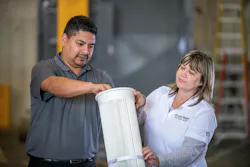
Manufacturing and processing leaders know that dust is continually generated throughout production processes, and wherever material is moved or stored, there is likely dust that needs to be contained. Even when a dust collection system appears to be working, dust can still escape into production areas and surrounding communities, negatively impacting air quality. Often, the problem is not the collector itself but improperly engineered airflow, which can undermine dust containment, reduce efficiency and shorten equipment life.
Proper airflow is essential for effective dust collection
The good news is that when appropriately sized and engineered equipment — i.e. tailored to the size of a plant’s operations and its type of dust — is paired with proper airflow engineering, modern dust collection technologies can successfully contain 99.9% of fugitive dust emissions.
Airflow engineering is the process of designing, balancing and controlling how air moves throughout a dust collection system. It ensures that each pickup point receives the airflow and capture velocity needed to collect airborne dust particles at their source and transport them to the collector. Performance depends on how hoods, enclosures, ductwork, fans and filters work together as a balanced system.
Poor dust containment increases safety and operating costs
Poor dust containment affects worker health and safety, regulatory compliance and operating costs. Airborne particulate matter, including silica and other process-generated dusts, can create respiratory hazards and reduce workplace air quality. Dust accumulation on walkways and equipment also increases slip-and-fall risks, makes routine maintenance more challenging and increases the likelihood of unplanned downtime.
Dust escaping collection systems can represent wasted product while increasing cleanup costs, energy consumption, equipment wear and filter replacement frequency. Facilities may also face regulatory violations, fines or production disruptions when emissions exceed acceptable limits or systems fail to perform as intended.
Airflow balance and enclosure design determine capture efficiency
Maintaining balanced airflow throughout the dust collection system is key to consistent performance. Uneven airflow can leave some pickup points with more airflow than they require while others are starved of the airflow needed to effectively capture dust. This imbalance allows dust to escape even when the dust collector appears to be operating normally.
Even when a system appears to be working normally, hidden issues such as airflow imbalance, leaking ductwork, worn filters or dust buildup can quietly reduce dust collection performance over time.
Airflow balance and enclosure design are critical factors that must work together to contain dust at its source. Hoods and enclosures at material transfer points, bag dump stations and other dust-generating locations help isolate airborne dust particles before they spread throughout the facility.
Enclosure design alone, however, cannot ensure effective capture. Each pickup point requires sufficient airflow and capture velocity to draw dust into the collection system. Too little airflow allows dust to escape, while excessive airflow can pull valuable product into the system, increasing operating costs and reducing process efficiency.
Inspect and measure airflow at critical process points
Material transfers, directional changes and equipment interfaces can disrupt airflow and compromise dust capture if not properly designed. Facilities should routinely survey these critical process points for visible emissions, while recognizing that hazardous fine and respirable particles may remain airborne long after visible dust disappears.
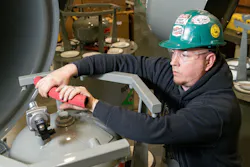
Measuring airflow and static pressure can help identify imbalances, damaged components and pickup points where capture velocities have fallen below design requirements. Operators should also inspect hoods, enclosures, ductwork and discharge components for damage, dust buildup and air leaks that can reduce collection efficiency.
Reassess system performance whenever a process change takes place, production volumes increase or equipment modifications occur, which can significantly alter airflow requirements and dust generation. A system that previously performed well may no longer provide adequate containment if operating conditions have changed.
Design the entire dust collection system for performance
Effective dust collection requires system-wide design that accounts for airflow, source capture and the performance of every component.
The hood and related enclosures are among the most important design considerations. Dust should be captured as close to the generation point as possible, with airflow directed so contaminants are not pulled through a worker’s breathing zone. OSHA recommends that hoods have good air distribution and account for cross-drafts.
Once dust is captured, airflow velocities within ducting must stay high enough to keep particles suspended and prevent buildup. Proper duct sizing and balanced airflow throughout the system help maintain conveying velocity while delivering the required airflow to each pickup point.
Dry dust collection systems, typically used in industrial settings, can range from small point-source systems like conveyor collectors to large centralized systems serving multiple process areas. Fan and dust collector selection should account for required air volume, dust characteristics and the number of collection points, and discharge components must be designed to prevent air leaks.
Verify dust collection performance beyond equipment specifications
Many manufacturers are surprised to learn that dust containment problems can persist even when filters are clean and fans are running. Unbalanced airflow, improperly sized ductwork and other system deficiencies can prevent dust from being captured effectively, regardless of the collector's apparent operating condition. In these situations, the issue is not necessarily the collector itself, but the assumption that installed equipment automatically delivers effective dust containment.
Evaluating airflow throughout the process and verifying that dust is being captured at the source can help manufacturers move beyond assumption, identify performance gaps and achieve measurable dust containment results.
About the Author
 Jake Gerson
Jake Gerson is a sales engineer at C&W DustTech. He has been part of C&W for more than a decade, bringing a unique combination of engineering expertise, sales acumen and a passion for customer service. Having started his career on the C&W engineering team, Jake built a deep understanding of the company's dust collection technology across industries including Ready-Mix, Mining and Aggregates, and internal processes.
Related
 dreamstime_xs_62672153
 Dust collection systems