Turn data to insight for reliable, efficient operations
Key Highlights
- Digitalization links equipment, instruments, and systems to create a continuous flow of operational data, enabling better decision-making.
- AI and machine learning analyze historical and real-time data to forecast equipment behavior, helping prevent failures before they occur.
- Integrated analytics platforms unify data from multiple sources, providing a holistic view of plant operations and asset health.
- Predictive maintenance reduces unplanned downtime, lowers costs, and improves process stability and product quality.
- Empowering plant personnel with user-friendly analytics tools enhances their ability to interpret data and act swiftly on insights.
In the process industries, a thin margin separates dependable output from costly disruption. Many plants must run nearly continuously, with just narrow windows to take equipment offline for service. As asset fleets age, product portfolios broaden and regulatory demands around safety, emissions and reporting intensify, process manufacturers face steady pressure to protect uptime.
Adding to the challenges, the retirement of experienced operators carries hard-won process knowledge out the door, raising the value of capturing that expertise in software. Fortunately, digitalization and the industrial internet of things (IIoT) provide paths forward by linking equipment, instruments and business systems into a continuous stream of operational data.
However, connectivity by itself changes little. What sets a reliable plant apart from one plagued by unplanned downtime is how well it puts the data to use. Operational information tends to pile up across many systems, and when it sits siloed or buried in spreadsheets, engineers struggle to know where to begin. Once the data is organized for real analysis, it opens the door to predictive strategies that prepare personnel to head off emerging issues before they manifest in failures.
The stakes reach well beyond the maintenance budget. In continuous and batch operations alike, one unplanned shutdown can translate into millions in lost production, off-spec material and emergency work. Furthermore, the same patterns that warn of an impending equipment failure often erode yield, add rework and nudge a plant off its emissions and sustainability targets. For example, a pump running off its curve, a fouled heat exchanger or a sticking control valve threatens not just a repair schedule, but the economics of the entire plant. For these and other reasons, effective digitalization pays dividends, increasing reliability, quality and margin all at once.
From spreadsheets to signal
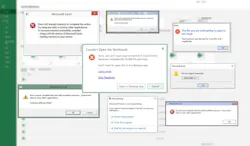
For years, digitalization stalled at the spreadsheet. Analysts once spent as much as 90% of their time collecting, cleansing and preparing data by hand, which left little room for the analysis that creates value (Figure 1). Every new question meant rebuilding the same manual pipeline, and the signals that mattered stayed scattered across disconnected systems.
But there is good news for processors, as advanced analytics platforms and artificial intelligence (AI) have since inverted that ratio. By automating significant portions of the preparation required for effective analysis, they free subject matter experts (SMEs) to interpret results and act on them. This empowers engineers to begin analyzing new datasets in minutes and scale their findings across an enterprise, moving the plant from explaining what already happened toward anticipating what comes next.
AI's expanding role on the plant floor
Across process operations, AI increasingly tunes process conditions, improves product quality and reinforces asset reliability. For predictive work, machine learning (ML) and generative AI matter most because they learn patterns from historical and real-time data and use them to forecast behavior, catching subtle signs of degradation a human could easily miss. The most durable models keep the SME central, however, because the experts who know the process best provide the most valuable context to elevates the analysis. Meanwhile, AI amplifies these judgments, rather than supplanting it.
This human-in-the-loop discipline reflects a deliberately cautious industry. Because safety, product quality and regulatory compliance allow no shortcuts, AI must rest on solid processes, clear governance and trustworthy data. Most process manufacturers therefore begin with narrow, high-value use cases, or well-bounded problems where model behavior is explainable and the payoff is measurable. Predictive maintenance is a natural place to begin because its models focus on specific assets and its results surface directly as avoided downtime.
One contextualized view of the plant
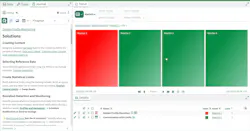
For many processors, fragmentation is the central obstacle to digitalization, with critical signals spread across systems that rarely talk to one another. Modern analytics and AI platforms address this issue by integrating and aligning data from multiple sources, then flagging anomalies automatically. Intuitive visualizations such as trends, heat maps and scatter plots make emerging risks easier to spot (Figure 2), and as more labeled data accumulates, ML models steadily sharpen their predictions.
Instead of displacing existing workflows, these platforms layer over the process historian, laboratory information management system (LIMS), computerized maintenance management system (CMMS), manufacturing execution system (MES) and other sources to form one contextualized picture of asset and process behavior. That picture connects the dots between equipment performance and product quality, degradation and energy intensity, and control-component behavior and cycle time, and it does so without custom coding or IT-heavy effort.
On the reliability front, these platforms move plants from time-based toward condition-based and predictive maintenance in three ways.
- First, they cleanse and contextualize raw tags, segmenting data by operating state and aligning equipment signals with batch, grade or campaign structure.
- Second, they empower SMEs to build asset health indicators, from deviations off pump and compressor curves to falling heat-exchanger U-values and control-valve stiction signatures, then apply them consistently across thousands of similar assets through asset hierarchies and templated analytics.
- Third, they close the loop with maintenance systems, generating structured work orders automatically so model output becomes planned intervention rather than emergency repair, while feedback from completed work refines the models over time.
Digitalization in practice
One prominent chemical manufacturer was servicing its control valves according to original equipment manufacturer (OEM) guidance and operator feedback, but it suspected these components were causing both reliability problems and process instability. The processor deployed Seeq to investigate further, integrating valve, process and maintenance data.
This unified information provided the reliability team with a holistic picture of the plant, so they were able to quickly detect stiction, excessive cycling and benchmark performance across critical assets. They scaled this early win quickly, and using asset hierarchies and visual tools, the team extended the models to thousands of valves to pinpoint the weakest sites and equipment. This resulted in a coordinated, fleet-wide program that curbed control problems and manual analysis, while measurably lifting overall equipment effectiveness (OEE) and process stability, all without replacing any hardware.
A second chemical producer set out to cut the cost and disruption of time-based maintenance on critical pumps and reactors, which too often meant needless overhauls alongside surprise failures. Working in Seeq, the team built an equipment health indicator from existing operating data, including flow, suction and discharge pressure, temperature and power draw.
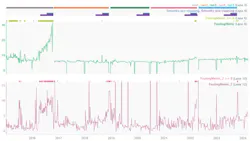
The team first filtered out recycle periods and abnormal operation, then judged performance against pump curves. With health scores and daily profiles in hand, the plant shifted to condition-based servicing guided by actual performance trends, rather than the calendar, prioritizing underperforming assets from fleet-level views (Figure 3).
This approach delivered roughly $200,000 in annual savings by trimming unnecessary maintenance and unplanned interventions, and it improved availability and stability along the way. Standardizing the approach across similar pumps then carried those gains well beyond the initial units.
Digitalize around the people who run the plant
Effective digitalization rests on two things: continuous access to contextualized equipment and process data, along with the people who know how to read it. Putting advanced analytics directly in the hands of process experts, without turning them into programmers, empowers teams to resolve more issues before they become downtime.
The change is less about adopting new tools than about how organizations think, collaborate and improve. When time-series data, institutional knowledge and AI come together, plants gain not only predictive insight but the confidence to decide faster. The next era of process performance will be powered by data and IIoT, and driven by the experts who know how to apply them.
About the Author
 Janelle Armstead-English
Janelle Armstead-English
Chemicals Industry Principal at Seeq Corporation
Janelle Armstead-English is the Industry Principal for Chemicals with Seeq Corporation. She has an engineering, market research, sales and product management background with a dual degree BS in Chemical Engineering and Mathematics from the University of Pittsburgh. Armstead-English has two decades of experience working with various chemical manufacturers like Honeywell UOP, Praxair (now Linde) and Abbott (now Abbvie). In her current role, she enjoys analyzing the ever-changing chemicals market and understanding the challenges and opportunities around digital transformation for chemicals customers.