Six proven strategies to reduce your dust collection system’s energy consumption
Key Highlights
- Reducing conditioned air exhaust by recirculating filtered air can significantly cut HVAC energy costs, provided regulations and safety considerations are met.
- Effective source capture minimizes airflow needs by collecting dust at the point of generation, reducing overall system energy consumption.
- Optimizing ductwork design and minimizing static pressure through proper sizing and layout decreases fan energy requirements.
- Selecting and maintaining appropriate filters reduces system resistance, ensuring efficient operation and lower energy use over the system's lifespan.
- Implementing variable frequency drives allows fans to operate at variable speeds, matching actual demand and saving energy during low-load conditions.
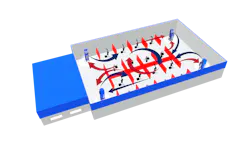
Industrial dust collection systems play a critical role in maintaining safe working environments, protecting equipment and ensuring compliance with environmental and occupational health regulations. However, they also represent one of the largest continuous energy consumers in many manufacturing facilities.
As manufacturers face rising utility prices and increasing pressure to improve sustainability, reducing the energy consumption of dust collection systems has become a growing priority. Fortunately, advances in system design, filtration technology and intelligent controls are making it possible to dramatically improve efficiency without sacrificing dust capture performance.
Today’s most efficient dust collection systems combine multiple technologies and design strategies to minimize energy use while still maintaining consistent airflow and reliable contaminant capture.
1. Keep conditioned air inside
One of the most fundamental ways to reduce the energy impact of dust collection is to avoid exhausting conditioned air from the building whenever possible.
Traditional exhaust systems may pull large volumes of heated or cooled indoor air out of the facility along with collected contaminants. That air then has to be replaced with outside makeup air, which may need to be heated in the winter, cooled in the summer or otherwise conditioned before entering the workspace. Depending on the climate and volume of air involved, these heating and cooling requirements can add substantially to overall energy costs.
Where regulations and the application allow, properly filtered air can sometimes be returned to the facility instead of exhausted outdoors. This reduces the amount of makeup air that must be conditioned and can significantly reduce the HVAC load associated with dust collection.
Of course, air recirculation is not appropriate for every contaminant or application. Facilities must consider the characteristics and hazards of the collected material, applicable regulations, and filtration requirements when determining whether returning filtered air to the facility is appropriate.
2. Capture contaminants close to the source
The less air you need to move, the less energy your dust collection system will consume. That makes effective source capture one of the foundations of energy-efficient system design.
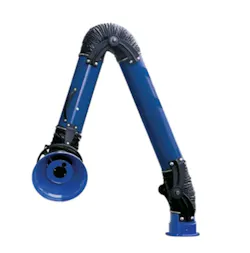
Source capture collects dust and fumes at or near the point of generation before contaminants have an opportunity to disperse throughout the facility. Compared with systems designed to clean large volumes of ambient air, effective source capture can control contaminants using significantly less airflow.
Hood design and placement are critical. A capture hood positioned too far from the contaminant source may require substantially more airflow to achieve the same level of control. Enclosures, close-capture hoods and other properly designed capture methods can often achieve better contaminant control while moving less air.
The goal is not simply to maximize airflow. It is to capture contaminants effectively using only the airflow the application actually requires.
3. Minimize static pressure through smart system design
Once required airflow has been minimized, the next step is making it as easy as possible for that air to move through the system.
Every component in a dust collection system creates some resistance to airflow. Duct diameter and length, elbows, transitions, dampers, filters and other components all contribute to the total static pressure the fan must overcome. The greater the resistance, the more fan energy is required to maintain the necessary airflow.
Efficient ductwork design can reduce these losses. Properly sized ducts, smooth transitions, appropriate transport velocities and layouts that avoid unnecessary bends or excessive duct runs can all help reduce static pressure without compromising collection performance.
System design should also account for how the entire network operates rather than evaluating individual components in isolation. An efficient dust collector attached to poorly designed ductwork can still result in unnecessary energy consumption. Reducing resistance across the entire system helps minimize required fan horsepower and operating costs.
4. Take care of your filters
Filters have a direct impact on system resistance and, consequently, energy consumption. Choosing the right filters and keeping them operating efficiently can help maintain lower pressure drop throughout the life of the system.
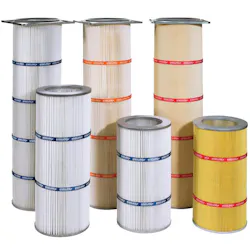
Filter selection should always be matched to the dust being collected. Particle size, abrasiveness, moisture content, chemical properties and required filtration efficiency can all affect which media will provide the best balance of performance, pressure drop and service life. Modern filter media options for cartridge filters, including nanofiber and PTFE technologies, can also improve dust release during cleaning while maintaining the filtration efficiency required for the application.
Once filters are installed, regular maintenance is equally important. As dust accumulates on filter media, resistance increases and the fan must work harder to maintain airflow. Monitoring differential pressure provides an indication of filter loading and can help facilities determine when cleaning or replacement is necessary.
For cartridge-style dust collectors, pulse-jet cleaning can help control this pressure drop by sending short bursts of compressed air through the cartridges to dislodge accumulated dust. Rather than cleaning on a fixed timer, demand-based systems use differential pressure to initiate cleaning only when needed. This helps maintain consistent airflow while reducing unnecessary compressed air consumption and excessive wear on the filter media.
5. Consider a variable frequency drive
After the fundamentals of airflow, capture, system resistance and filtration have been addressed, a Variable Frequency Drive (VFD) provides another opportunity to reduce energy consumption by matching fan output to actual system requirements.
In a conventional system, the fan may operate at full speed whenever the collector is running, even when maximum airflow is not required. A VFD allows motor speed to increase or decrease based on system demand instead.
This can produce substantial energy savings because fan power requirements change dramatically with speed. Even a modest reduction in fan RPM can result in meaningful reductions in electrical consumption over time.
A VFD can also respond to changing filter conditions. When filters are relatively clean and pressure drop is low, the fan can operate at a lower speed. As filters load and resistance increases, fan speed can gradually increase to maintain the required airflow. Rather than designing your operation around the system's highest possible resistance, the VFD allows energy use to more closely follow actual conditions.
6. Implement intelligent controls
For facilities ready to take efficiency a step further, intelligent controls can coordinate airflow throughout the dust collection system based on real-time production demand.
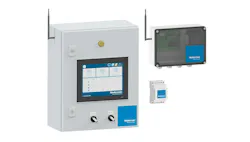
CNC machines cycle on and off, robotic welding cells pause between runs, and individual workstations may sit idle for portions of a shift. Yet a conventional centralized system may continue pulling air from every pickup point regardless of whether contaminants are being generated.
Demand-based controls change that equation. Sensors monitor equipment activity, while automated dampers open airflow to active processes and close or reduce airflow to inactive ones. Paired with a VFD, the collector continues running while the fan modulates its speed to match total airflow demand — ramping down as processes go idle and back up as they return to production. Rather than frequent cycling between full output and no output (which can damage the fan wheel), the system continuously adjusts to deliver only the airflow the facility needs at any given moment. The result is a dust collection system that scales smoothly with production rather than operating at a fixed rate.
More advanced systems can also incorporate IIoT monitoring to provide data on airflow, pressure, filter condition and equipment performance. This information can support predictive maintenance, identify declining efficiency and give facility managers greater visibility into how the system is performing over time.
The progression is important: intelligent controls cannot compensate for inefficient capture, excessive static pressure or poorly maintained filters. By addressing the fundamentals first and then layering in technologies such as VFDs and demand-based controls, facilities can build a dust collection system that delivers the required performance with significantly less wasted energy.
A systems approach delivers the greatest savings
No single technology can maximize dust collection efficiency on its own. The greatest reductions in energy consumption occur when facilities view dust collection system design as an integrated process rather than a collection of individual components.
As manufacturers continue looking for ways to reduce operating costs and improve sustainability, investing in a comprehensive approach to dust collection efficiency offers benefits that extend well beyond lower utility bills. Well-designed, energy-efficient systems can improve air quality, extend equipment life, reduce maintenance requirements and increase overall operational reliability — creating long-term value for both the facility and its workforce.
About the Author
 Rick Kreczmer
Rick Kreczmer
Rick Kreczmer is President of RoboVent, a supplier of industrial dust, fume, and mist collection and industrial ventilation equipment to a wide range of industries.