Processing's Weekly Mixer: Disaster planning in process plants, and more

A compilation of recent coverage related to the process industries from across EndeavorB2B brands.

Welcome to the latest installment of Processing's Weekly Mixer, which highlights recent content from EndeavorB2B brands relevant to process manufacturers.

This week's entry features content from Chemical Processing, Pharma Manufacturing, Control and Plant Services, as well as this week's content from Processing.
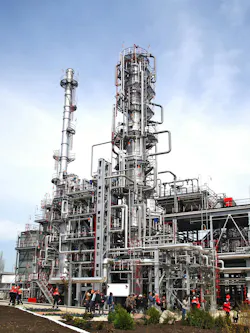


Disaster planning in process plants: The best offense is a passive defense

From Chemical Processing: Smart design and layout choices, made well before a crisis hits, can protect plants from cyberattacks, sabotage and extreme weather without a major capital investment.

Amin Almasi writes:

Public scrutiny over chemical plant safety will likely intensify amid global instability and a string of recent near disasters. Consider the incident this past May at an aerospace plastics plant in Garden Grove, California, where an unstable tank of methyl methacrylate triggered mass evacuations and a state of emergency for the surrounding community. Add the 2023 expiration of the Chemical Facility Anti-Terrorism Standards regulation in the U.S., along with newer technology threats like drones, and plants find themselves at a crossroads.

Active defense strategies often garner much of the attention due to their innovative, high-tech modes of protection. But a safety-by-design approach known as passive defense can prevent disastrous outcomes without a significant upfront investment. Passive defense covers the design, configuration and layout choices that protect plants from damage and production interruptions caused by security threats and other risks.

Unlike active defense, which depends on personnel, sensors and equipment to detect and respond to a threat as it unfolds, passive defense relies on decisions made long before any incident occurs. In today's environment, where plants face everything from cyberattacks to extreme weather to deliberate sabotage, these upfront design choices often determine whether a facility survives an event with minimal disruption or incurs extensive damage and a long shutdown.

Despite the protection they offer, passive-defense provisions are often overlooked in plant design. Most of these measures are inexpensive and straightforward to implement, yet they can prevent operational interruptions and facility damage. A few examples of passive defense strategies include the use of landscaping to hide or camouflage the facility, strategically placed spare equipment and fire-protection measures, including the use of fire-resistant walls around higher-risk operations.

Read the entire article HERE.


AstraZeneca designs cell therapy facility for zero downtime

From Pharma Manufacturing: Designed around uninterrupted operation, automation, and sustainability, the site offers a blueprint for the next generation of commercial autologous manufacturing.

Andy Lundin writes:

Cell therapy manufacturing is entering a new phase of commercial maturity after several years of uneven growth. Momentum accelerated in 2025, with the cell and gene therapy sector recording approximately $12 billion in disclosed investment activity, according to the International Society of Cell and Gene Therapy. 

One company investing heavily in that future is AstraZeneca. In 2025, the company opened its $300 million commercial cell therapy facility in Rockville, Maryland, reinforcing its long-term commitment to manufacturing. Now in 2026, the Rockville facility has been recognized as one of the winners of 2026 Facility of the Year Awards by the International Society for Pharmaceutical Engineering (ISPE).

“As an industry, I like to say we're kind of like moving up the S-curve,” says Heather Francis, head of cell therapy manufacturing at AstraZeneca. “We’ve been for a while at the bottom of that curve, but now with investment by AstraZeneca and our peers, we’re starting to move up the S-curve in a way that we can really adopt the technologies and scale out what’s needed for these advanced therapies to be realized and have many patients have access. I’m really proud of not only this award, but also all the work we do at AstraZeneca in this space. It’s really exciting.”

Read the entire article HERE.


A future framework for resilient operations

From Control: In the latest episode of Control Amplified, Vishal Mehta, vice president and general manager for Honeywell Connected Industrial Solutions and Autonomy X enterprise consulting practice, talks about how energy companies are adopting a new framework for resilient operations. Listen to the episode below.

Reliability culture determines predictive technology success in manufacturing

From Plant Services: Industry experts at Ultrasound World 2026 shared how they achieved better predictive maintenance results by building reliability culture alongside advanced monitoring.

Anna Townshend writes:

Over two days of presentations and panel discussions at Ultrasound World 2026, one message from reliability leaders was a constant like the waves crashing on the beach outside in Clearwater, Florida. Predictive maintenance succeeds because of people—not technology.

“Programs don't scale; habits do. You have to make [reliability] part of your day-to-day, and make it part of your culture.” That observation from Jeremy Bey, strategic accounts leader at UE Systems, captures a challenge facing many manufacturers and reliability programs today. Plants are investing in ultrasound, vibration monitoring, artificial intelligence, remote monitoring, and advanced analytics, but the technology itself is rarely the reason reliability programs succeed or fail.

Across presentations from reliability leaders at Michelin, Amazon, FedEx, UE Systems and others, the biggest barrier to predictive maintenance is not access to better tools. (Of course, those industry leaders have the best technology and tools.) The challenge is creating the organizational behaviors and culture that allow those tools to deliver value.

There was plenty of room for discussion about technology at the conference, and it had its time in the spotlight, but speakers spent far more time discussing leadership, training, standardization, and accountability. As Chris Hileman, reliability engineering manager at Amazon, summarized, “At any scale, reliability success is built on cultural consistency, disciplined execution, cross-functional accountability. While technology will amplify what you're doing, it cannot fix it.”

Read the entire article HERE.


Recapping the week on Processing

Articles

Cooling towers facing new water reality

Large facilities under growing pressure to conserve water are exploring alternative treatment approaches as a practical way to reduce blowdown and save water without disrupting operations.

Solving fluid transfer challenges in modern paint and coatings manufacturing

How AODD pumps provide material compatibility, fluid-handling flexibility and reliable operation needed to protect formulations and maintain throughput.

ISA-84.91.03: A new framework for low-integrity protection layers

The new standard closes a long-standing gap by defining lifecycle expectations for instrumented protection layers outside traditional SIS requirements.

Where experienced engineers go wrong when designing high-velocity dust collection systems — Part 5: Silo bin vents

Surge airflow at the end of a pneumatic conveying cycle can overwhelm improperly designed silo bin vents, making airflow analysis essential during system design.

Engineering efficient separation in industrial fermentation

From pharmaceuticals to bio-based chemicals, advanced centrifuge systems help clarify fermentation broth, dewater slurries and recover valuable products for up and downstream processing.

Polymer Resources cuts post-blending time more than 30% with rotary batch mixer

The new rotary batch mixer from Munson Machinery enables Polymer Resources to blend up to 6,000 pounds of specialty resin in just two to three minutes.

Application Corner: Ideal flowmeters (Part 2)

The latest installment in David W. Spitzer's long-running Application Corner series.

Quiz Corner: Feedback vs. cascade control strategies

Do you have the right answer? Find out by reading the latest installment of David W. Spitzer's Quiz Corner series.

Podcast

Jesse Yoder on the future of flowmeters and dual-tube technology

In this Processing Pros episode, the Flow Research CEO discusses flowmeter technologies and how his patented dual-tube meter could reshape industrial flow measurement for process manufacturers. Listen to the episode below.

Industry News

New book on mass flow measurement explores Coriolis theory and the geometry of flow

Mass Flow Measurement explores the concept of mass and its measuring technologies in non-technical language.

Intersnack Group expands into U.S. snack market with Utz acquisition

Utz says the transaction supports continued investment in its brands, manufacturing, technology, and long-term growth strategy.

Three process equipment numbers every manufacturing buyer should understand

Gericke USA COO Alexandre Venancio outlines how engineering calculations influence mixer performance, conveying efficiency, and size reduction results.

General Mills faces Florida subpoena over potassium bromate supply chain

Florida Attorney General James Uthmeier has subpoenaed General Mills as part of a consumer protection investigation into potassium bromate in flour products sold throughout the state.

New Products

New Multimilla+ roller mill targets milling efficiency and food safety

Imas has introduced the Multimilla+ roller mill with new feeding, grinding, and automation technologies designed to improve milling performance.

Gericke RotaVal expands Fast Clean rotary valve range to 400 millimeters

Updated Fast Clean rotary valves combine improved hygienic design with faster maintenance to help manufacturers reduce production downtime.

ActiveCool DTS 5000 enclosure cooling units improve airflow and installation efficiency

Pfannenberg has introduced the ActiveCool DTS 5000 Series enclosure cooling units with improved airflow, R513A refrigerant, and external service access for industrial control cabinets.

Emerson expands flame detection portfolio

New flameproof model adds hazardous-location certification to Rosemount 965 Flame Detector with QuadSense technology and factory-calibrated-for-life operation.

MagnaShear hazardous duty motor brakes receive CSA approval in North America

Oil Shear Technology helps MagnaShear motor brakes reduce wear while providing reliable braking in hazardous industrial environments.

Titan Enterprises unveils next-generation hygienic oval gear flowmeters

A key advancement in the redesign is the transition from a cast body construction to a fully machined, engineered design.

Dual energy photon-counting X-ray system with AI capabilities

Designed specifically for packaged applications, the X56 DXD+ enables manufacturers to inspect every product with confidence by delivering enhanced contamination detection capabilities.

Sign up for our eNewsletters
Get the latest news and updates