Processing's Weekly Mixer: When the process hazard is the network; and more

Welcome to the latest installment of Processing's Weekly Mixer, which highlights recent content from EndeavorB2B brands relevant to process manufacturers.
This week's entry features content from Chemical Processing, Plant Services, Automation World and Food Processing, as well as this week's content from Processing.
When the process hazard is the network
From Chemical Processing: Cyber exposure is quietly undermining the safety assumptions chemical plants depend on. It's time hazard analysis caught up.
Denrich Sananda, managing partner and senior consultant at Arista Cyber, writes:
The chemical industry must change the way it assesses risk as digitalization evolves. Well-practiced hazard and operability studies and safety integrity level, or SIL, assessments depend on clearly defined initiating events and credible failure scenarios. Traditionally, these have centered on physical or electrical faults, such as a transmitter failing low, a valve sticking or a tripped power supply.
The increase in digital connectivity introduces additional potential risks. Control logic can be altered remotely. Communications can be delayed or disrupted. Configuration files can change without visible hardware impact. Equipment can remain seemingly fully intact while safety functions degrade or behave differently from their validated design assumptions.
If interference hinders a shutdown function or suppresses an alarm, SIL performance can be affected. Yet cybersecurity is still widely treated as an IT support function rather than a defined component of safety assurance.
Sananda also recently wrote an article for Processing outlining how cybersecurity weaknesses can prevent safety functions from operating on demand, yet rarely feature in HAZOPs or SIS risk assessment.

How Bush Brothers & Company deployed a three-phase PM optimization strategy
From Plant Services: In the latest episode of Great Question: A Manufacturing Podcast, Tony Peterson of Bush Brothers and Jeff Shiver of People & Processes outline how improving your PM completion rate can be a bridge to condition-based maintenance.
The conversation explores how improving PM accuracy, leveraging tools like P&IDs and CMMS data, and engaging technicians can shift operations from reactive to proactive maintenance. They also discuss common pitfalls in PM programs, including low-value tasks and scheduling challenges, along with strategies to improve compliance and efficiency.
Listen to the episode below.
How industrial databases are evolving into real-time intelligence engines

Can the meat industry capitalize on its MAHA, dietary guidelines moment?
From Food Processing: In the lastest episode of the Food for Thought podcast, Andy Hanacek and Brian Brozovic discuss how the meat industry is preparing for the potential of the MAHA movement and new dietary guidelines to give meat and poultry a boost.
Listen to the conversation below.

Recapping the week on Processing
Articles
A guide to selecting the right flow measurement technology for every semiconductor fab process
A recipe for batch processing success
Case study: Achieving fast ROI by eliminating industrial wastewater hauling
Ask a Powder Pro: How do I determine whether my facility needs a centralized dust collection system or multiple point-of-use collectors?
Podcast
Automation trends shaping process manufacturing in 2026
Processing's Photo of the Month
Senior editor Nate Todd writes:
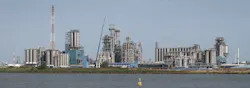
Processing’s first photo of the month is this view of the TotalEnergies Polymers plant in Antwerp, Belgium, taken from across the Scheldt River. The photo was taken by German Simonson, a Lithuanian IT professional whose hobby is industrial photography. Simonson operates the website Industrial Fine Art as well as a Facebook page and an Instagram page under the same name. He also administers an Industrial Fine Art Facebook group that has more than 129,000 members.
While many of Simonson’s photos are more artistic, we chose this one to illustrate the value of simply documenting a facility or process. “While I position myself as a fine art photographer, in reality, perhaps 80% of my photos are basically documentary,” Simonson says. “The photos at that plant are just simple photos. Good quality, but nothing artistic.”
The photo does have a pastoral quality, however, making the plant appear almost like an isolated city on a plain. In reality, the polymers plant is part of a vast complex that also includes a crude oil refinery and an olefins plant. The polymers plant converts ethylene produced by the olefins plant into high-density polyethylene (HDPE) powders and pellets for the plastics industry.
Last spring, the company announced plans to shut down the older of two steam crackers at the site’s olefins plant in 2027, citing a cancelled offtake agreement by a long-term customer. The closure also aligns with the company’s long-term strategy of pivoting away from oil and gas and achieving carbon neutrality by 2050.
Less aligned with that long-term strategy was the announcement this week that TotalEnergies reached an agreement with the Trump administration to redirect nearly $1 billion of investment from East Coast offshore wind leases to oil and natural gas and LNG production in the U.S., along with a pledge not to develop any new offshore wind projects in the U.S.
In a statement, Patrick Pouyanné, Chairman of the Board of Directors and CEO of TotalEnergies said, “These investments will contribute to supplying Europe with much-needed LNG from the U.S. and provide gas for U.S. data center development. We believe this is a more efficient use of capital in the United States.”
The photo also highlights the challenge of accessing processing plants and how facilities can seem distant and mysterious to outsiders. This is why we hope going forward that you, the insiders, will contribute photos for this feature that take us beyond the security fence and help unravel the mysteries behind the industrial processes we all depend on.