Processing's Weekly Mixer: How data is redefining industrial safety, and more

Welcome to the latest installment of Processing's Weekly Mixer, where we highlight the newest content from across EndeavorB2B brands relevant to the process manufacturing industries.
This week, we feature content from Plant Services, Control, Chemical Processing and Automation World, as well as recapping all of the content published to Processing during the course of the week.
— Jesse Osborne, Chief Editor
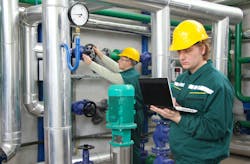
How data is redefining industrial safety
From Plant Services: Managing editor Anna Townshend examines how manufacturers are moving beyond audits and checklists by using data-driven safety platforms to improve compliance and proactively manage workplace risk.
Key highlights of the article:
- Manufacturers are adopting cloud-based safety platforms to centralize data, streamline compliance and enable remote access for safety teams.
- Predictive analytics and AI are used to identify high-risk areas before incidents occur, enabling proactive risk management.
- Digital safety tools facilitate continuous documentation and reinforce safety behaviors, reducing reliance on manual record-keeping.
Townshend writes: As industrial environments grow more complex, the move from compliance to prediction signals a broader maturity in how safety is managed. By leveraging data to see risks sooner and respond faster, organizations are positioning safety as an integral part of operational excellence, not just a regulatory obligation.
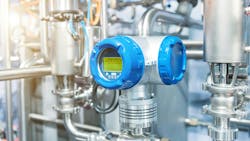
The key to high flowmeter performance: tight coupling
From Control: Flow Research president and founder Jesse Yoder explains why accuracy is fundamentally driven by how directly and precisely the measurement principle is connected to flow.
Yoder writes:
Flowmeters come in many types: Coriolis, magnetic, ultrasonic, vortex, differential pressure, turbine and variable. Each measures flow in a different way and comes with its own accuracy specification. However, the question that underlies all this is why some flowmeters are more accurate than others.
I believe the single most important factor is that the most accurate flowmeters have a close connection between the operating principle of the flowmeter and the variables it depends on to generate the output. When those variables are small and can be precisely determined, it’s tightly coupled. A flowmeter is loosely coupled when its output is influenced by variables whose values are not precisely determined by the operating principle.
Some flowmeters are more accurate than others because their operating principle is tightly coupled to mass or volumetric flow. Others require inference, modeling or secondary variables that introduce uncertainty because they cannot be measured with precision.

Regulatory compliance: What chemical processors can expect in 2026
From Chemical Processing: Compliance Advisor columnist Lynn L. Bergeson provides a global chemical regulatory ‘best guess’ for 2026 amid political shifts, litigation and evolving U.S. and European Union policies.
Bergeson writes:
Each year, Bergeson & Campbell, P.C., its global consulting affiliate The Acta Group, and consortia management affiliate B&C Consortia Management, L.L.C., prepare a summary overview of things to come in the new year. We are pleased to present our Forecast 2026. Our global team of chemical experts works hard each year to summarize our collective best guess on what to expect in the new year regarding global industrial, agricultural and biocidal chemical regulatory and policy initiatives. This year's analysis was no easy feat, given the general capriciousness of the world in which we live, global geopolitical and trade tensions and the looming 2026 midyear elections.
Industrial connectivity: The latest trends
From Automation World: Patrick Corbett — senior automation data systems engineer at Eli Lilly and Company, and senior member of the International Society of Automation (ISA) — examines how Ethernet dominance, IT/OT convergence and industrial data fabrics are transforming industrial networks and shaping the future of manufacturing connectivity.
Corbett writes:
Industrial networks are the backbone of control systems, enabling communication between devices such as controllers, sensors, actuators and enterprise systems. As industries embrace digital transformation, the need for robust, scalable and intelligent connectivity has never been greater. That’s why the landscape of industrial connectivity is being reshaped by technological innovation, economic pressures and evolving operational requirements.

A recap of the content that appeared on Processing during the course of the week.