Processing's Weekly Mixer: Snack processors balancing tradition vs. automation, and more
Welcome to the latest installment of Processing's Weekly Mixer, which highlights recent content from EndeavorB2B brands relevant to process manufacturers.
This week's entry features content from Food Processing, Plant Services, Control, and Pharma Manufacturing, as well as this week's content from Processing.
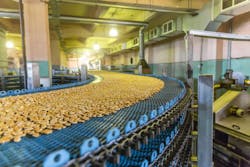
How snack processors are balancing tradition vs. automation
From Food Processing: Some processors migrate quickly toward automation as technology speeds ahead, but many others rely on traditional, handcrafted, artisanal methods to help their products stand out in the crowded snack space.
FP senior editor Andy Hanacek writes:
As the snack universe gets more diverse, so too do the processing methods and operational strategies needed to produce everything from meat snacks to chips to fruit snacks and more. And even though the rise in popularity of GLP-1 drugs is predicted to threaten snack consumption in the future, food companies continue to develop new ideas and more efficient ways to produce them.
Automation and robotics continue to make life easier for many snack processors, but some snack products require a mixture of tradition with modernity.
Maintenance vs. operations — improving communication through shop floor accountability
From Plant Services: In the most recent episode of Great Question: A Manufacturing Podcast, Joe Kuhn discusses ways to ease plant floor tension with leadership, observation and the 90-day experiment.
Listen to the episode below.
Avoiding irrecoverable failure with industrial orchestration

Drugmakers, CDMOs seize GLP-1 opportunity, invest in manufacturing facilities
From Pharma Manufacturing: In his latest Editors' (re)View column, editor in chief Greg Slabodkin outlines how Big Pharma and contract development and manufacturing organizations are making large capital expenditures to build infrastructure supporting the wildly popular medications.
Slabodkin writes:
Analysts’ forecasts call for the obesity drug market to reach nearly $100 billion by the end of the decade. Eli Lilly and Novo Nordisk are ramping up their manufacturing infrastructure to meet demand. Both companies are betting on strong interest in weight loss pills.
With the launch of the Wegovy pill in the U.S., Novo Nordisk announced this week that it is adding manufacturing capacity to its Athlone, Ireland site to support current and future GLP-1 treatments. The Danish drugmaker is investing more than $500 million in the Irish facility which it said will serve as a “critical hub” for markets outside the U.S.
In the U.S., no pharma company is spending more on its GLP-1 manufacturing infrastructure than Eli Lilly. In 2025, the drugmaker pledged $27 billion to build four new domestic pharmaceutical manufacturing sites — three for active pharmaceutical ingredients (APIs) and one to manufacture parenteral (injectable) products and devices.