Processing's Weekly Mixer: Biopharma manufacturing at an inflection point, and more

Welcome to the latest installment of Processing's Weekly Mixer, which highlights recent content from EndeavorB2B brands relevant to process manufacturers.
This week's entry features content from Pharma Manufacturing, Control, Automation World, Chemical Processing, and Food Processing, as well as this week's content from Processing.
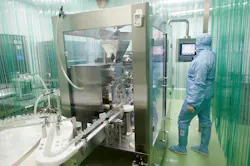
Biopharma manufacturing at inflection point amid rise of complex biologics, AI
From Pharma Manufacturing: A new report from Accenture found that 64% of 2024 drug-launch delays stemmed from CMC issues, highlighting mounting pressure on manufacturers to modernize operations.
Andy Lundin writes:
Biopharmaceutical manufacturing has reached an inflection point as the production of increasingly complex biologics is being outpaced by AI-accelerated drug discovery and clinical development, ultimately contributing to widespread drug-launch delays, according to a new report from professional services firm Accenture.
Based on an analysis of FDA Complete Response Letters (CRLs), the report found that 64% of drug-launch delays in 2024 were tied to chemistry, manufacturing and controls (CMC) issues, with many of those delays stemming from the production of complex biologics. It also noted that biologics now represents 55% of the clinical pipeline, placing mounting pressure on manufacturers to modernize operations and scale production more efficiently.
At the same time, AI-driven acceleration in drug discovery and clinical trials is compressing development timelines and increasing pressure on manufacturing and technical operations teams. Combined with broader geopolitical volatility, supply chain disruption, and rising competition, the industry is facing growing urgency to build more resilient and adaptable manufacturing networks.
Accenture’s report makes the case that resilience increasingly depends on harnessing data and intelligent technologies to create smarter, faster, and more scalable manufacturing systems. Yet, while 28% of surveyed top biopharma companies reported access to advanced intelligent tools supporting predictive or partially autonomous operations, most organizations remain in the early stages of scaling these capabilities, with digital innovation still confined to isolated initiatives.
Read the entire article HERE.

Driving sustainable transformation: A conversation with Endress+Hauser CEO Peter Selders
From Control: Now in his second year as leader of the global process instrumentation powerhouse, Endress+Hauser's Peter Selders talks with Control's Keith Larson about the innovations, investments and company values that support the company's trust-based relationships with process manufacturers.
Listen to the episode below.
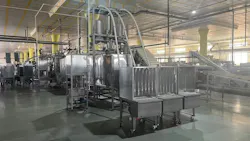
How a two-week maintenance overhaul cut downtime by 10% at a major snack food manufacturer
From Automation World: A structured, low-cost maintenance framework delivered measurable reliability gains at Bikaji Foods with no major capital investment required.
Tigran Hovhannisyan writes:
In early 2024, I was invited by Bikaji Foods International Ltd. to assess and improve equipment reliability at its production site in Bikaner, India. The engagement resulted in measurable operational improvements within a limited two-week period.
The facility operates multiple automated lines producing pretzels, breadsticks, corn chips, cereal bars and lavash-based products, where operational stability is critical to maintaining output.
Rather than conducting a traditional audit centered on equipment replacement or major capital upgrades, the work focused on identifying systemic inefficiencies in maintenance practices and improving how early warning signs were recognized and addressed.
The approach introduced during the engagement was based on structured maintenance logic, early signal detection and simplified data tracking without reliance on complex or capital-intensive predictive maintenance systems.
Working in coordination with plant leadership, maintenance managers and production personnel, the intervention focused on analyzing recurring failure patterns and restructuring maintenance workflows. The framework applied was based on an integrated maintenance optimization model designed to improve predictability and reduce unplanned downtime.
Read the entire article HERE.

11 Fires, 60 Days: What's Really Behind the 2026 Refinery Crisis

Carving out an ultraprocessed foods definition
It’s one of the toughest conundrums the FDA has ever faced: How to define and regulate ultraprocessed foods.
No doubt Robert Kennedy, secretary of Health & Human Services, the FDA’s parent, underestimated the difficulty when he promised back in March on the “Joe Rogan Experience” podcast that there would be a definition of the ambiguous term “by April” — followed immediately by front-of-package labeling to flag a product as ultraprocessed.
That self-imposed deadline came and went, and we still have no federal definition of ultraprocessed foods (UPFs).
"It was only a matter of time before they realized how hard it would be to establish a definition that was going to target the foods they didn’t like without lumping in items that they want to encourage,” says Mark Thompson, a partner at law firm Keller & Heckman.
“According to prior comments from RFK Jr., the end game was a labeling requirement that would seek to dissuade consumers from purchasing UPFs — but that has become an undesirable outcome,” Thompson continues. “So, it sounds like they’re considering a downshift to more of a generalized guidance on UPFs in lieu of proposing a thorny definition."
There’s no federal definition as of this writing, but the need remains. There seems to be enough momentum and pressure that some rule or guidance, maybe even labeling, will come from FDA or perhaps in a joint effort with USDA – like the tag-team approach on bioengineered foods labeling in 2018. Because, just like in the case of bioengineered foods, states are making up their own rules, and food & beverage processors could one day be faced with 50 slightly different UPF rules to follow.